

Popular
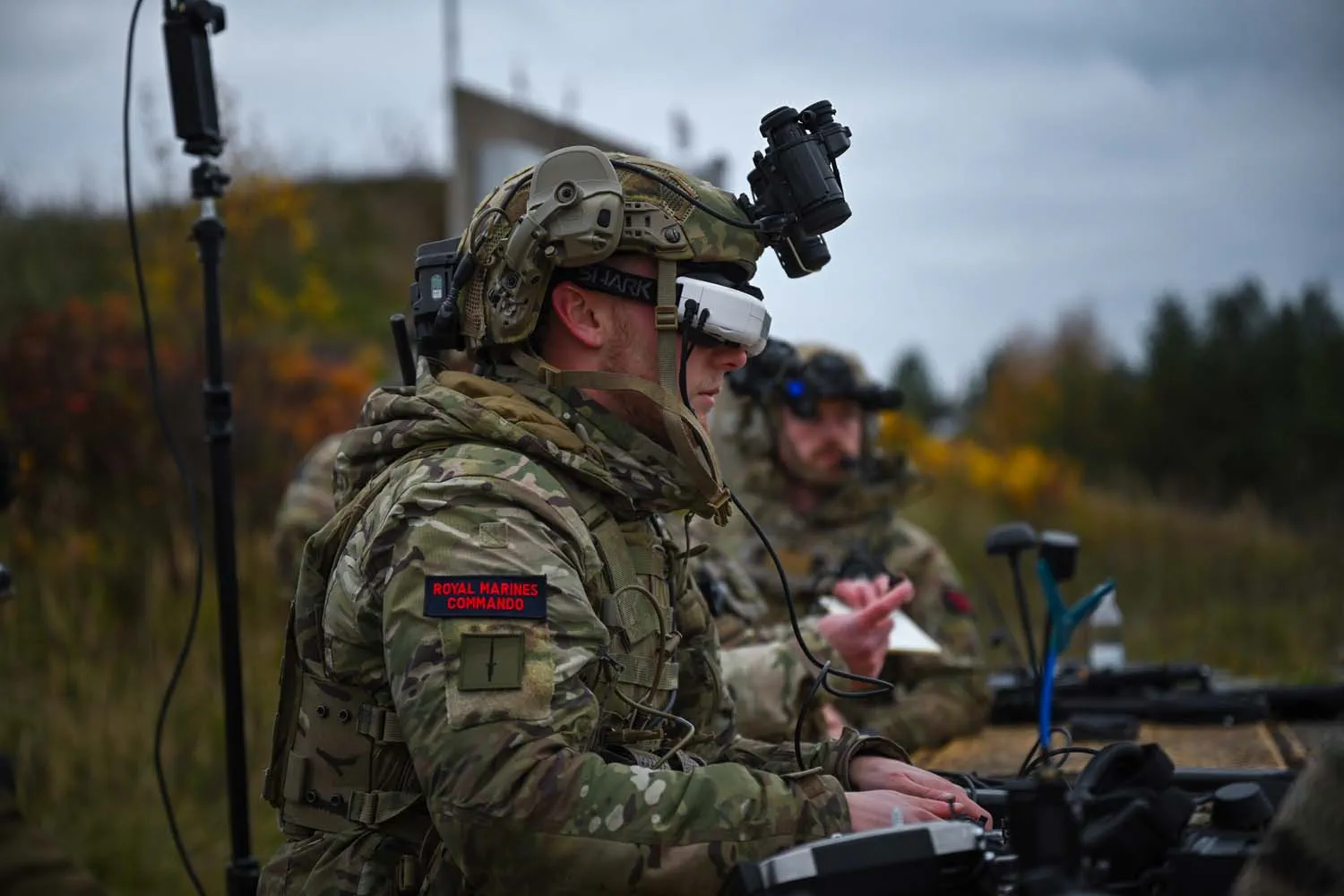
British commandos from 40 Commando, Royal Marines defeated Ukrainian service members at the inaugural Drone Crucible drone competition for special operations forces held in Germany.
This was reported by the Royal Navy.
The organizers—the U.S. National Drone Association—commended the British team, which secured the victory following 400 sorties, for its “outstanding performance, professionalism, and dedication.”
“What impressed me most was how quickly the team from 40 Commando’s Information Warfare (IW) Company adapted. With minimal time for joint preparation, Marines from various specialties learned fast and demonstrated excellent results competing against experienced operators from the special operations forces community,” said Major William Doherty, Officer Commanding Information Warfare Company, 40 Commando.
The exact composition of the participating teams remains unknown. Alongside the British team from 40 Commando, the event featured troops from the U.S. Army’s 10th Special Forces Group, as well as German and Latvian special operations forces. It is known that a team from Ukraine also took part. Although the organizers announced the participation of aa team from the Ukrainian Special Operations Forces, Militarnyi learned from its own sources that they did not participate in the event.

Seven teams, each consisting of four to five service members, competed in the event. Participants could select drones from any of ten manufacturers, test the equipment, ask questions, and provide feedback before deploying the drones in the competition.
California-based Neros Technologies, manufacturer of the Archer strike FPV drone, stated that all three teams that finished on the podium used their UAVs. According to the manufacturer, the Archer features an 8-inch frame, a 2 kg payload capacity, and a range of over 19 km.
The competition kicked off with locating a target at a distance of more than two kilometers. Participants had to positively identify it using a reconnaissance drone before executing a strike and conducting a battle damage assessment.

Next, the teams were tasked with clearing buildings: they had to fly their drones inside two-story structures and navigate them through rooms and tight spaces.
In the final challenge, teams coordinated strikes by sequentially directing three drones onto a single target at short intervals. Participants had to clear an urban area and coordinate the attack. Each stage had its own winner, but the British commandos emerged as the overall champions.

As a reminder, in late June 2026, hundreds of British service members began training in the use of unmanned aerial vehicles and electronic warfare systems at a training range in Canada.
Conducting such exercises in the United Kingdom itself is hindered by existing peacetime civil aviation regulations and other domestic restrictions, making it difficult for the British military to practice drone operations and counter-drone technologies on home soil.
Підтримати нас можна через:
Приват: 5169 3351 0164 7408 PayPal - [email protected] Стати нашим патроном за лінком ⬇
Subscribe to our newsletter
or on ours Telegram
Thank you!!
You are subscribed to our newsletter