



Popular
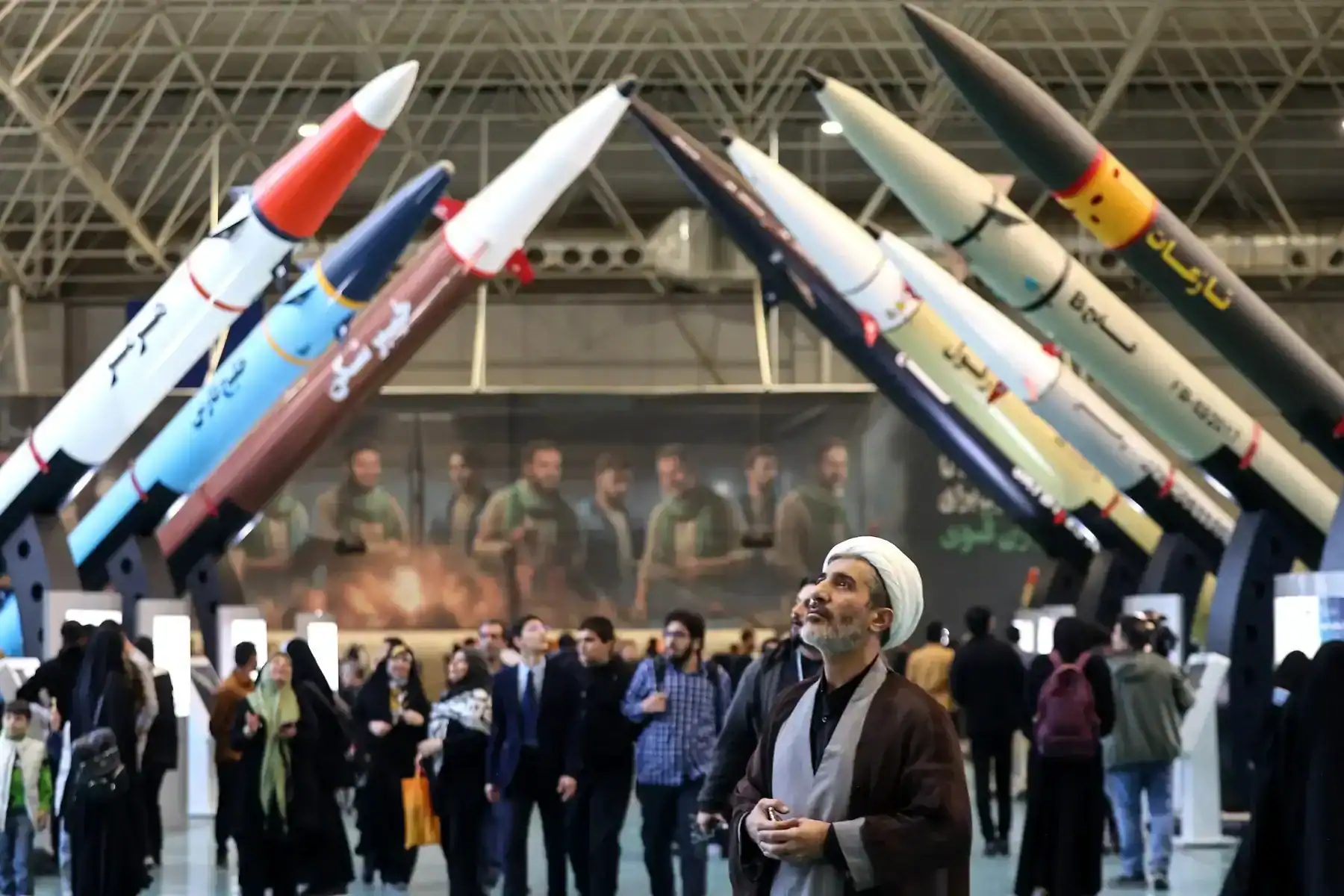

Iran has developed the most powerful and diverse ballistic missile program in the Middle East. It constitutes a fundamental element of the national defense doctrine and serves as an instrument of regional power projection.
Over the past decades, Iran’s military and political leadership has invested enormous resources in creating a self-sufficient missile industry. This sector compensates for the technological lag in traditional weapons systems, particularly the air force, which has long been constrained by international sanctions.
The evolution of Iran’s missile arsenal reflects a transition from simply purchasing and reverse-engineering Soviet models of the 1950s to developing complex, high-precision systems. Modern designs utilize solid propellant, guided warheads, and elements of hypersonic technology.
The Iran-Iraq War (1980–1988) served as the historical catalyst for the program. At that time, Tehran was unable to respond to massive strikes by Iraqi Scud missiles on its major cities. This experience, known as the “War of the Cities,” convinced the leadership that ballistic missiles were the only reliable means of deterring aggression. In 1984, Iran received its first 20 Scud-B missiles from Libya.
This event laid the foundation for the creation of specialized units within the Islamic Revolutionary Guard Corps (IRGC). Today, the program is coordinated by the Aerospace Industries Organization (AIO) and the IRGC Aerospace Force.
They manage an extensive network of research centers, production facilities, and front companies through which they procure critical components abroad.
Iran possesses the region’s largest arsenal of tactical ballistic missiles, primarily solid-fuel short-range and medium-range ballistic missiles. According to official data, Tehran voluntarily limits the range of its weapons to 2,000 km, which allows it to cover most of the Middle East. The country relies largely on its own designs, although it also draws on support from China and North Korea.
Developers equip all missiles with guidance systems: inertial navigation, gyro-stabilization, and new satellite-guided and autonomous homing warheads. Troops launch them from mobile launchers.
Iranian missiles carry conventional high-explosive, high-explosive fragmentation, or cluster warheads weighing 500–1,000 kg. Some variants feature anti-ship and anti-radar warheads. The accuracy of the best models reaches several dozen meters.
The technical characteristics of the systems vary. The Fateh family (Fateh-110, Fateh-313, etc.) has a length of about 9–10 m and a launch weight of 3–4 t, with a warhead weight of 500 kg. These single-stage solid-fuel missiles are mounted on mobile launchers.
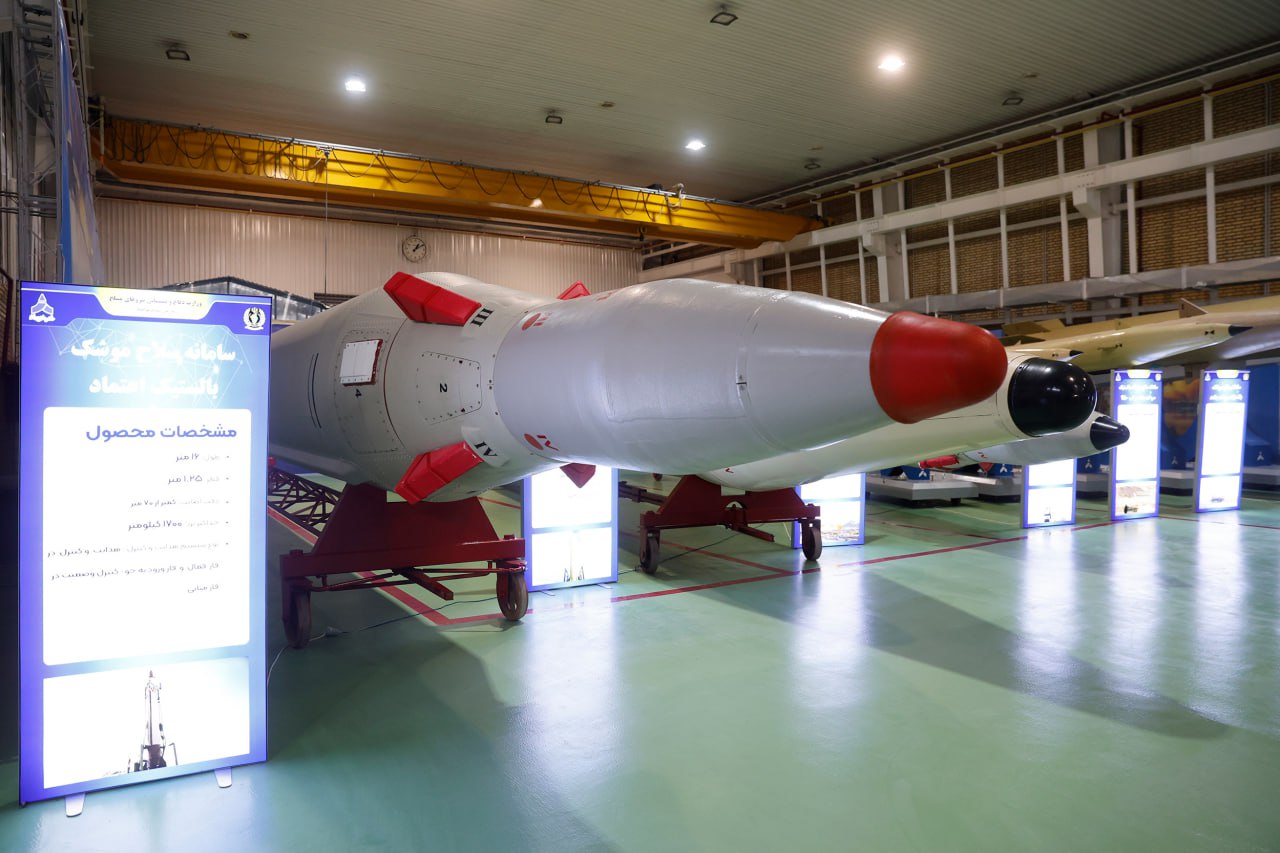
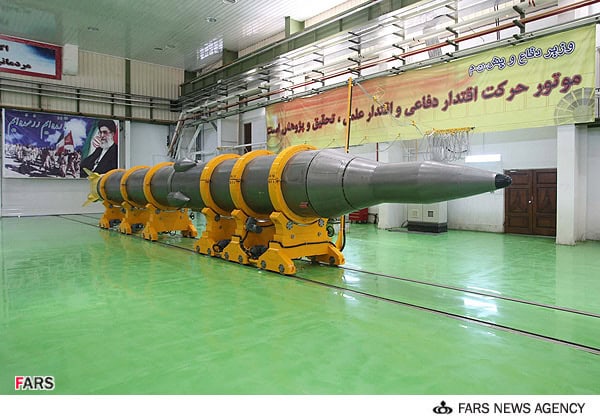
The name Shahab is now used less frequently; these are mostly products of the Islamic Revolutionary Guard Corps (IRGC). This series includes the liquid-fueled Shahab-1 (Scud-B), Shahab-2 (Scud-C), and the improved Shahab-3 in the Ghadr and Emad variants, with a range of 800–1,600 km.

The medium-range ballistic missile (MRBM) class is represented by the solid-fuel Sejjil (2,000 km), Khorramshahr (up to 2,000 km), as well as the new Kheibar Shekan (1,450 km) and Haj Qasem (1,400 km). The latter was named after Qasem Soleimani; it has two solid-fuel stages. In 2023, Iran unveiled a prototype of the Fattah hypersonic missile with a range of 1,400 km. The introduction of new systems is proceeding slowly: often, following a series of failed launches, missiles undergo testing for years.
Iran actively uses missiles during exercises and in local conflicts. The most well-known examples are the Fateh-110 and Zolfaghar strikes on northeastern Syria in June 2017 and October 2018 against ISIS. In January 2020, the country attacked U.S. bases in Iraq with Shahab-3, Ghadr, and Emad missiles. Tehran officially acknowledges these actions. The IRGC Aerospace Force conducts test launches of at least a dozen missiles 1–2 times a year. Iran also transfers weapons to its allies: solid-fuel Fateh missiles were received by Hezbollah in Lebanon and Shiite militias in Iraq.
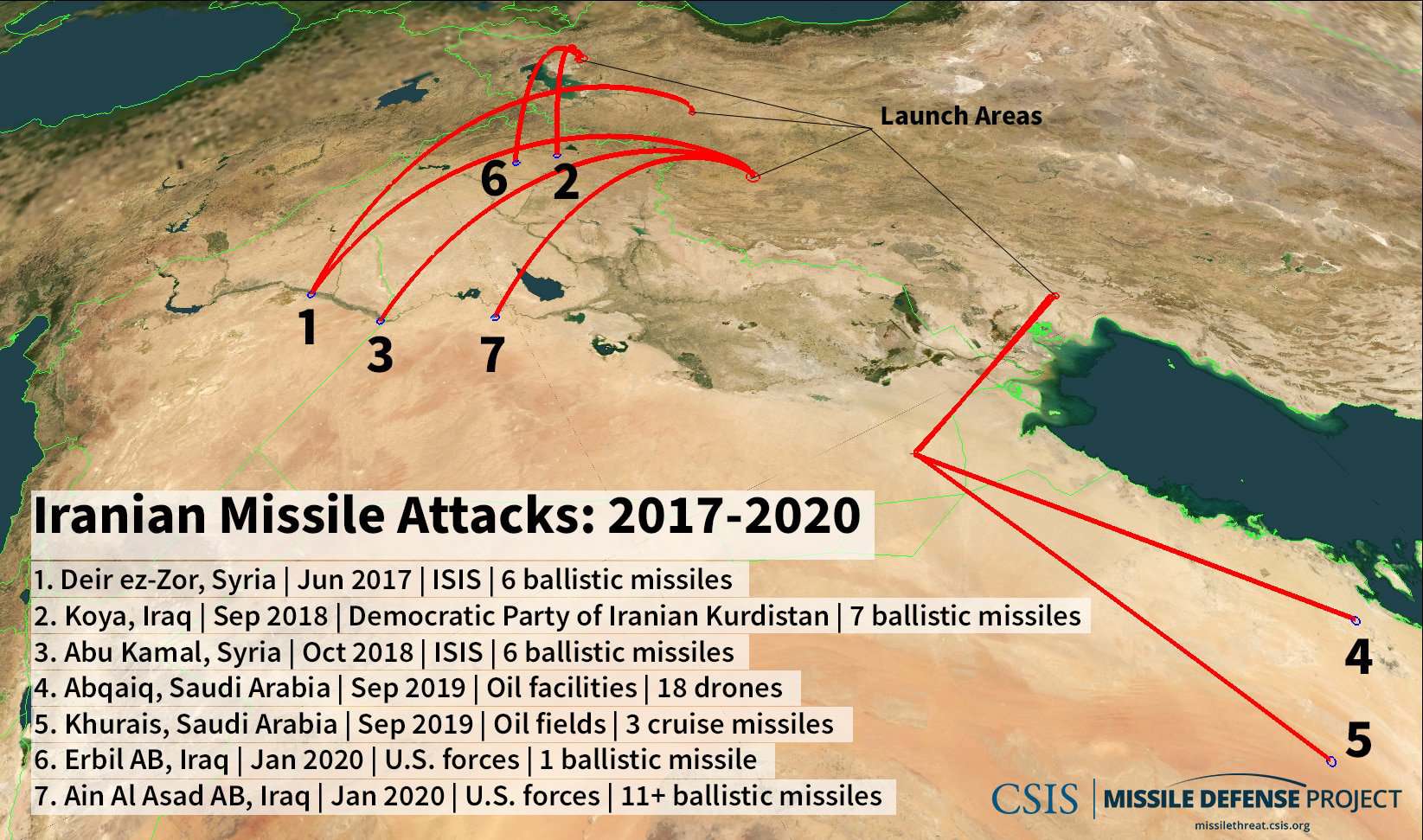
In Yemen, the Ansar Allah movement uses variants known as Burkan-1/2 (copies of Qiam and Shahab-2). In 2018, Iran announced the transfer of Zolfaghar and Dezful missiles to the Popular Mobilization Forces in Iraq. Although data on the number of weapons vary, sources indicate the presence of at least several hundred launchers of various classes.
The Iranian missile industry has achieved a high level of self-sufficiency, yet it still depends on the supply of specific chemical components and electronics.
In February 2025, observers recorded the arrival at the port of Bandar Abbas of a vessel carrying 1,000 tons of sodium perchlorate — a critical oxidizer for solid rocket fuel. Such quantities are sufficient to produce fuel for approximately 260 Kheibar Shekan missiles or 200 Haj Qasem missiles.
This dependence on international sources, particularly China, creates a vulnerability in the program that Iran’s adversaries attempted to exploit during blockades and strikes in 2026.
The Self-Sufficiency Jihad Organization (SSJO) plays a central role in development, responsible for implementing innovations and adapting foreign technologies. In 2024–2025, production rates accelerated: despite losses during the war with Israel in June 2025, Iran was able to quickly rebuild its arsenal to a level of approximately 2,000–2,500 missiles of various types.
For a long time, analysts classified Iranian missiles as “weapons of terror” due to their low accuracy. However, in 2024–2026, the situation changed radically. Iran abandoned GPS signals, which are vulnerable to electronic warfare, in favor of the Chinese navigation system BeiDou-3.
It is reported that the military signal of the BeiDou (B3A) system uses frequency-hopping and encryption technology. This ensures 98% navigation reliability even under conditions of massive electronic warfare jamming.
Thanks to this, Iranian missiles have achieved an accuracy of less than 5–10 meters. During the conflict in June 2025, Zolfaghar missiles guided by BeiDou-3 demonstrated the ability to strike specific buildings and radar antennas on Israeli territory.
Iran is also developing its own inertial navigation systems based on fiber-optic gyroscopes. New software algorithms allow the missiles to automatically switch between different signal sources in the event of the loss of one of them, ensuring mission success even in a jammed environment.
Experience from actual combat operations during the 2024–2026 period allows for an objective assessment of the effectiveness of Iran’s arsenal against the most advanced missile defense systems, such as Arrow, THAAD, and Patriot.
This period demonstrated a rapid degradation of Tehran’s launch capabilities under intense fire from allied forces. While in April 2024 Iran launched about 120 short-range ballistic missiles per day, by October of that same year the salvo had increased to 200 missiles, predominantly Kheibar Shekan and Rezvan models.

Tehran reached the peak of its missile power during the 12-day war in June 2025, using approximately 550 ballistic missiles over the entire conflict.
However, Operation “Epic Fury” in late February 2026 exposed a critical vulnerability in Iran’s strategy. Despite a massive start on February 28 with the launch of 170 missiles, the intensity of the attacks plummeted: by March 4, the daily number of launches had dropped by 86%, and as of March 10, missile activity had reached a historic low.
This depletion of capacity was primarily caused by the loss of mobile launchers (TELs), which had become the program’s main bottleneck. During Operations “Epic Fury” and “Roaring Lion,” U.S. and Israeli aircraft destroyed approximately 75% of Iran’s TEL fleet, making coordinated salvos impossible and forcing the IRGC to resort to isolated launches.
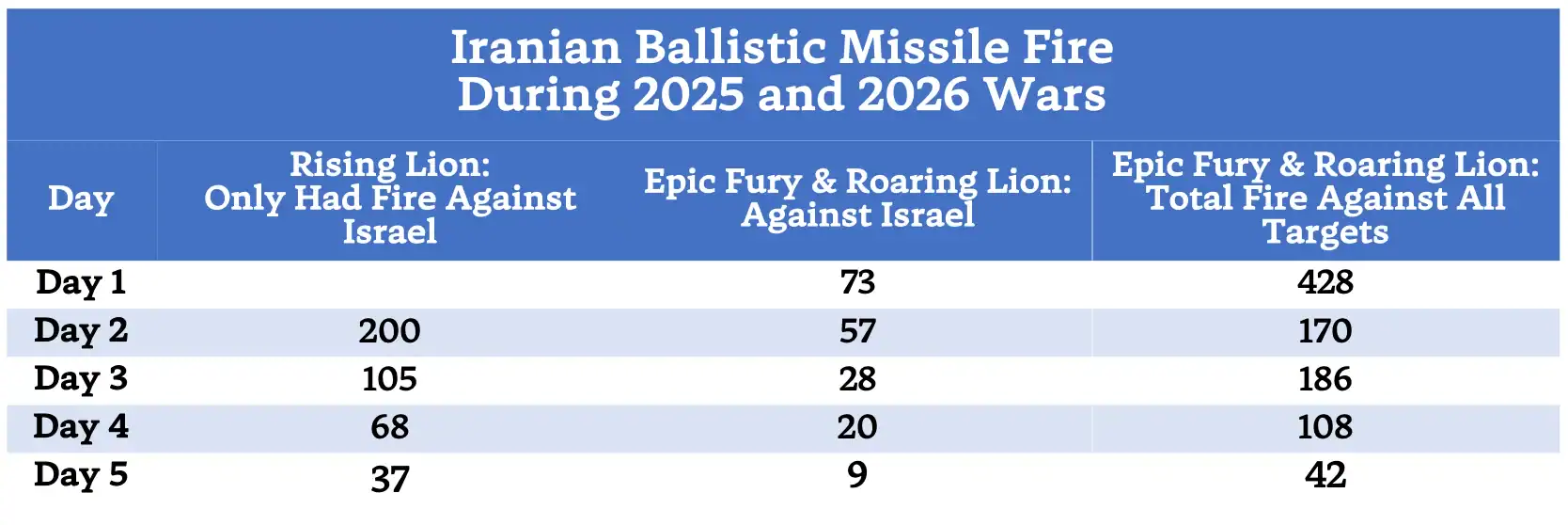
In parallel with the shortage of launchers, systematic strikes on underground facilities in Khojir and Shahrud, as well as on IRGC logistics hubs, disrupted supply chains and destroyed significant stockpiles of short-range ballistic missiles directly at their storage sites.
The situation deteriorated due to the “launch suppression” effect: the constant presence of enemy aircraft in Iranian airspace posed an existential threat to missile crews, as the risk of destruction within minutes of deployment forced planners to act with extreme caution.
Ultimately, the protracted nature of the war forced the Iranian leadership to impose strict rationing of remaining weapons. Tehran sought to preserve at least a minimal deterrent capability so as not to be left completely unarmed ahead of the final phases of the conflict.
Iran’s short-range ballistic missiles (SRBMs) are primarily represented by the Fateh-110 family — a series of solid-fuel missiles that engineers have been developing since 1995 based on the Zelzal and Chinese technologies.
The basic Fateh-110A (first generation) has a range of ~210–250 km, a warhead of ~500 kg, a single-stage solid-fuel engine, and a mobile launcher (a trailer or a converted Scud TEL).
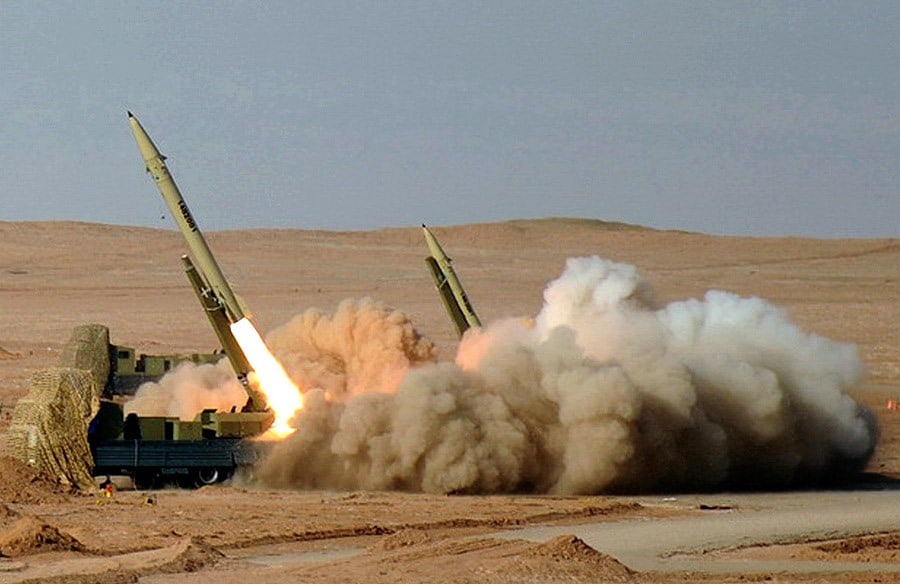
In the production versions (Fateh-110B/C/D), the developers increased the engine diameter, thereby extending the range to ~300 km. Between 2007 and 2018, Iran conducted successful Fateh tests every year, and the most recent public launches took place during IRGC exercises in 2018 and 2020.
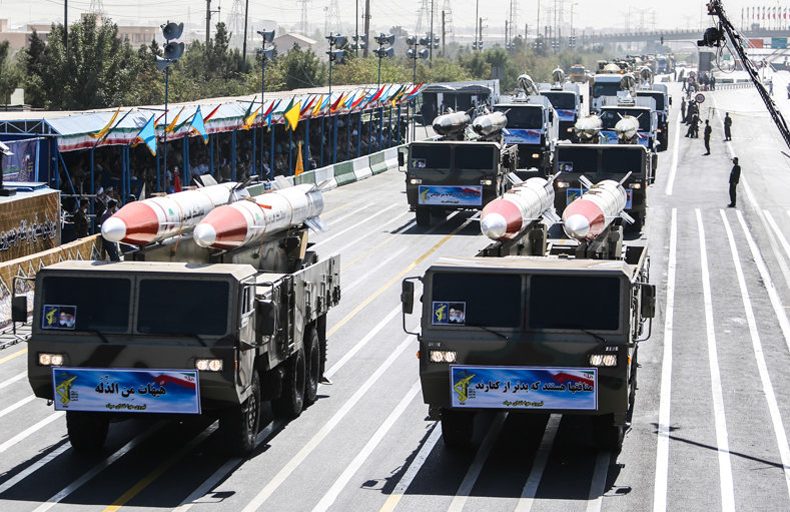
Iran has used the system against ISIS positions in Syria (2017, 2018); it is also known that missiles were transferred to Hezbollah (Lebanon) and the PMU (Iraq). The Fateh-110 launcher is exceptionally mobile: it can be easily transported on dirt roads and quickly deployed for firing within seconds of stopping.
The Fateh-110 family also includes upgraded variants. The Fateh-313 is an extended version, approximately 10.3 m long with a range of 500 km, retaining a single-stage design. The Fateh-e Mobin features infrared guidance (satellite channel and IR seeker), providing a range of up to 300–500 km. Attempts to license production for allies (the M-600 project for Syria) have enabled the manufacture of single-stage missiles with a range of approximately 300 km.
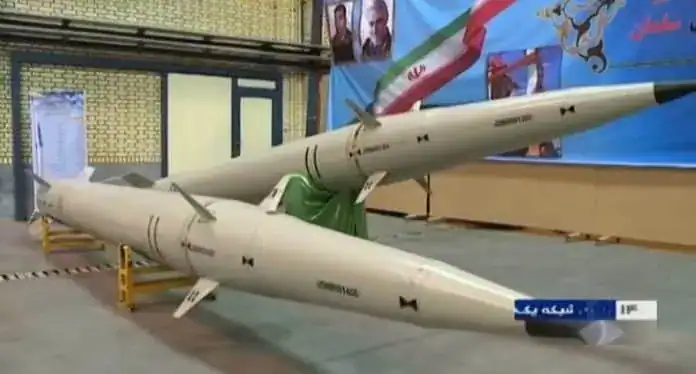
The Hormuz-1 and Hormuz-2 — solid-fuel anti-radar and anti-ship missiles – are also based on the Fateh platform. According to some reports, they were not classified as a separate type but were integrated into the Fateh family.
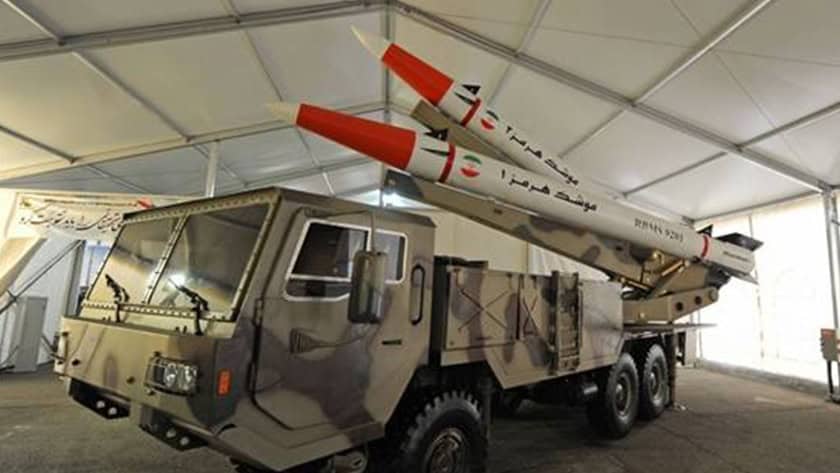
Another medium-range ballistic missile (MRBM) is the Qiam-1 (Qaem-1), a single-stage liquid-fuel missile. It served as a transitional model from the Shahab-2 (Scud-C) to an indigenous design without stabilizers. The first test took place in 2010; its range is estimated at ~800 km with a warhead weight of ~750 kg. The Qiam-1, guided by engine thrust vectoring, has better aerodynamics than the Shahab-2, which has improved its accuracy.
It was first used in 2017 for strikes on Deir ez-Zor. IRGC continues to produce and improve the Qiam-2 version (range ~1,000 km). Iran also supplied these missiles to the Houthis in Yemen under the name Burkan between 2017 and 2020.
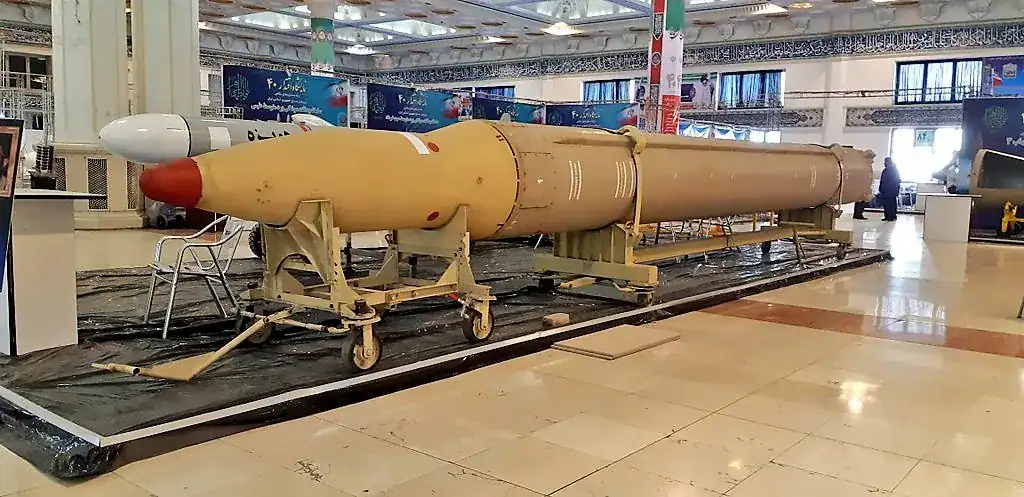
The older Shahab-1/2 (Scud-B/C) series is nearly obsolete, though some units remain in storage. The Zelzal-2/3 are semi-guided rocket systems that Iran has used in combat (Deir ez-Zor, 2017) and which later evolved into the Fateh ballistic missiles. Their warheads weigh ~600–1,000 kg, and their range reaches ~200 km (for the Zelzal-3).

These systems have low accuracy (circular error probability is measured in kilometers), so they are used as rocket artillery against area targets.
Further development of missile programs led to the emergence of the Zolfaghar, which Tehran demonstrated in 2016. The missile has a range of 700 km and uses a separable warhead, which significantly complicates its interception by missile defense systems.
It was the Zolfaghar that served as the instrument for Iran’s first combat launches against targets in Syria during 2017–2018. In 2020, the arsenal was expanded with a naval variant — Zolfaghar-e Basir. With a range exceeding 700 km, this system can threaten aircraft carrier groups deep in the Indian Ocean.
In 2019, Iran unveiled the Dezful missile, which essentially replicates the design of the Zolfaghar but features an extended body. As a result, its range has increased to 1,000 km. According to international classification, these parameters place the system in the medium-range missile category; however, the Iranian command continues to use it as a tactical tool for precision strikes.
Iranian medium-range ballistic missiles (MRBMs) have a range of 1,000–2,000 km. A key role here is played by the Shahab-3 family and its variants — single-stage liquid-fuel missiles whose design resembles North Korea’s “NoDong.” The original Shahab-3A (tested in 1998–2003) is ~15.6–16.6 m long, weighs ~17–19 t with a warhead of 760–1,200 kg, and has a range of 800–1,300 km.
After a series of tests in 2000–2003, the missile entered service. The original uses an inertial guidance system, and its circular error probability (CEP) ranges from several hundred meters to 2.5 km.
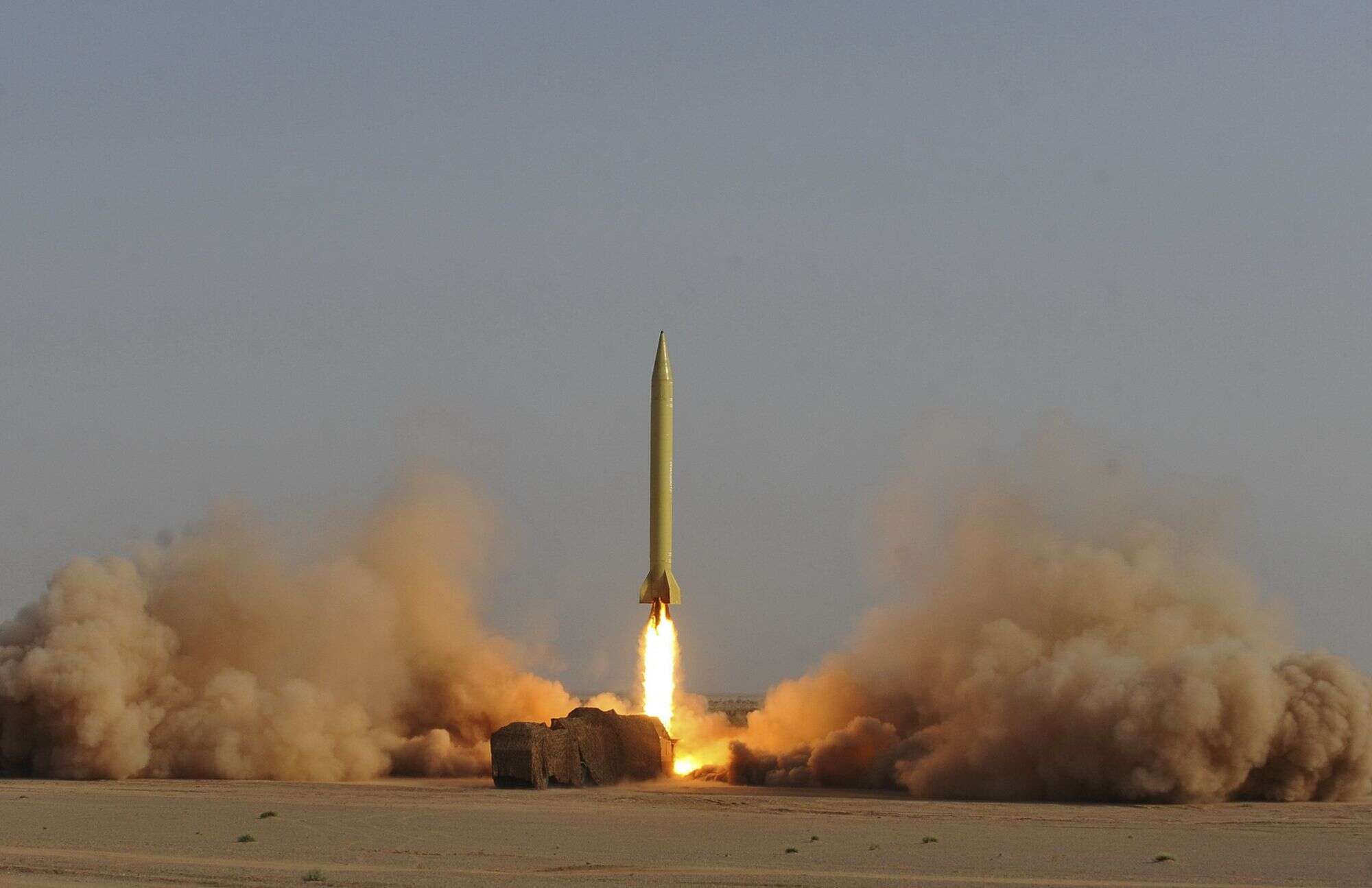
Between 2004 and 2010, developers began a modernization program: the Shahab-3B (Ghadr-101/110) received larger fuel tanks and a lighter structure. This increased the range to ~1,600–2,000 km, but reduced the payload to ~750 kg due to the specific fairing (“baby bottle”).
The upgraded “Ghadr” has higher accuracy (circular error probability of about 300 m) thanks to a more sensitive inertial guidance system and gyrostabilizer.
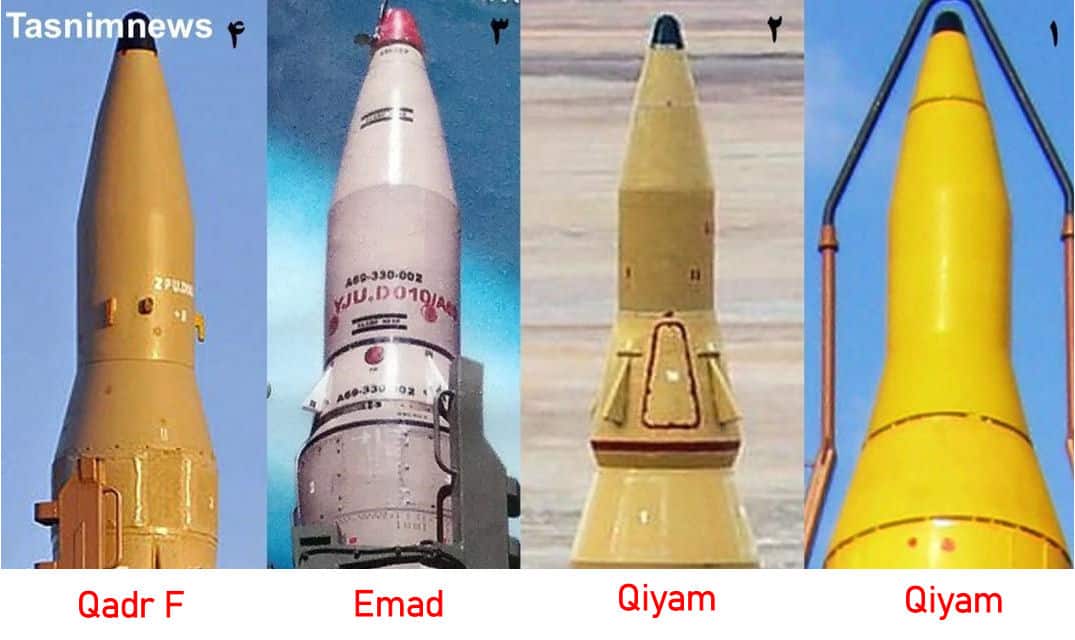
In 2015, Tehran unveiled the Emad-1 — essentially an improved guided warhead for the Shahab-3/Ghadr missiles. The Emad is equipped with aerodynamic control surfaces on the warhead for maneuvering during the terminal phase of flight, which increases accuracy and makes interception by missile defense systems more difficult.

Experts estimate the Emad’s range at 1,700 km with a warhead of ~750 kg and a circular error probability (CEP) of ~500 m. Although no official combat launches have been recorded, the military actively uses these missiles during exercises.
Other medium-range ballistic missiles include:
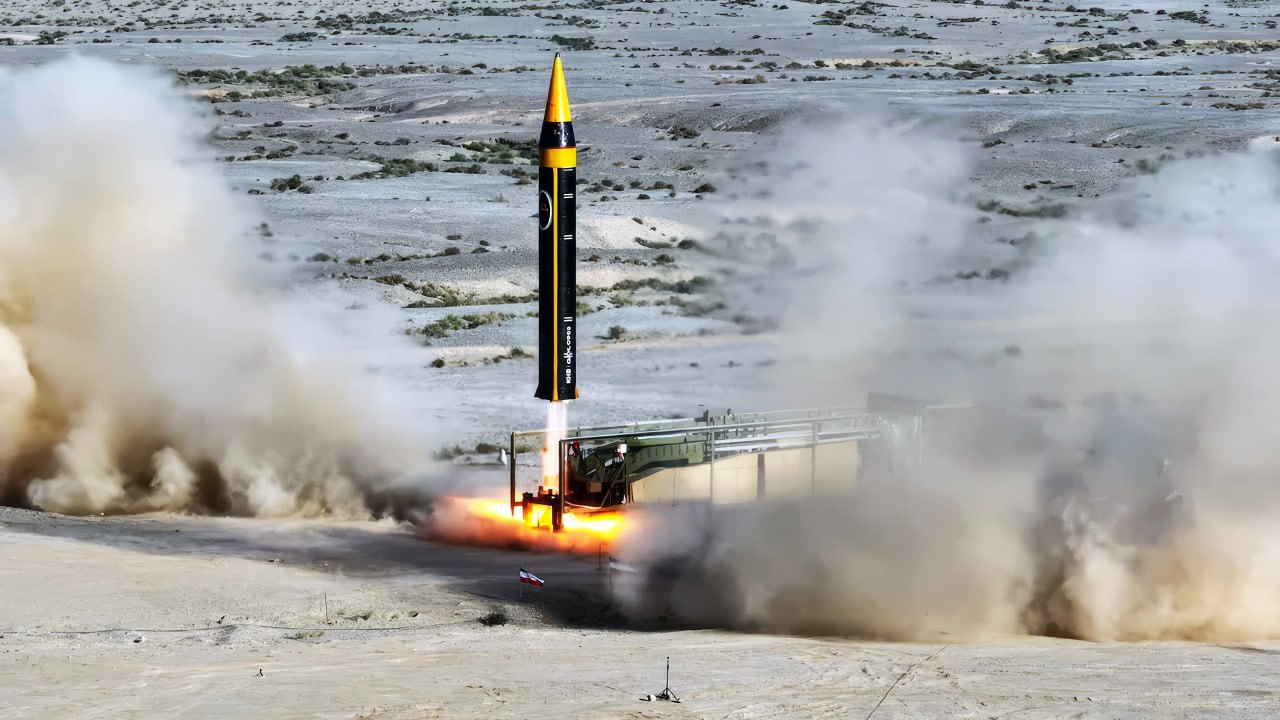
Officially, Tehran does not possess ICBMs (range over 3,000 km) or SLBMs (over 5,500 km). The maximum range of Iranian ballistic systems is approximately 2,000–2,500 km.
This figure, for example, is included in a 2025 Iranian infographics regarding the Sejjil missile, although Western experts consider this estimate to be overstated. The actual capabilities of the Ghadr, Khorramshahr, and Sejjil systems are limited to a range of 2,000 km, while the 2,500 km figure remains purely hypothetical. Experts emphasize: none of Iran’s known missile programs allows for striking targets on the continental United States.
In 2023–2024, media outlets reported on the development of the “hypersonic” Fattah missile, capable of reaching speeds of up to Mach 13 with a range of 1,400 km. However, these characteristics still fall within the parameters of medium-range ballistic missiles (MRBMs).
Developers are focusing space launch vehicles (Simorgh, Safir) exclusively on satellite deployment. Currently, Tehran has not converted these space technologies into combat missiles of the BRSD or ICBM type, as analysts confirm. Iran systematically denies plans to develop intercontinental weapons, although North Korea’s experience and China’s technological support suggest the emergence of such projects in the future.
Despite the expansion and active development of its missile forces, actual combat operations have demonstrated Iran’s inability to deliver devastating strikes against American and Israeli forces. Tehran’s attacks against its adversaries did not cause serious damage: not a single American ship was sunk or damaged.
At the same time, the intensity of Iranian missile use decreased significantly as a result of active operations by Israeli and American aviation. This serves as a clear example that developing only one aspect of deterrence does not guarantee effectiveness in warfare.
Despite constant demonstrations of its missile capabilities, Iran has failed to establish reliable air defense systems or modernize its air force. The country’s air force still consists mainly of obsolete aircraft; furthermore, Tehran faces a severe shortage of airborne early warning and control (AWACS) aircraft and modern radar systems.
This war served as a telling example of how Iran, despite its loud statements and constant displays of missile capabilities, proved powerless in the face of an adversary possessing a comprehensive military advantage. A state capable of integrating the development of its naval forces, air force, intelligence, and command-and-control systems gains a decisive advantage on the battlefield.
Ultimately, this conflict demonstrated the complete superiority of a comprehensive approach over Iran’s attempts to rely exclusively on missiles as the primary instrument of war against a powerful adversary.
Підтримати нас можна через:
Приват: 5169 3351 0164 7408 PayPal - [email protected] Стати нашим патроном за лінком ⬇
Subscribe to our newsletter
or on ours Telegram
Thank you!!
You are subscribed to our newsletter