








Popular
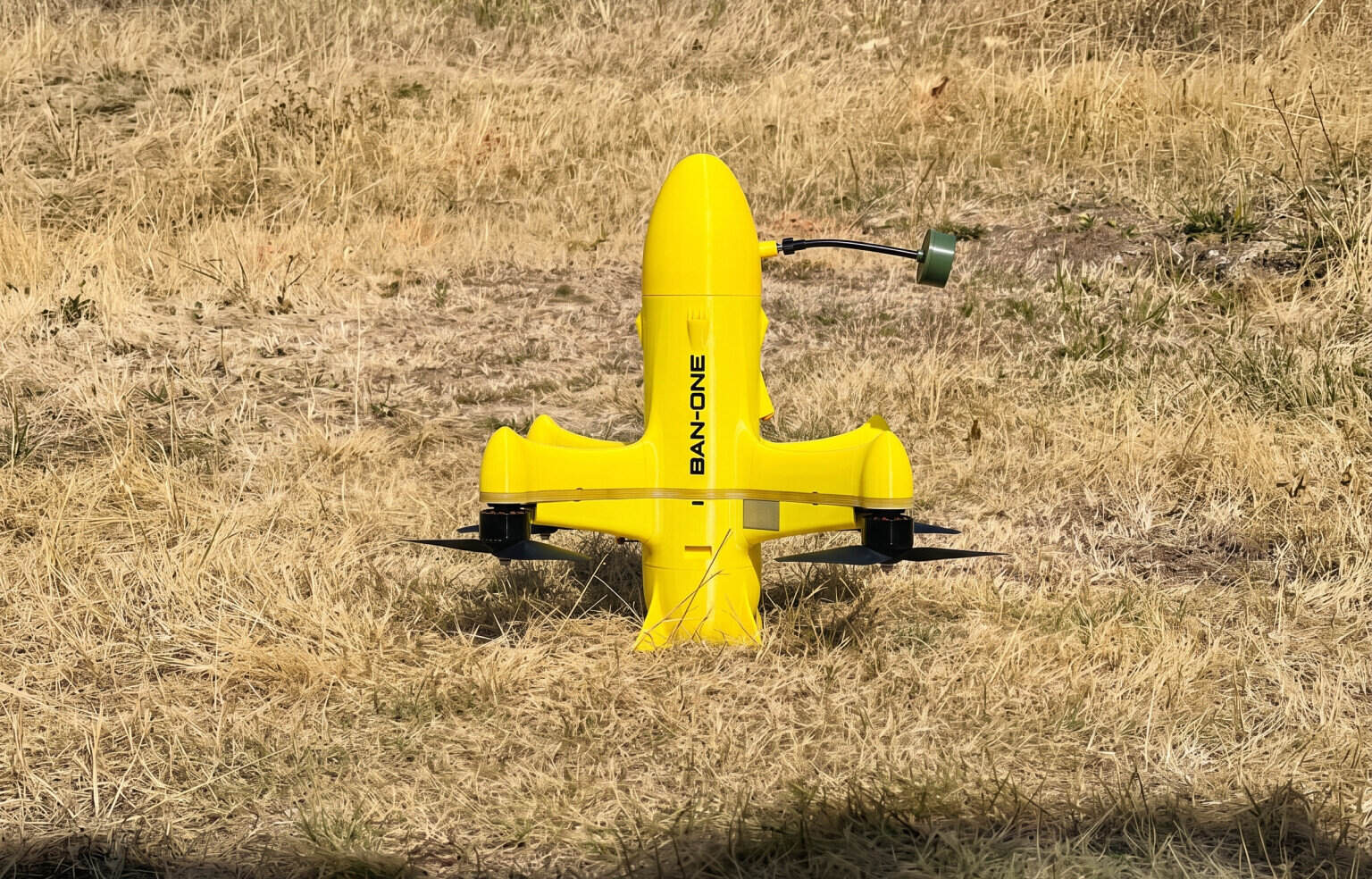

Ukrainian manufacturer PUF (Persha Universalna Firma) has launched Ban-One, a high-speed air-defense interceptor designed to counter UAVs.
Speed was the design team’s top priority: in an air-to-air engagement, it is the key factor.
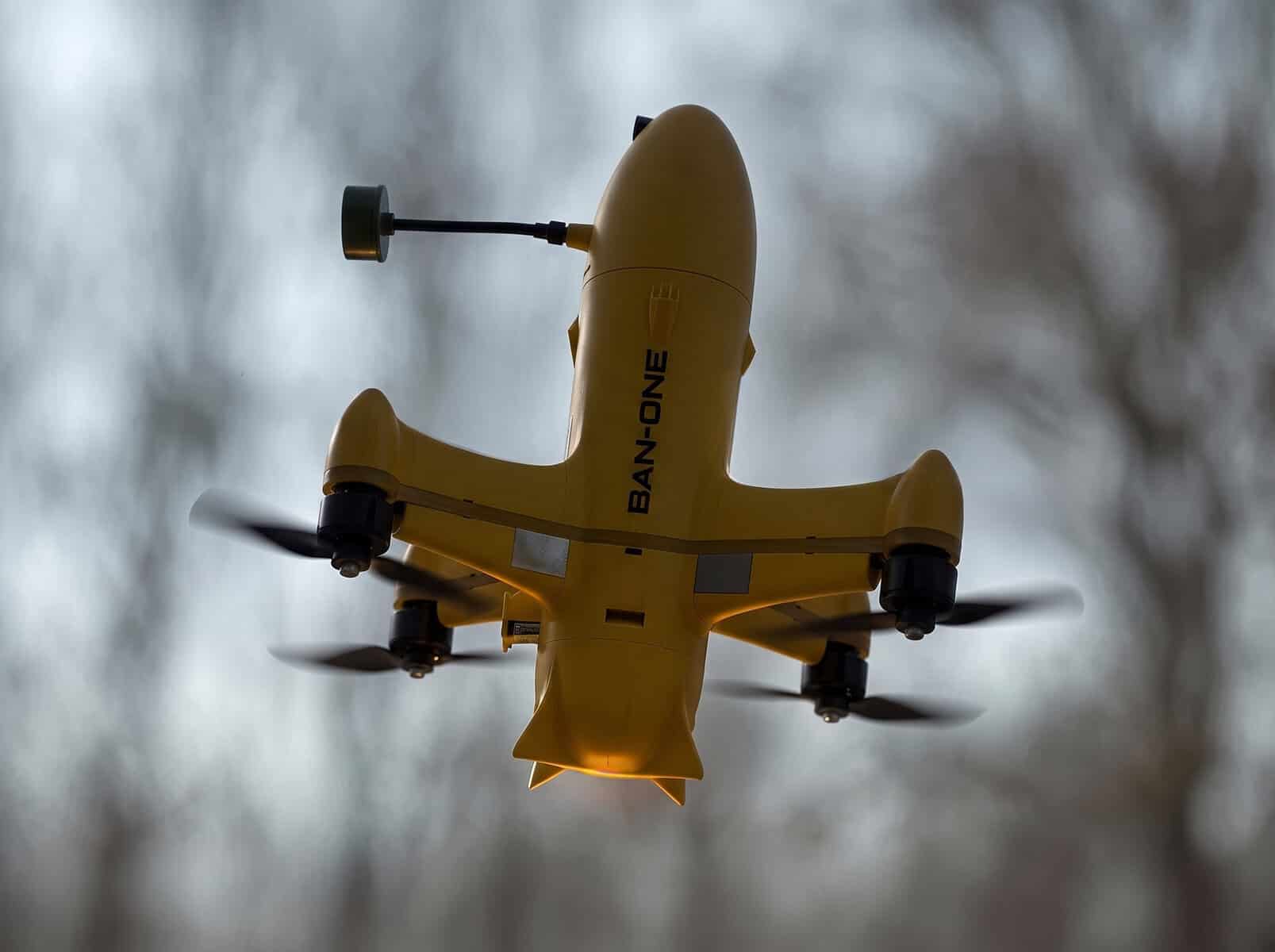
An aerodynamic airframe and a carefully matched propulsion system allow Ban-One to engage targets at 190–345 km/h, with a peak speed of 370 km/h.
Intercepts demand sharp acceleration, maximum thrust and sustained high-RPM operation. To keep the system reliable under that load throughout the flight, the engineers mounted the ESCs (electronic speed controllers) externally. As a result, the drone runs cooler and holds its speed.
PUF’s interceptor is designed to destroy rotary-wing and fixed-wing UAVs. It also successfully hunts Shahed-type drones. Ban-One remains effective even when enemy aircraft are flying at altitudes of several kilometers.
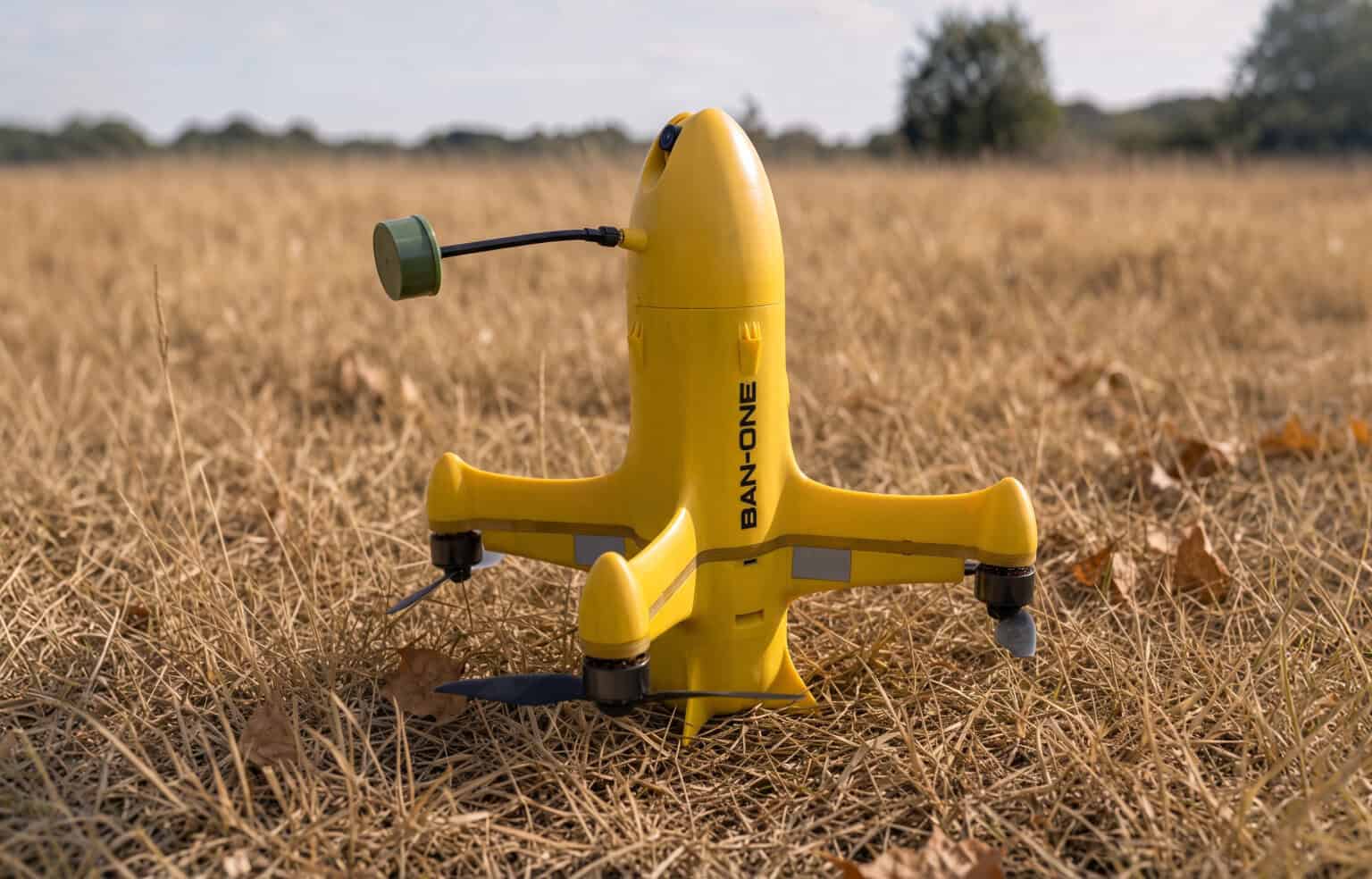
The modular airframe lets Ban-One be configured for different mission requirements. It is available with either an analog or a digital link. The analog version supports day/low-light and thermal cameras and can carry one or two analog cameras at the same time. A digital video system (day or thermal) is also available. Camera angle can be adjusted from the controller depending on the flight profile.
The analog video link operates on two frequencies, 5.8 GHz and 6.7 GHz, while digital video runs on 5.8 GHz. The control link frequency can be selected in one of two bands: 500–1050 MHz or 1.9–2.6 GHz.
Swappable camera units are not the only advantage of the modular design. Replacing the lower section adapts the drone to warheads of different sizes. Maximum payload is 400 g.
The frame is made of fiberglass. Its distinctive shape and yellow color earned the drone the in-house nickname “banana” — which is where the official name Ban-One comes from.
Ban-One ships with an 8S3P battery pack. Its key advantage is high current output, which lets the motors reach their full potential without voltage sag or the risk of battery failure.
The Ban-One unmanned aircraft system (UAS) includes a ground control station (GCS) developed and manufactured in-house. According to the company, its main advantage is versatility: the GCS works with analog, digital and fiber-optic drones.
Integration works the other way, too. PUF can adapt Ban-One, like the rest of its products, to a customer’s ground station — for example, by changing the communication protocol. This lets the new aircraft slot quickly into the infrastructure a unit already operates.
Ban-One has completed NATO codification and has been assigned a NATO Stock Number (NSN).
Ban-One can already be ordered on the manufacturer’s website and will soon be available on Brave1 Market. Data on Ban-One’s flight range, altitude and endurance is available on request via the PUF website.
PUF’s lineup also includes fiber-optic, digital and analog drones, as well as a new FPV interceptor.
Підтримати нас можна через:
Приват: 5169 3351 0164 7408 PayPal - [email protected] Стати нашим патроном за лінком ⬇
Subscribe to our newsletter
or on ours Telegram
Thank you!!
You are subscribed to our newsletter