


Popular
Germany and Spain have decided to continue development of a sixth-generation fighter aircraft without France’s participation.
Airbus announced the formation of Team Gen 6, a consortium of eight German and five Spanish defense companies that will continue development of the aircraft. The German members of the consortium are Airbus, AUTOFLUG, Diehl Defence, Liebherr Group, HENSOLDT, MBDA Deutschland, MTU Aero Engines, and Rohde & Schwarz.
The Spanish companies involved in the project are Indra, Oesia, GMV, ITP Aero, and Sener.
“As Team Gen 6, we have the capabilities and the capacities. Now, we are looking for close alignment with policymakers and the Air Force to drive forward a superior European air combat system for collective security,” the company said.
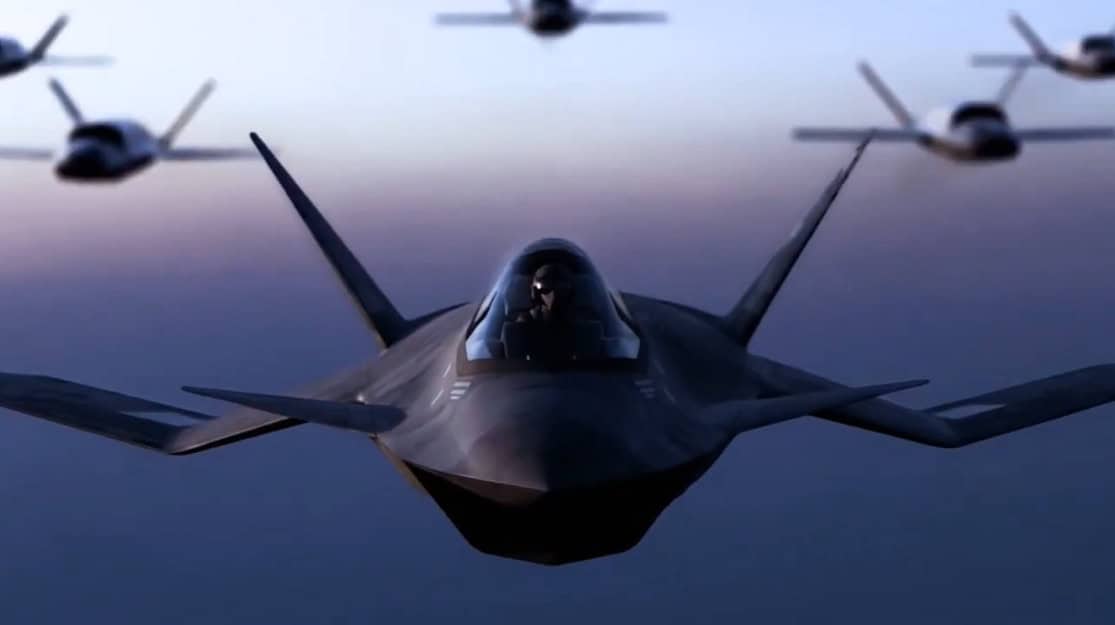
Airbus also released a video showing a concept aircraft accompanied by several unmanned platforms. However, the aircraft shown is likely a conceptual rendering rather than a final design.
This is indicated by its aerodynamic configuration, including canard foreplanes, a ventral air intake, and an unusual wing design. The concept appears to draw some inspiration from the Iranian IAIO Qaher-313 project.

Recently, it emerged that Airbus is considering deeper cooperation with Saab to develop a new sixth-generation fighter.
At the same time, consultations are continuing on alternative formats of European defense cooperation, with Sweden currently viewed as one of the most promising partners.
Growing defense cooperation between Germany and Sweden has created favorable conditions for industrial collaboration, and Saab, as the manufacturer of the Gripen fighter, has extensive experience in combat aircraft development.
The FCAS program encountered difficulties due to long-running disputes between Airbus and France’s Dassault Aviation over project leadership, workshare, and intellectual property rights. Despite the program’s strategic importance for European defense, these disagreements repeatedly hindered progress.
France has traditionally emphasized sovereign weapons development and sought to maintain a leading role in the program, which would give it influence over key decisions, including export policy and the development of specialized variants, such as a nuclear-capable version and a carrier-based aircraft.

Germany, by contrast, views FCAS primarily as a means of acquiring a next-generation fighter while maintaining a relatively balanced financial contribution. At the same time, Berlin has sought greater influence within the program and has been unwilling to concede key management roles to Paris.
As a result, governments and industry partners have struggled for years to agree on the balance of responsibilities and control. Tensions have continued to grow since 2022, with negotiations over the division of roles repeatedly reaching deadlock and causing delays at key stages of the program.
Підтримати нас можна через:
Приват: 5169 3351 0164 7408 PayPal - [email protected] Стати нашим патроном за лінком ⬇
Subscribe to our newsletter
or on ours Telegram
Thank you!!
You are subscribed to our newsletter