


Popular
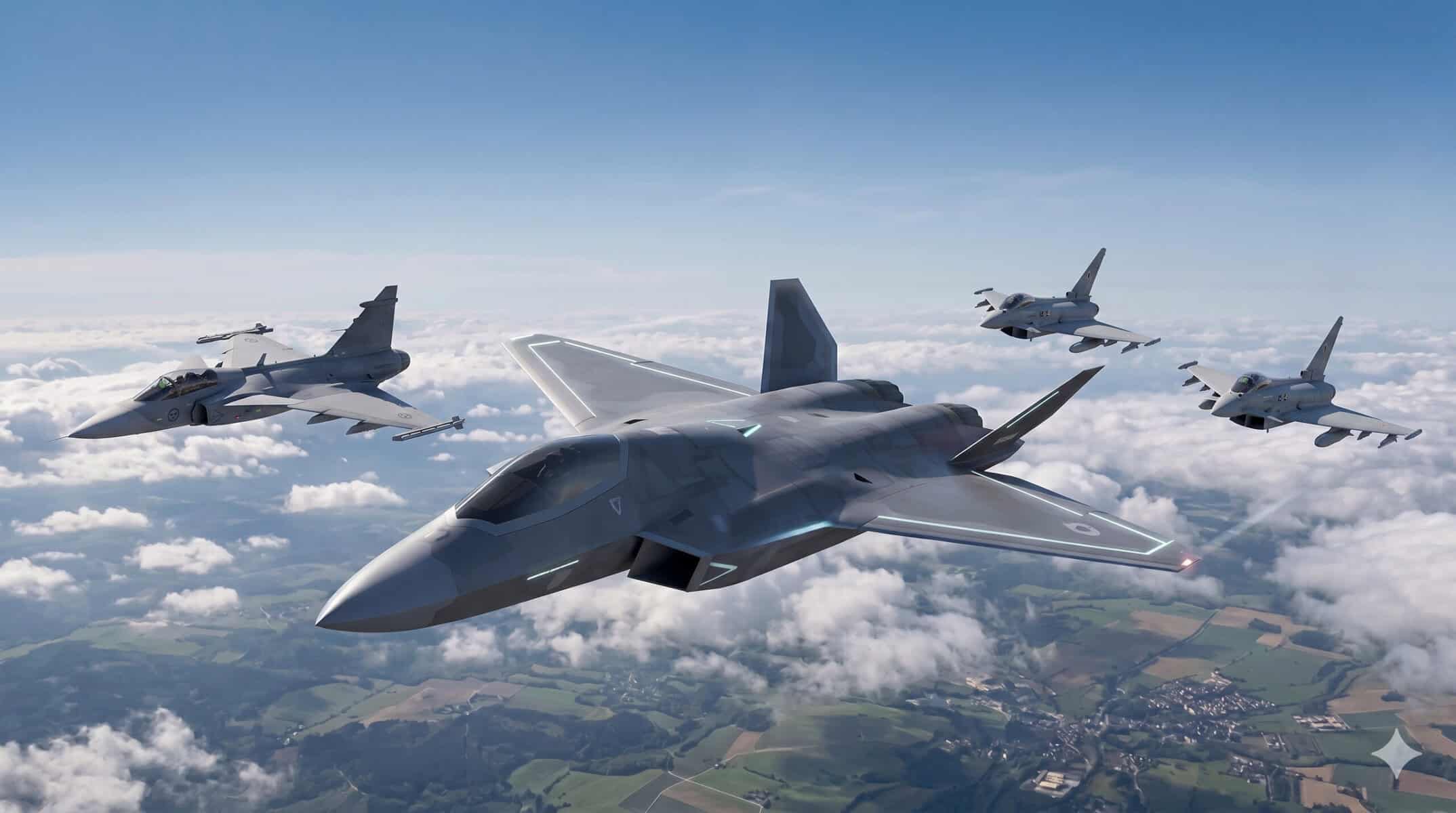
European aircraft manufacturer Airbus is considering deeper cooperation with Swedish company Saab to develop a new sixth-generation fighter aircraft.
Reuters reported on this.
Airbus has intensified contacts with Saab after the FCAS (Future Combat Air System) program, developed by France, Germany and Spain as the foundation of a future European combat air system, encountered critical disagreements and was effectively terminated in June 2026.
At the same time, consultations are ongoing on alternative cooperation formats in Europe, including other international programs, but the Swedish option is currently viewed as one of the most viable.
Closer defense ties between Germany and Sweden have created a favorable environment for industrial cooperation, and Saab, the manufacturer of the Gripen fighter, has relevant expertise in combat aircraft development.

The FCAS project faced prolonged disputes between Airbus and France’s Dassault Aviation over program control, workshare distribution and intellectual property rights.
These disagreements repeatedly blocked progress on the program, despite its strategic importance for European defense.
Amid this, Airbus also announced the creation of a Team Gen 6 alliance with a group of German and Spanish companies to develop a European alternative to the fighter program.
The problems of FCAS stem largely from differing strategic ambitions among participants.

France has traditionally focused on sovereign weapons systems and seeks to maintain a leading role in the project, ensuring control over key decisions, including export policy and the development of specialized versions such as a nuclear-capable and carrier-based aircraft.
Germany, meanwhile, has not pushed for such extensive requirements and views FCAS as a way to acquire a next-generation fighter jet with a more moderate financial commitment. At the same time, Berlin seeks greater influence in the program and is unwilling to cede key leadership roles to Paris.
As a result, governments and industry partners have been unable to agree on a stable balance of responsibility and control. Tensions within the project have increased since 2022, when negotiations over workshare allocation increasingly reached deadlock, delaying key stages of development.
Cooperation with Saab is seen as a more pragmatic alternative to Franco-German defense programs. Stockholm generally avoids large-scale geopolitical defense frameworks and does not insist on a rigid sovereign development model.

This creates a more flexible basis for cooperation, with a focus on cost efficiency and practical system performance rather than political control over the program.
This approach potentially simplifies decision-making, as Sweden and its partners tend to prioritize cost-effective defense solutions and avoid overly complex governance structures. In this context, cooperation with Saab appears more predictable and less conflict-prone than programs such as FCAS.
Meanwhile, experience from Franco-German programs shows that even when strategic goals are aligned, partners often face structural disagreements. Differences in operational requirements, cost expectations, and workshare distribution have repeatedly led to delays or revisions of initial agreements.
France, for its part, has consistently insisted on a leading role in defense programs to maintain control over key technologies and export policy. This has regularly been a source of tension with other European partners seeking a more balanced distribution of influence.
Підтримати нас можна через:
Приват: 5169 3351 0164 7408 PayPal - [email protected] Стати нашим патроном за лінком ⬇
Subscribe to our newsletter
or on ours Telegram
Thank you!!
You are subscribed to our newsletter