


Popular

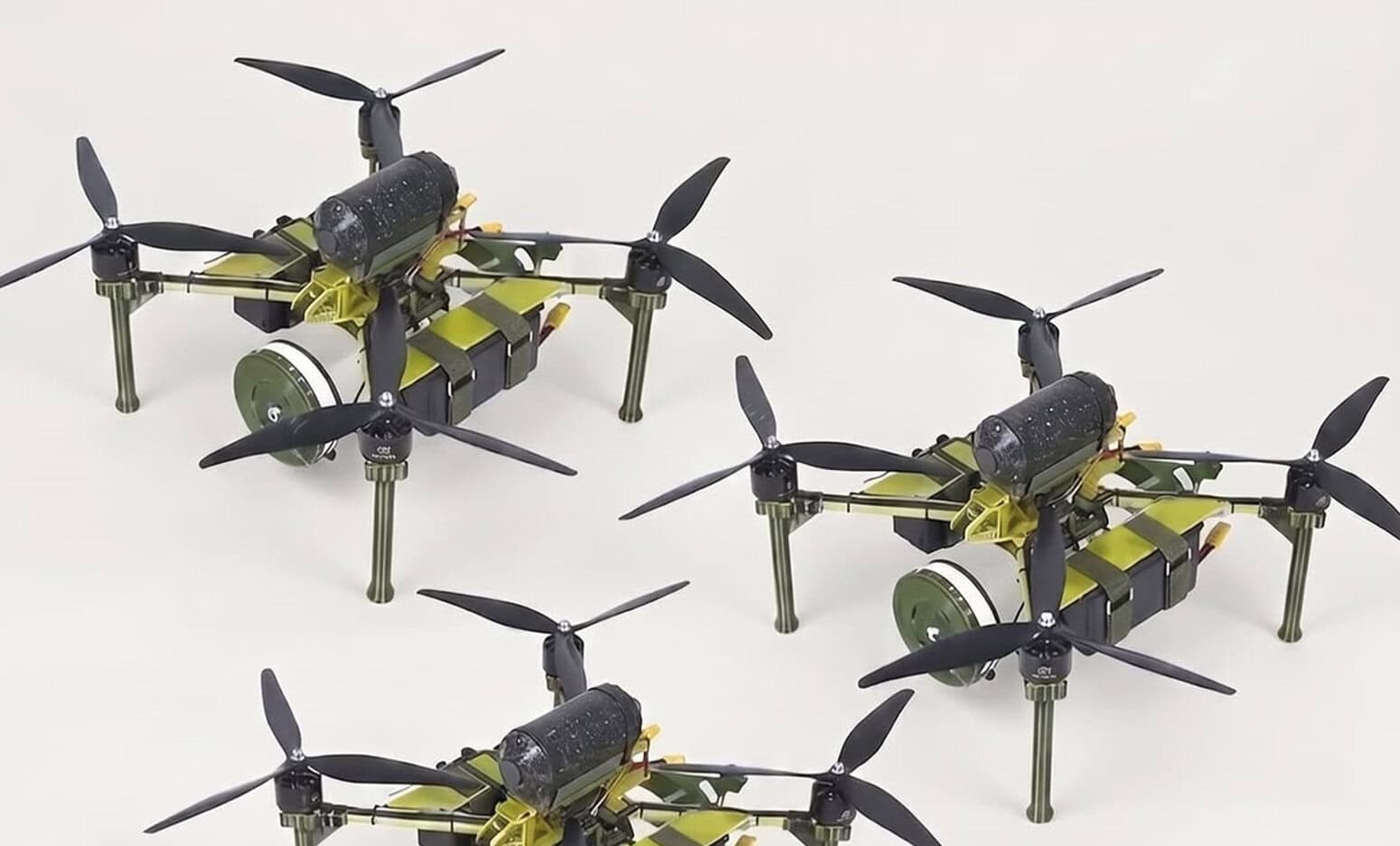
Border guards from the 105th Detachment shot down a Russian Shahed attack drone carrying an R-60 air-to-air missile using a P1-SUN interceptor drone.
The tgp_news Telegram channel published a video of the interception.
Footage from the interceptor drone shows that, unlike previously recorded cases in which the missile was mounted facing forward along the drone’s flight path, this time it was installed facing backward.
This configuration is likely intended to counter Ukrainian helicopters and light aircraft that intercept strike drones.
According to Ukraine’s Defense Intelligence (DIU), Russia has adapted the Soviet-era R-60 air-to-air missile for installation on drones. Its primary role is to target Ukrainian helicopters and aircraft involved in intercepting Russian UAVs.
The missile, mounted on an APU-60-1MD launcher, is attached to a special bracket on the upper forward section of the UAV’s fuselage. This allows the drone not only to conduct strike missions but also to pose a threat to aircraft.

The drone is equipped with two cameras, one in the nose and another behind the launcher. Video and control signals are transmitted via a Chinese Xingkay Tech XK-F358 mesh modem.
The flight controller, navigation system, and inertial units remain standard for other variants of this drone.
A 12-channel Kometa anti-jamming module is used for satellite navigation, allowing operation under active Ukrainian electronic warfare conditions.
The electronics suite includes a British-made Raspberry Pi 4 single-board computer, a tracker, and two GSM modems for transmitting telemetry, providing a stable communications and control link.

After launch, the missile’s infrared homing seeker independently locks onto the target, with a maximum engagement range of 7-10 km.
The first confirmed combat use in Ukraine of R-60 missiles mounted on Russian Shahed-type attack drones was recorded in early December 2025. Since then, air-to-air missiles have repeatedly been found in the wreckage of downed drones, including those fitted with jet engines.
Підтримати нас можна через:
Приват: 5169 3351 0164 7408 PayPal - [email protected] Стати нашим патроном за лінком ⬇
Subscribe to our newsletter
or on ours Telegram
Thank you!!
You are subscribed to our newsletter