




Popular
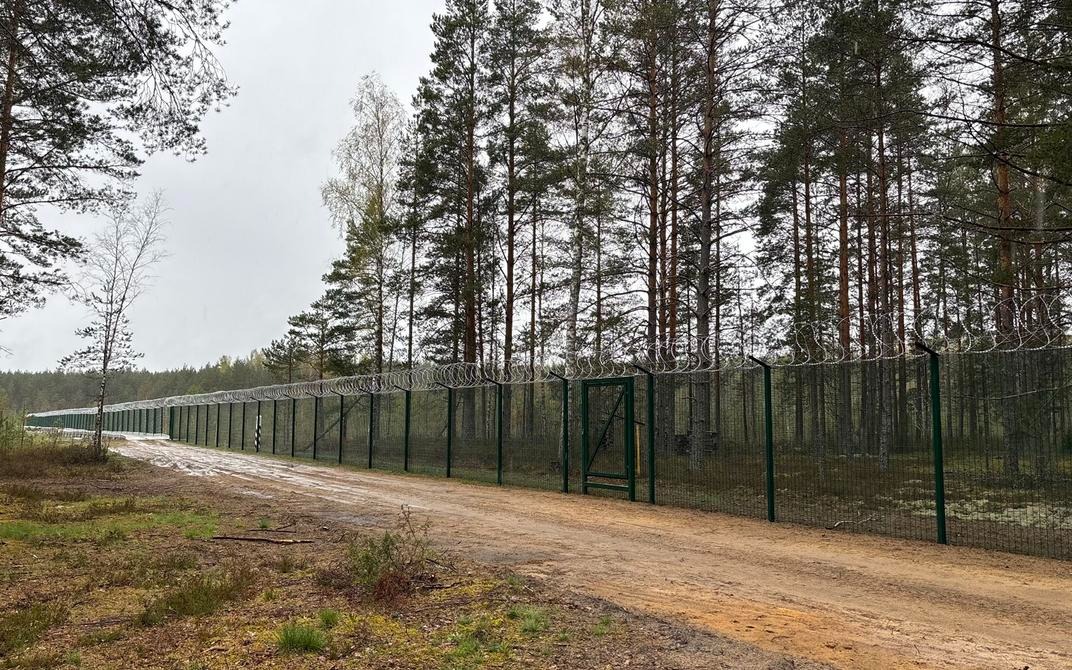
The Estonian Border Guard Board closed the Saatse border crossing on October 10 after border guards observed higher-than-usual Russian military activity on the territory of the Russian Federation.
ERR reported on this.
“Russian border guards regularly patrol the ‘Saatse Boot’ area, as it is their territory. Today, the activity was more intense than usual. We decided to close the road to prevent possible provocations and incidents, as our goal is to ensure the safety of the people of Estonia,” the agency explained.
At first, border guards stationed patrols on both sides of the road, who spoke with drivers and explained that, due to increased Russian activity, it was currently recommended to avoid this section. However, despite the warning, some people ignored the recommendation, so the border guards decided to temporarily close the road “to prevent escalation.”
The Saatse Boot (Saatse saabas) is a uniquely shaped stretch of Russian territory, resembling a boot, that extends into Estonia near the village of Saatse. It belongs to Krupskaya Volost in the Pechorsky District of Russia’s Pskov region and is known for its distinctive geography and unusual position along the border.

The road between the settlements of Värska and Saatse passes through the “Saatse Boot” along a stretch approximately one kilometer long. Drivers and cyclists on the Estonian side are permitted to pass through the Russian section without undergoing border control or obtaining a visa, provided they do not stop until re-entering Estonian territory.
The opportunity to transit through Russian territory is used not only by local residents – this section of road has also become a tourist attraction in the region.
The area known as the “boot” was supposed to be transferred to Estonia in exchange for two parcels of land in the Värska and Meremäe municipalities, according to an agreement signed in 2005 by the foreign ministers of Estonia and Russia. However, the treaty was never ratified. In 2024, Lauri Läänemets, Estonia’s Minister of the Interior, ruled out any territorial exchanges with Russia.
In 2008, a new road connecting Sesniki and Matsuri was opened, allowing access to the mentioned villages without the need to pass through the “boot.” A shorter bypass road, 4.7 kilometers long, is planned for completion in 2026, after which access to the “boot” will be closed off.
In June 2025, due to growing security threats, Estonia started constructing a network of defensive border structures along its eastern frontier.

As part of this project, a 40-kilometer anti-tank trench is planned to be dug along the Estonian-Russian border over the next two years. The engineering work is part of Estonia’s planned Baltic Defense Zone system.
The plan aims to establish a defensive zone along the border with Russia, approximately 100 kilometers long and about 40 kilometers wide from the land border. Additionally, 600 concrete bunkers are to be constructed.
Підтримати нас можна через:
Приват: 5169 3351 0164 7408 PayPal - [email protected] Стати нашим патроном за лінком ⬇
Subscribe to our newsletter
or on ours Telegram
Thank you!!
You are subscribed to our newsletter