






Popular
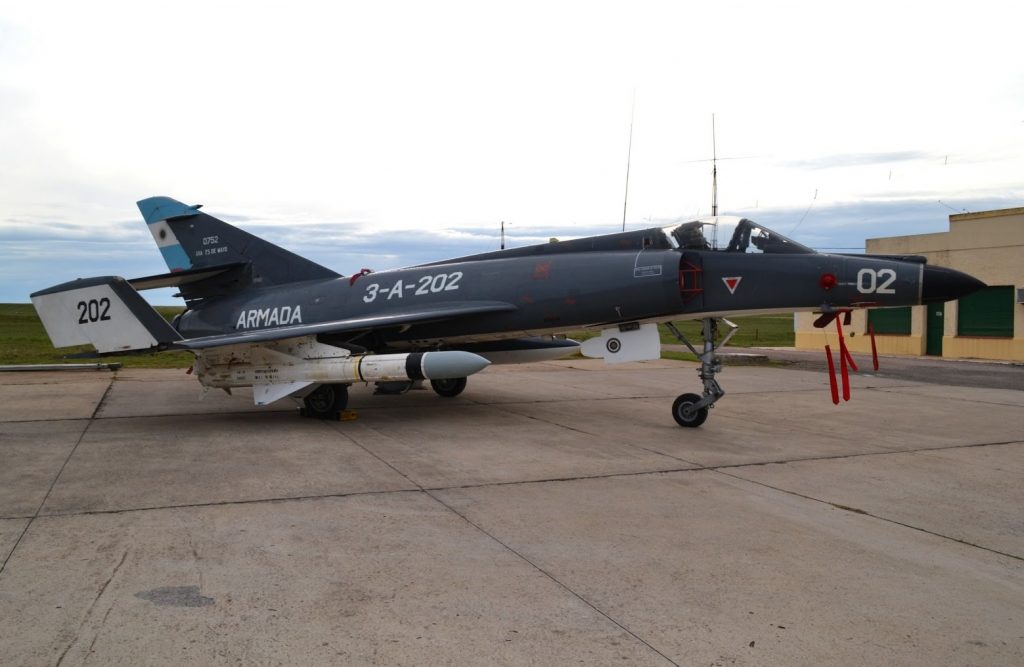
The Argentine Navy will permanently retire its Super Étendard aircraft by the end of 2026 after the jets effectively remained grounded since Argentina received them from France.
Argentine Navy Commander Rear Adm. Román Enrique Olivera announced the decision on August 20.
The main problem was the Martin-Baker ejection seats manufactured in the United Kingdom.
The seats require specialized pyrotechnic cartridges, which Argentina was unable to obtain because of British export restrictions.
Argentina received five modernized Super Étendard Modernisés (SEM) aircraft from France in 2019 under a €14 million agreement.

The package also included spare parts and a flight simulator. However, the Argentine military was never able to return the aircraft to operational flight status.
In 2023, then-Argentine Defense Minister Jorge Taiana decided to remove the Super Étendard aircraft from the naval aviation inventory. The decision was reversed a year later, and authorities attempted to determine whether the aircraft could be restored to service.
In August 2024, then-Navy Commander Adm. Carlos María Allievi said the service planned to conduct test flights after restoring the ejection seats. Argentina’s MBA Argentina SA, a company associated with ejection-seat manufacturer Martin-Baker, was to participate in the work.
However, the Dirección General de Aeronavegabilidad Militar Conjunta (Joint Directorate-General for Military Airworthiness) never authorized the test flights. As a result, the Argentine Navy abandoned further efforts to return the Super Étendard to service. Separately, in June 2024, the Argentine government considered transferring Super Étendard carrier-based attack aircraft to Ukraine capable of carrying anti-ship missiles.

Aircraft of this type, but not the same aircraft Argentina received from France in 2019, played an important role in the Falklands War. Argentina occupied the Falkland Islands in 1982, triggering an armed conflict with the United Kingdom.
Despite their limited numbers, Argentinian Super Étendards were used to attack British ships with Exocet anti-ship missiles and to strike ground targets. The aircraft were not designed for air combat, and their capabilities in this role were further limited by the lack of sufficient air-to-air missiles.
The first successful attack by Argentinian Super Étendards took place May 4, 1982. Two aircraft departed from Río Grande Air Naval Base and received aerial refueling from a KC-130H Hercules before the attack.
The Super Étendards launched two AM.39 Exocet missiles at the British destroyer HMS Sheffield. One missile missed, while the other struck the ship and started a major fire. The crew was unable to contain the fire, and the command later ordered the crew to abandon the ship. HMS Sheffield subsequently sank.
The second notable Super Étendard attack took place May 25. Two aircraft again departed from Río Grande Air Naval Base and each launched two AM.39 Exocet missiles at a British naval group. The pilots intended to strike one of the British aircraft carriers, HMS Hermes or HMS Invincible. However, the missiles locked onto another large target, the container ship Atlantic Conveyor, which was near the carriers. Both missiles struck the vessel and started a major fire that ultimately caused it to sink.
Overall, Argentinian Super Étendards conducted five combat sorties in pairs during the war.
Підтримати нас можна через:
Приват: 5169 3351 0164 7408 PayPal - [email protected] Стати нашим патроном за лінком ⬇
Subscribe to our newsletter
or on ours Telegram
Thank you!!
You are subscribed to our newsletter