


Popular
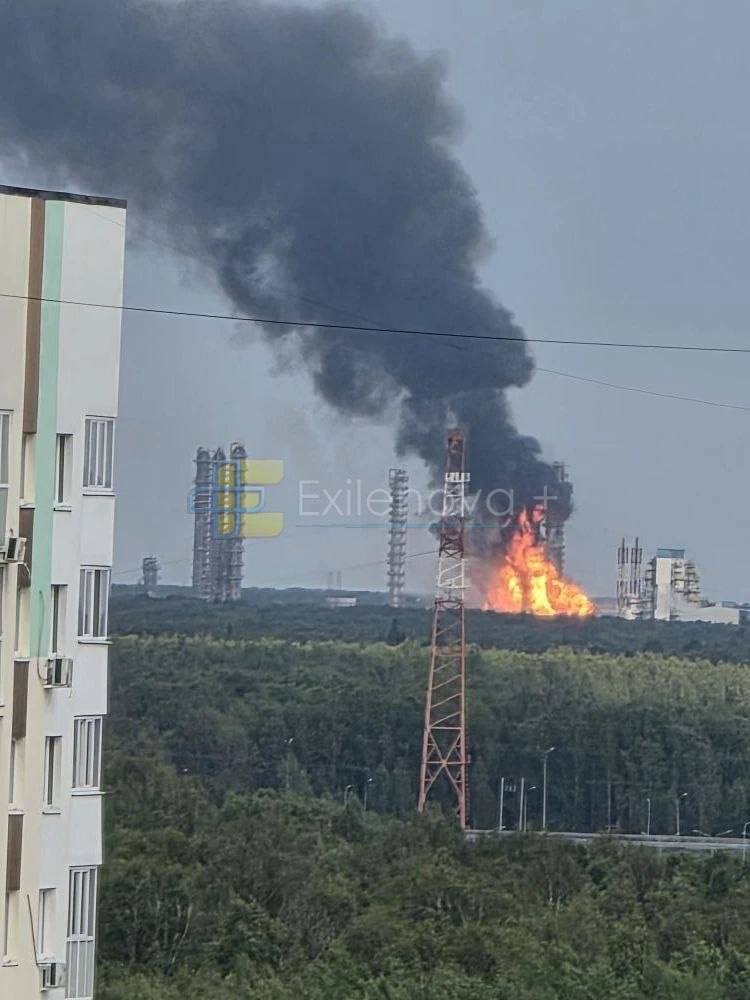
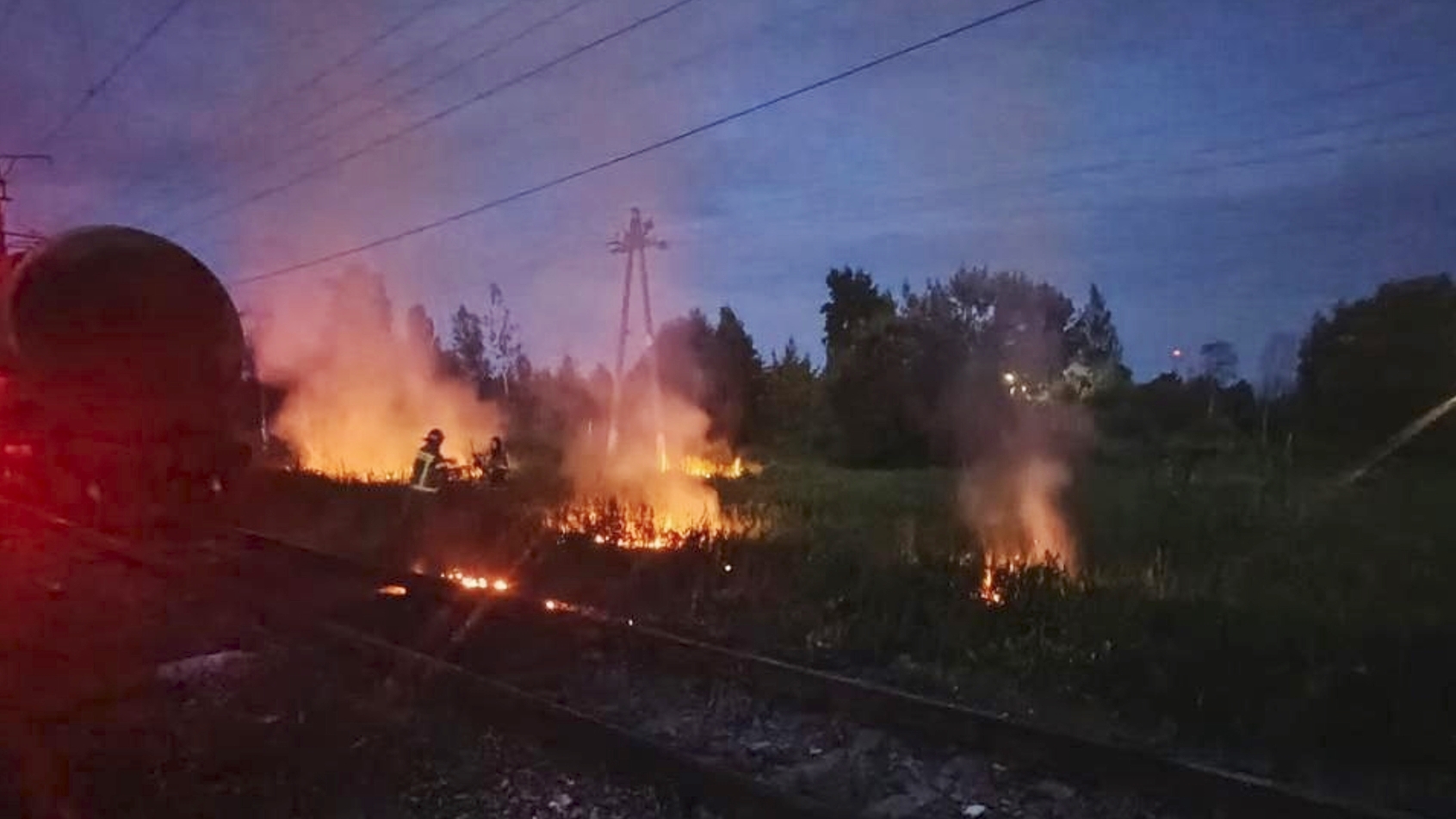
The ZapSibNeftekhim petrochemical facility in Tobolsk, the Tyumen region, Russia, has halted operations following a strike by Ukrainian drones.
Reuters reported this on Tuesday, August 11, citing industry sources.
One source said the facility, which is Russia’s largest plant for producing liquefied petroleum gas, had been shut down indefinitely “while the extent of the damage and its consequences are being assessed.”
On Tuesday, no volumes of liquefied gas designated for delivery from the Tobolsk loading terminal were offered on the St. Petersburg International Mercantile Exchange.
Earlier this year, around 4,000 metric tons of technical propane-butane mixture were sold through the terminal each day.
The Ukrainian Defense Forces struck ZapSibNeftekhim on August 10. The petrochemical facility is located more than 2,200 kilometers from the front line. The facility is owned by SIBUR.
According to an OSINT analysis by Militarnyi, the attack targeted the facility’s central gas fractionation unit.
It is the first stage in the production chain of ZapSibNeftekhim. The unit processes a broad fraction of light hydrocarbons obtained from the processing of associated petroleum gas and gas condensate.
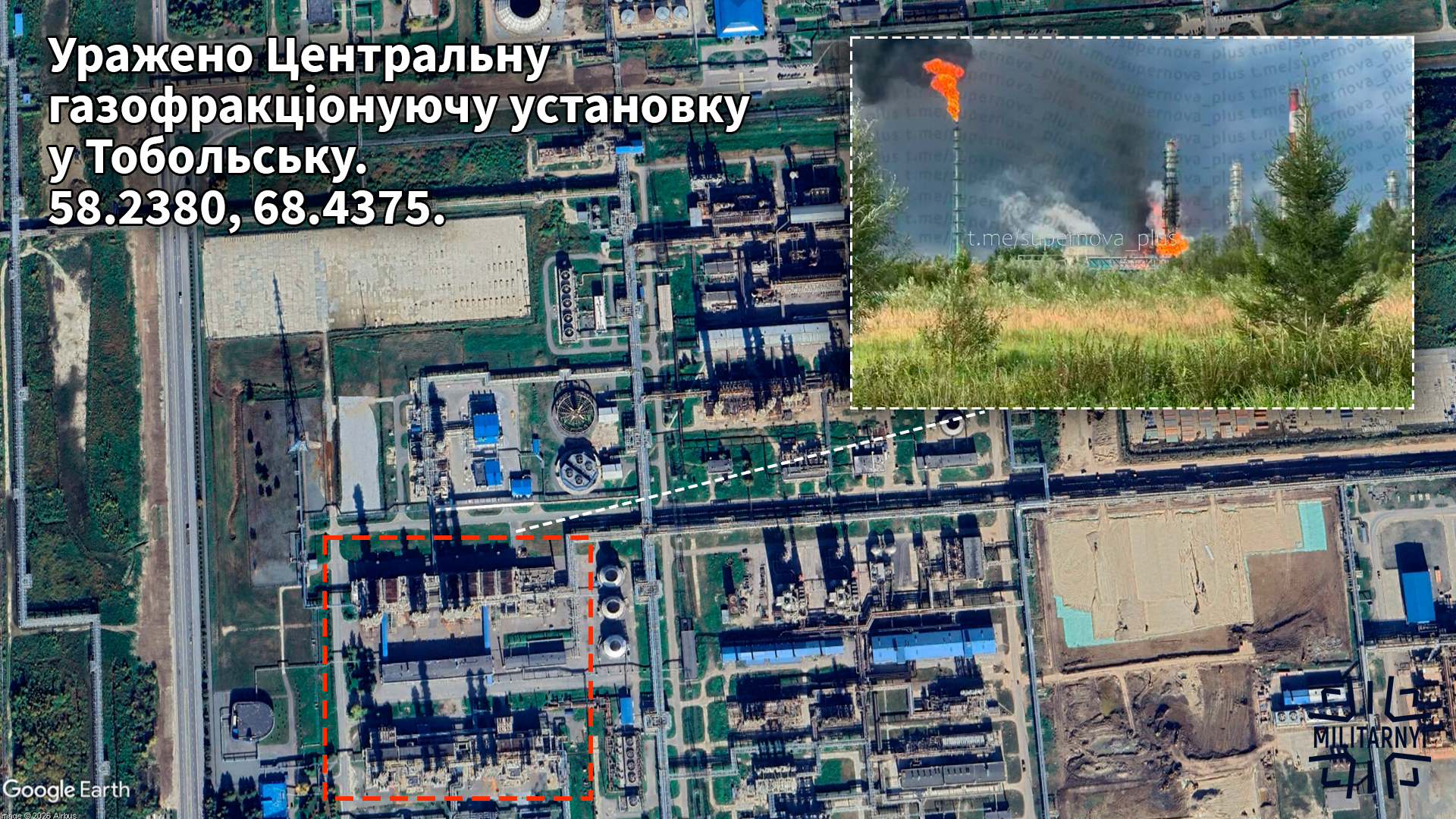
The ZapSibNeftekhim petrochemical facility produces around six million metric tons of liquefied petroleum gas (LPG) annually, accounting for approximately 40% of Russia’s total LPG production.
About half of the gas produced by the facility is used as feedstock for petrochemical production at SIBUR’s facility in Tobolsk.
It is known that SIBUR, the parent company, had contracts to supply feedstock to Russian defense-industry enterprises. These included the Kamensky Combine, which produces solid rocket propellant, solid-fuel charges, and rocket engines used in the Grad, Smerch, and Uragan multiple rocket launchers.
SIBUR is also known to have supplied feedstock to the Perm Powder Plant, which produces propellant charges for multiple rocket launcher systems and air-defense systems, engine charges for aircraft missiles, launch and boost systems for cruise missiles, and spherical gunpowders for small arms.
The company’s products were also supplied to explosives manufacturers, including the Sverdlov Plant and the Biysk Oleum Plant.
Підтримати нас можна через:
Приват: 5169 3351 0164 7408 PayPal - [email protected] Стати нашим патроном за лінком ⬇
Subscribe to our newsletter
or on ours Telegram
Thank you!!
You are subscribed to our newsletter