

Ukraine’s new loitering munition will hit ground and air targets

Oleksandr Yan


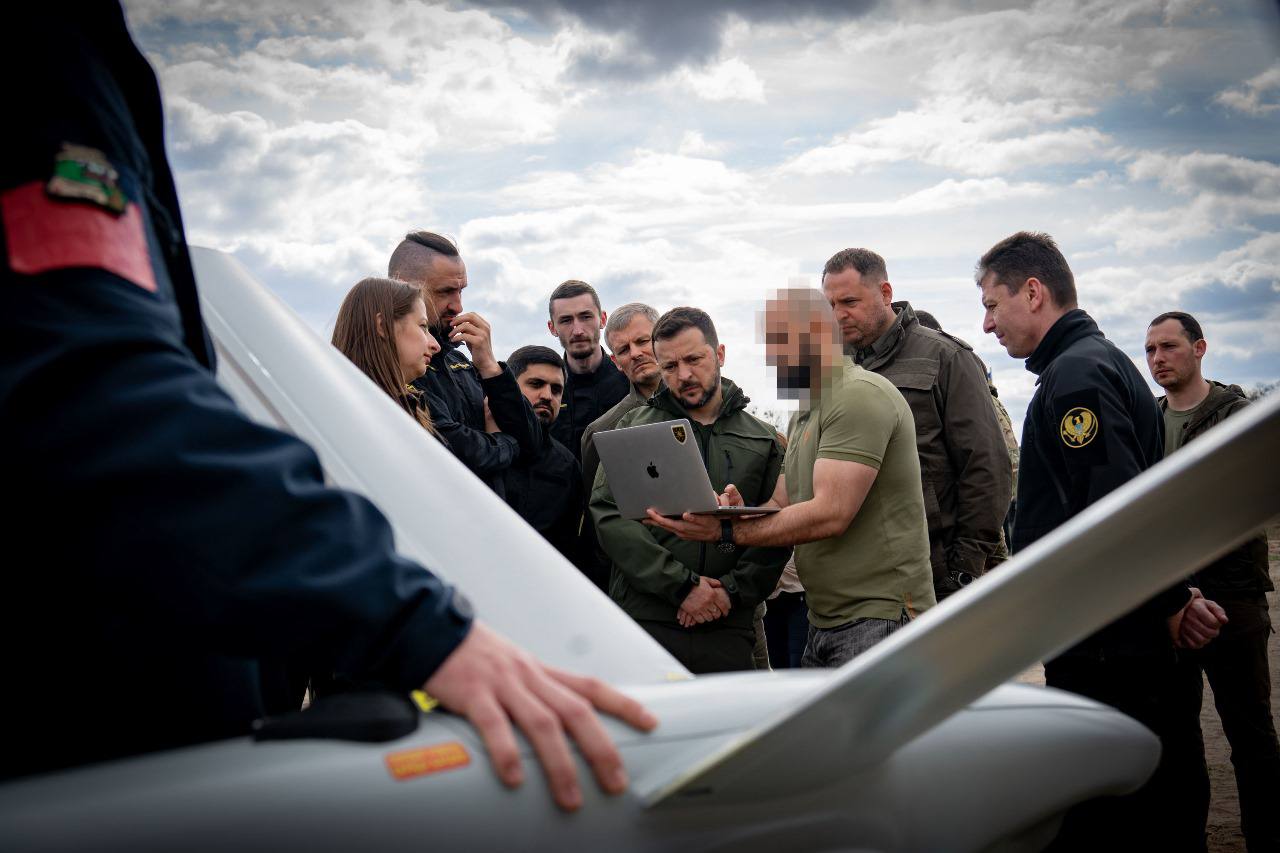
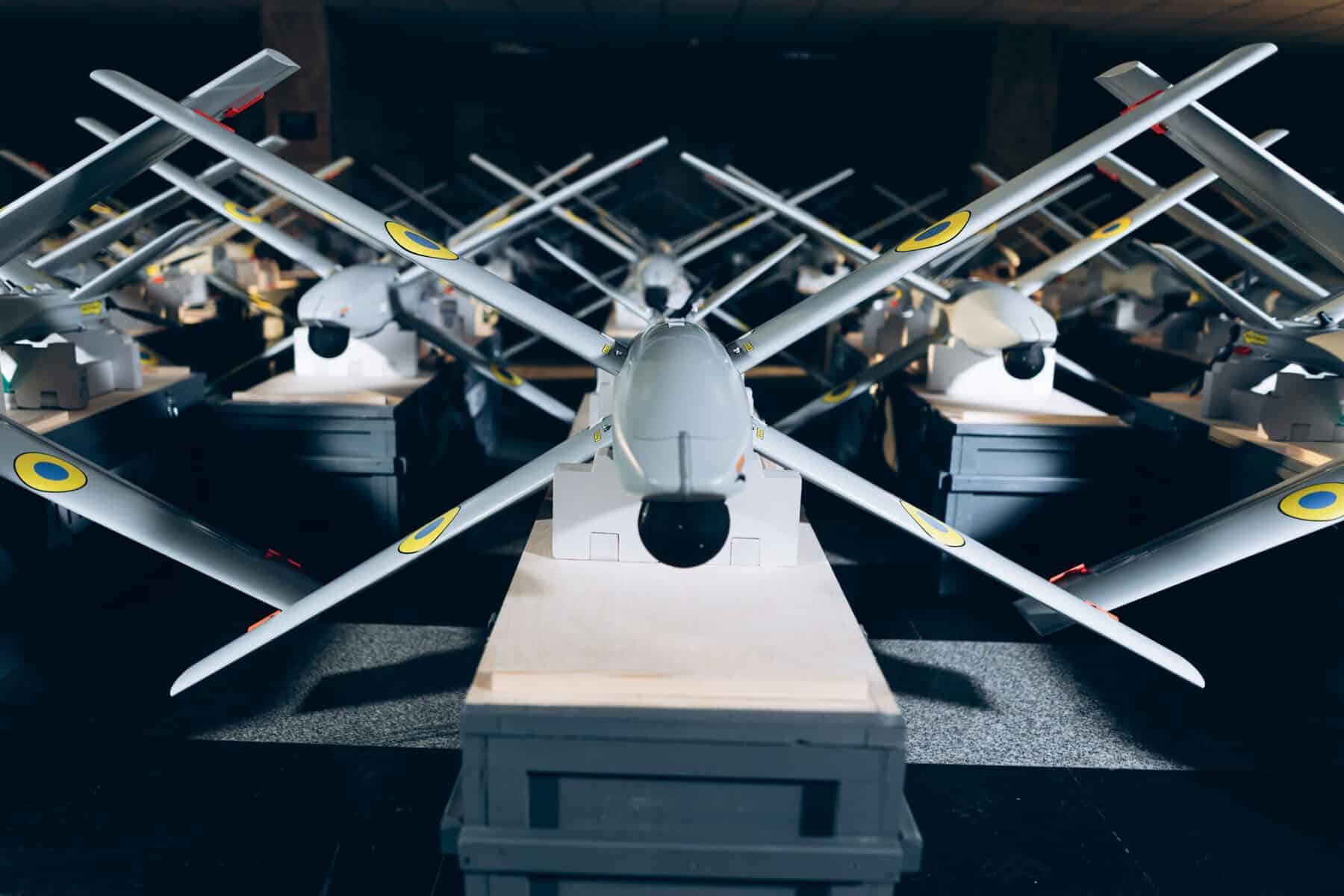
On the Defense and Industrial Complex Employee Day, President Volodymyr Zelenskyi was presented with a new model of loitering munition that will be able to strike targets at an operational and tactical depth of 100+ kilometers.
The drone, whose name is still being kept secret, is already being used on the front line against the Russian occupiers and has won its first victories, successfully destroying, among other things, a Russian anti-aircraft missile system.
In the future, the new development should become a mean of defeating targets both on the ground and in the sky due to its speed and powerful warhead.
By hunting down enemy reconnaissance drones that direct Russian air and missile strikes on the Ukrainian rear and front lines, it will be able to reduce the strike potential of Russian troops.
What can this drone do?
Ukraine’s new barrage munition is intended to fill the same niche as Russia’s Lancet, delivering precision strikes against important military equipment at a great distance from the front line.
Like most drones, it is electrically powered and catapult-launched, making it easy to operate.
The new X-shaped wings provide the drone with high maneuverability and the ability to engage static and moving targets along various trajectories. In particular, it is able to enter the target at a right angle.
Depending on the selected target, the drone can be equipped with a warhead weighing up to 3 kilograms. It is available in different versions: fragmentation, thermobaric, or armor-piercing with a warhead. The latter can pierce up to 40 mm of armor and cause serious damage to vehicles, creating a large number of secondary fragments when the hull is “broken”.
To intercept air targets, the drone will be equipped with a fragmentation warhead, which will be initiated upon collision with an object or upon approaching it by a signal from the operator’s console. The blast wave and the stream of debris should destroy the fuselage of the enemy reconnaissance drone and thus shoot it down.
What targets can this drone shoot down? The maximum speed of the drone does not exceed 180 km/h, so its main victims may be objects moving slower than 130 km/h. In fact, we are talking about Russian Orlan-10, Zala, and Lancet, although theoretically, these could be hovering or flying on opposite courses.

An important element of Ukraine’s new strike system is a relay drone that works in conjunction with a loitering munition. It performs tasks of finding the target, tracking it while waiting for the strike drone, and monitoring the effects of a strike objectively.
Thanks to the repeater, the barrage munition can operate over long distances and with good communication. Using it, the operator can bypass the “radio horizon” phenomenon and not lose video signal and control over the drone until it hits the target.
All the drones of the complex are equipped with highly reliable encrypted communication modules (AES256 standard), which allows them to operate in conditions of active electronic warfare suppression.
Another important innovation for the strike system is the integration of a machine vision system that provides object capture and automatic targeting. This technology is already being actively used by the Ukrainian military to engage targets even in areas where powerful electronic warfare systems are operating.
Today, the unmanned system is undergoing refinement. It is being tested in the conditions of constant launches and use in the combat zone, where the drone has already successfully destroyed enemy equipment.
The cost of one such unmanned aircraft is not disclosed, but according to the developers, it is comparable to the cost of most Ukrainian tactical drones.


Xi Jinping’s Washington Visit Outlines the Timeframe for the Active Phase of the Confrontation: Beijing Openly Demands Taiwan’s Return
On September 23–25, 2026, Chinese President Xi Jinping held talks with President Trump at the White House during the first Chinese state visit to t...

Netanyahu’s Visit to Abu Dhabi: Israel Builds Partnerships from a Position of Strength, but the Middle East Conflict Is Eroding the Edge of Its Weapons
On September 27, 2026, Israeli Prime Minister Benjamin Netanyahu traveled to Abu Dhabi with the head of Mossad and the head of the National Securit...

Big Tech Pushes the White House Toward Global De-escalation: The Stance of Tech Capital Shapes the Terms for a Deal Between Trump, Putin, and Xi Jinping
As of October 14, 2026, political advertising expenditures in the current U.S. election cycle, including reserved airtime, had exceeded $10 billion...
