


Popular
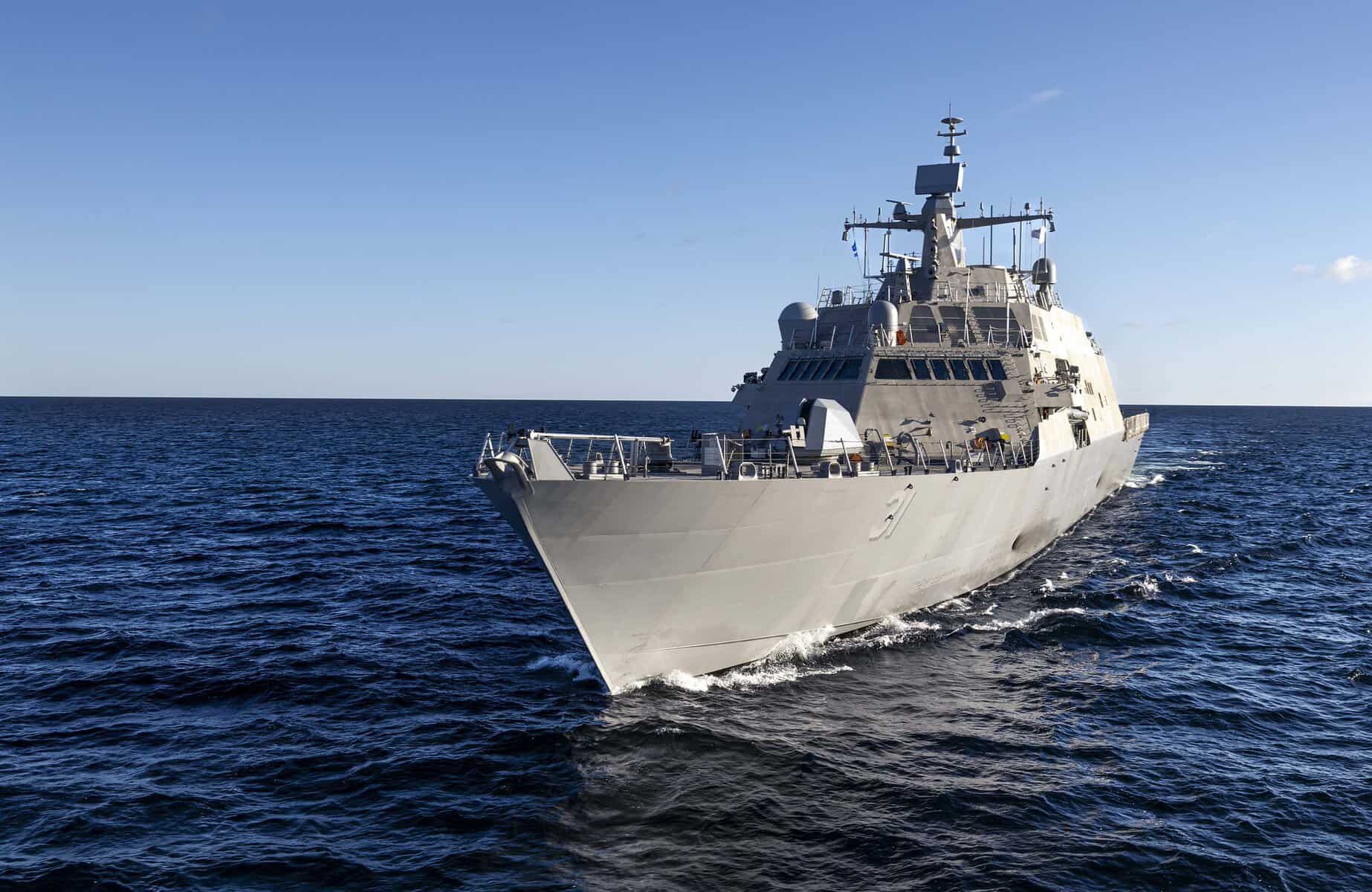
The US Navy has officially commissioned the USS Cleveland, the final Freedom-class littoral combat ship.
This was announced in a US Navy press release.
The ship is the fourth in US Navy history to be named after the city of Cleveland.
Previously, the name was used for an armored cruiser in service from 1903 to 1929, a light cruiser during World War II, and an amphibious dock ship decommissioned in 2011.
With the commissioning of USS Cleveland, 11 Freedom-class littoral combat ships remain in service. The oldest is USS Fort Worth, which entered service in September 2012.

Freedom-class littoral combat ships, particularly early versions, have been affected by a series of engine and propulsion system problems.
In December 2015, USS Milwaukee suffered a failure in the Atlantic Ocean and was forced to return to port under tow. Metal shavings were found in the filtration system during inspection.
The failure was linked to a coupling between the gas turbine and diesel power plants that did not disengage during the transition between propulsion modes.
A similar incident happened with USS Fort Worth in the Pacific Ocean in January 2016. The cause was crew maintenance errors, with propulsion transmission systems operating with insufficient lubrication.
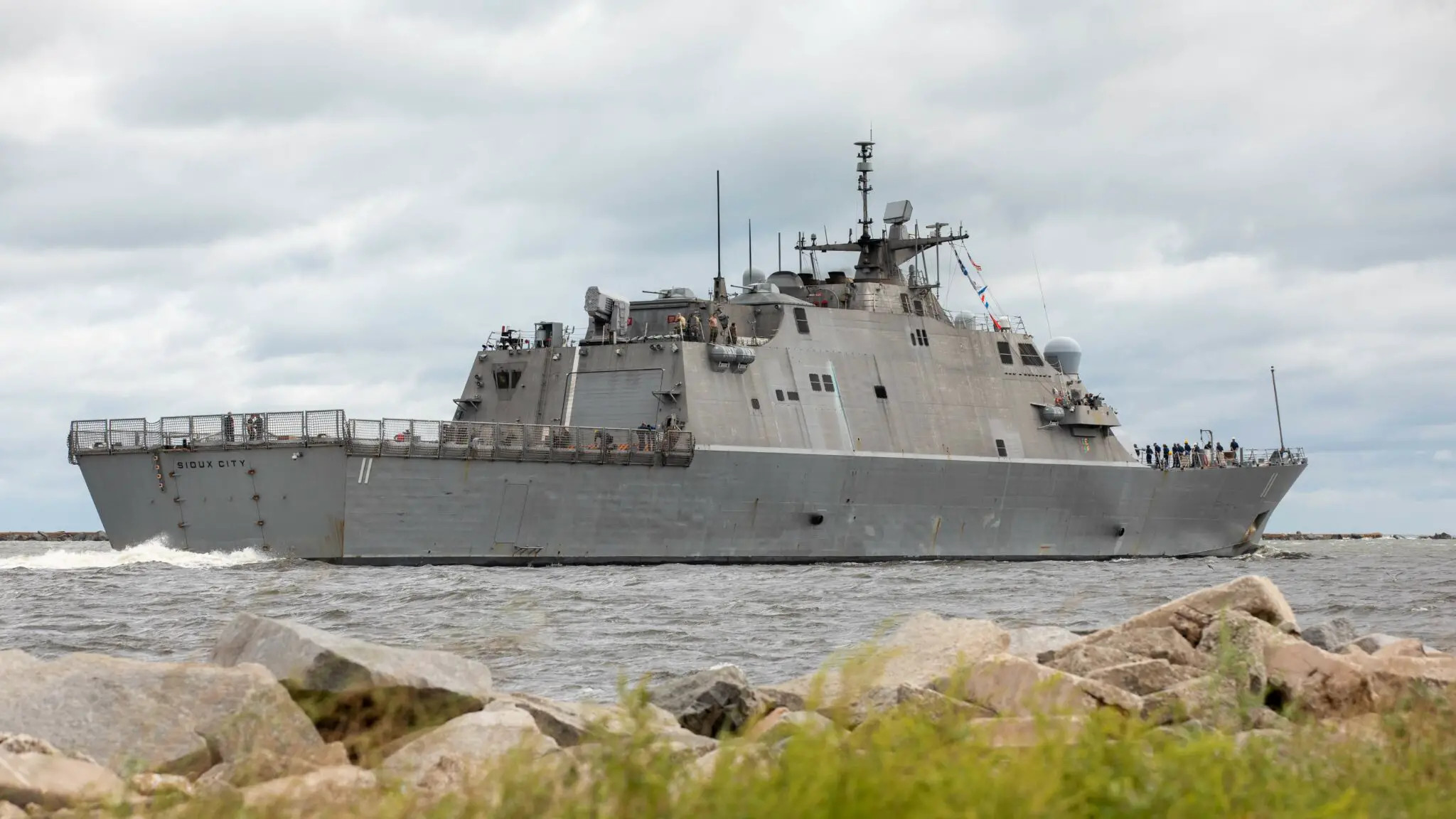
In July 2016, USS Freedom was found to be leaking seawater into one of its two main diesel power plants. Similar issues were also identified on USS Detroit.
At the end of 2020, it was reported that all ships of the class had a design defect in the gearbox that is effectively impossible to fully correct.
The issue involved clutch bearings that could not withstand operational loads and failed during main engine operation.
A temporary workaround was to avoid using the main propulsion system. In this configuration, the ships’ maximum speed was reduced to about 12 knots.
It was previously reported that the US Navy leadership plans to sell Freedom-class littoral combat ships to other countries.
Freedom-class littoral combat ships were designed for operations in coastal waters, including surface warfare, anti-submarine warfare, and mine countermeasures. The program was developed as a modular high-speed platform capable of rapidly changing mission packages.
The ships have a steel hull with an aluminum superstructure. Full displacement is about 3,500 tons, length about 118 meters, and beam over 17 meters.
A key feature of the Freedom class is high speed. With a combined diesel-gas turbine propulsion system and waterjet propulsion, the ships can exceed speeds of 40 knots.
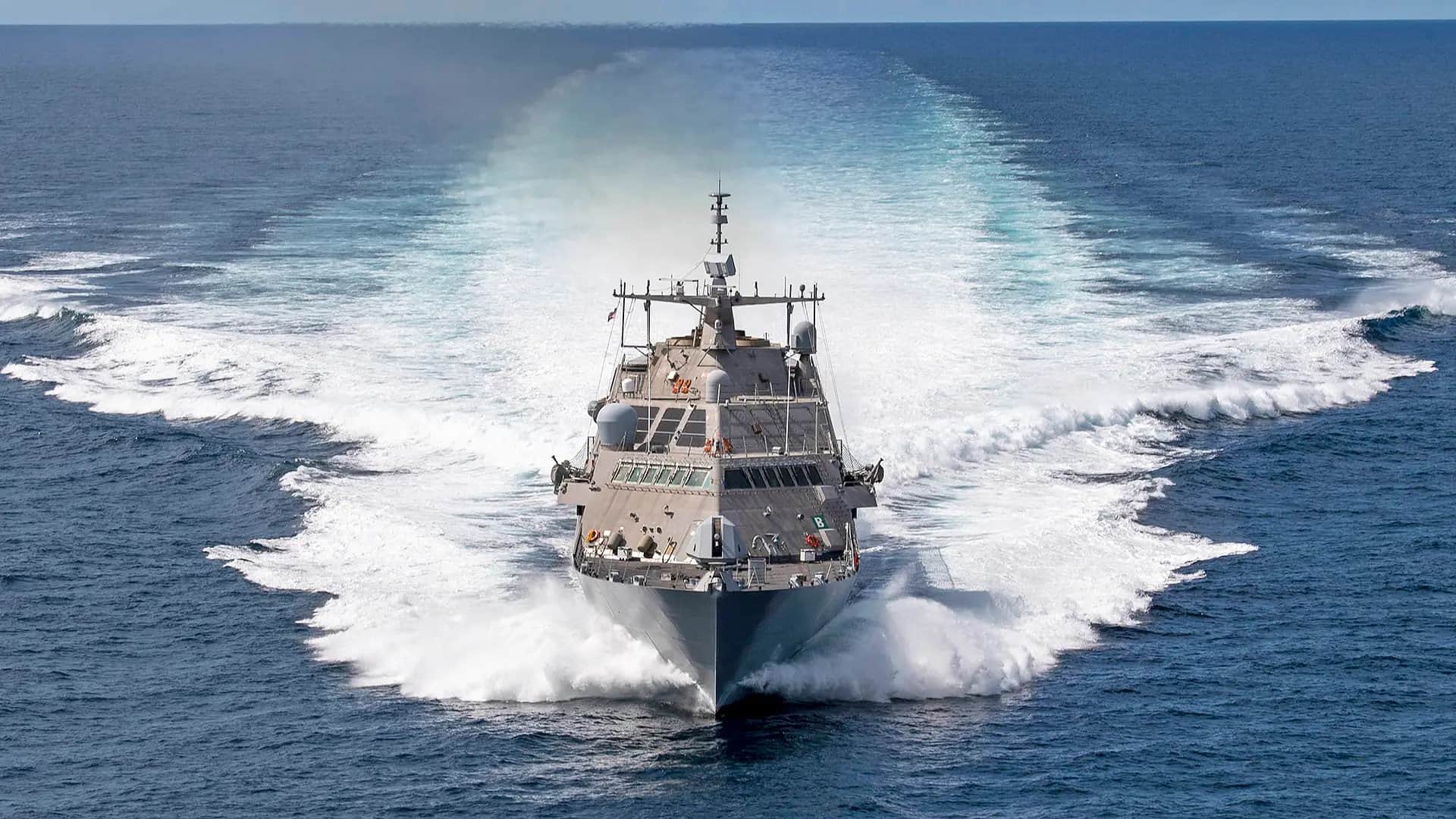
The crew is relatively small, about 50 core sailors, but with the aviation detachment and mission specialists, it can exceed 70 personnel.
The basic armament includes a 57 mm Mk 110 naval gun, a RAM surface-to-air missile system for self-defense, heavy machine guns, and small-caliber autocannons.
The ships also feature a hangar and flight deck for MH-60 Seahawk helicopters and unmanned aerial systems. Aviation capability is a key element of their operational concept.
Підтримати нас можна через:
Приват: 5169 3351 0164 7408 PayPal - [email protected] Стати нашим патроном за лінком ⬇
Subscribe to our newsletter
or on ours Telegram
Thank you!!
You are subscribed to our newsletter