

Popular
Since Ukrainian arms exports began in October of last year, the country’s defense industry has secured up to 10 small export contracts.
Ihor Fedirko, head of the Ukrainian Council of Defence Industry, reported this.
He noted that in February, the first permits were issued, marking the start of exports. On July 1, the government adopted Resolution No. 875, establishing a special simplified mechanism for exporting military equipment during martial law.
Fedirko noted that, during this time, the entire private sector has secured up to 10 small export contracts. However, only one joint venture abroad is actually operating. No permit has been issued under the new Resolution No. 875.
Overall, the resolution includes several positive provisions: application review within 30 days, a simplified procedure for partner countries, and the possibility of technology transfer. However, according to Fedirko, its key conditions make exporting either unprofitable or too risky for manufacturers.

“During the entire process, I was invited to only one meeting on the document, back in the spring. I was practically the only representative of industry associations there. I took on the task of collecting market feedback. We gathered and submitted our suggested amendments, but the resolution was presented, adopted, and implemented without any meaningful dialogue with industry. The final text did not consider the market’s key proposals at all,” he said.
The head of the Ukrainian Council of Defence Industry named five main problems of the resolution:
The fee amounts to 20% of the value of finished products and technologies and 30% of the cost of components. It must be paid before the application is even reviewed, and there is no clear mechanism for refunds in the event of a rejection.
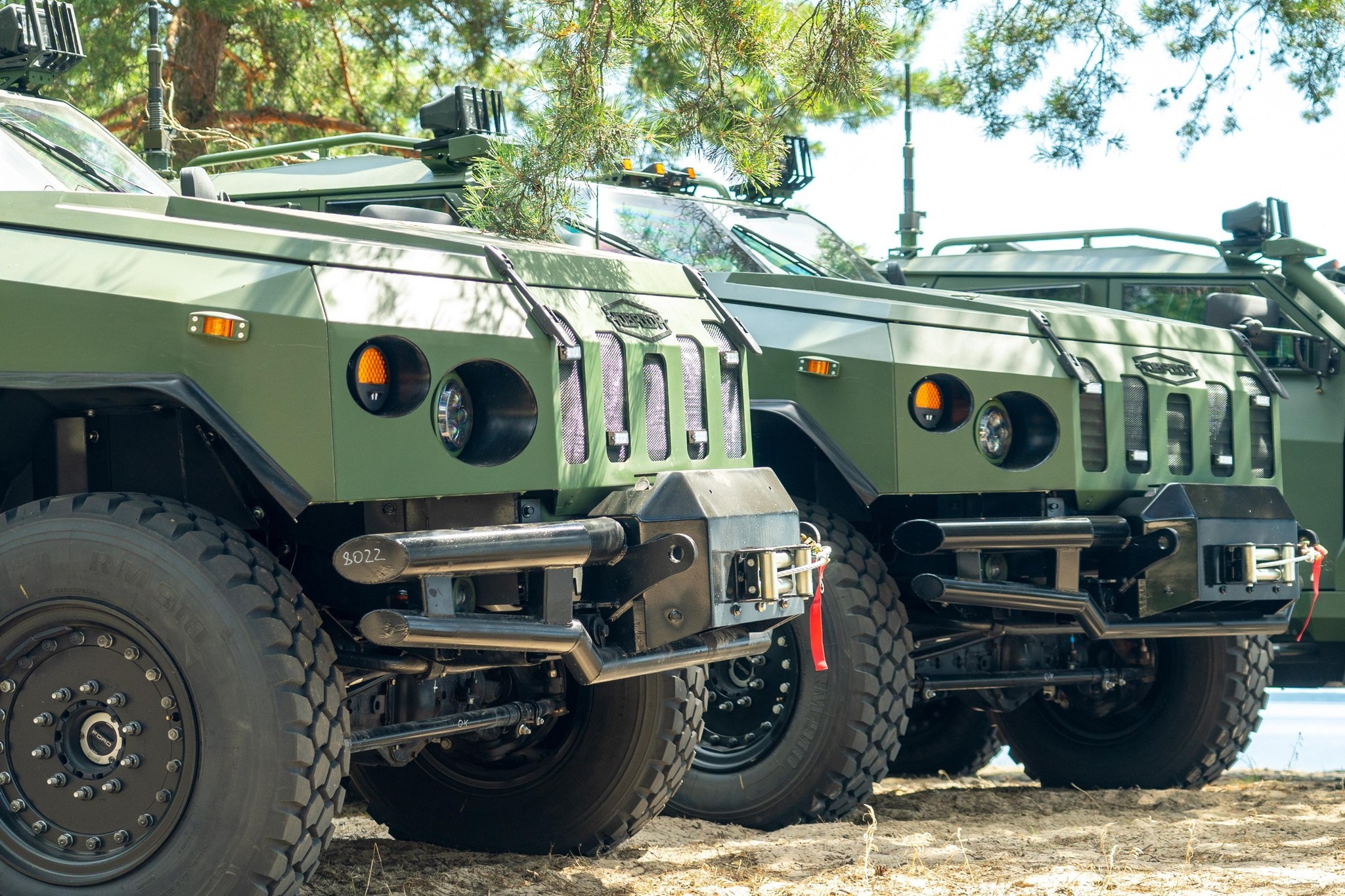
The same rates apply across product types. For weapons, particularly armored vehicles, even a 20% fee makes Ukrainian offerings uncompetitive. For dual-use products, such as engines and thermal imaging cameras, the automatic 30% rate also fails to account for their intended use and scope of application.
It is proposed to lower the rates and introduce a differentiated model that accounts for the product type and intended use, as well as competition in the international market.
The application must include proof of full payment, meaning the manufacturer must pay the fee before the government decides whether to grant the export authorization.
If the application is rejected, there is no clear mechanism for a refund. It would be advisable to provide for a refund or introduce a phased payment system, with part of the fee paid when the application is submitted and the remainder after a favorable decision.

The special procedure applies to exports worth ₴15 million or more, except for components and parts. As a result, the procedure excludes small test and demonstration batches.
Foreign customers usually begin cooperation with such trial batches rather than large production runs. We propose eliminating the threshold for pilot, demonstration, and test shipments.
The intention of the Ministry of Defence or another state customer to purchase the product may be grounds for denying an export authorization or suspending it for up to 30 days.
The priority of the Ukrainian military’s needs is indisputable. However, if the government blocks exports, it must be prepared to purchase these products. Foreign customers are under no obligation to wait, so the manufacturer risks losing the contract.
Such an intention should specify quantities and timelines, include confirmed funding, and include a commitment to sign a contract. Without these elements, it should not constitute sufficient grounds for denying an export authorization.
The resolution allows only the minimum training required to use exported products but does not establish a comprehensive mechanism for exporting services.
Service and technical maintenance, operator training, services provided by accredited UAV schools and certified humanitarian demining operators are not subject to the special procedure.
According to Fedirko, Ukrainian industrialists are proposing to extend a special procedure to the independent export of certified and accredited services.
“This is the position of the Ukrainian Council of Defence Industry, together with our colleagues from the Tech Force in UA, NAUDI, the Federation of Employers of Ukraine, and UADUT,” the post states.
At the same time, the Ministry of Defence began reaching out to industry associations and listening to manufacturers. The Ministry is expected to present the changes by early September.
Підтримати нас можна через:
Приват: 5169 3351 0164 7408 PayPal - [email protected] Стати нашим патроном за лінком ⬇
Subscribe to our newsletter
or on ours Telegram
Thank you!!
You are subscribed to our newsletter