


Popular
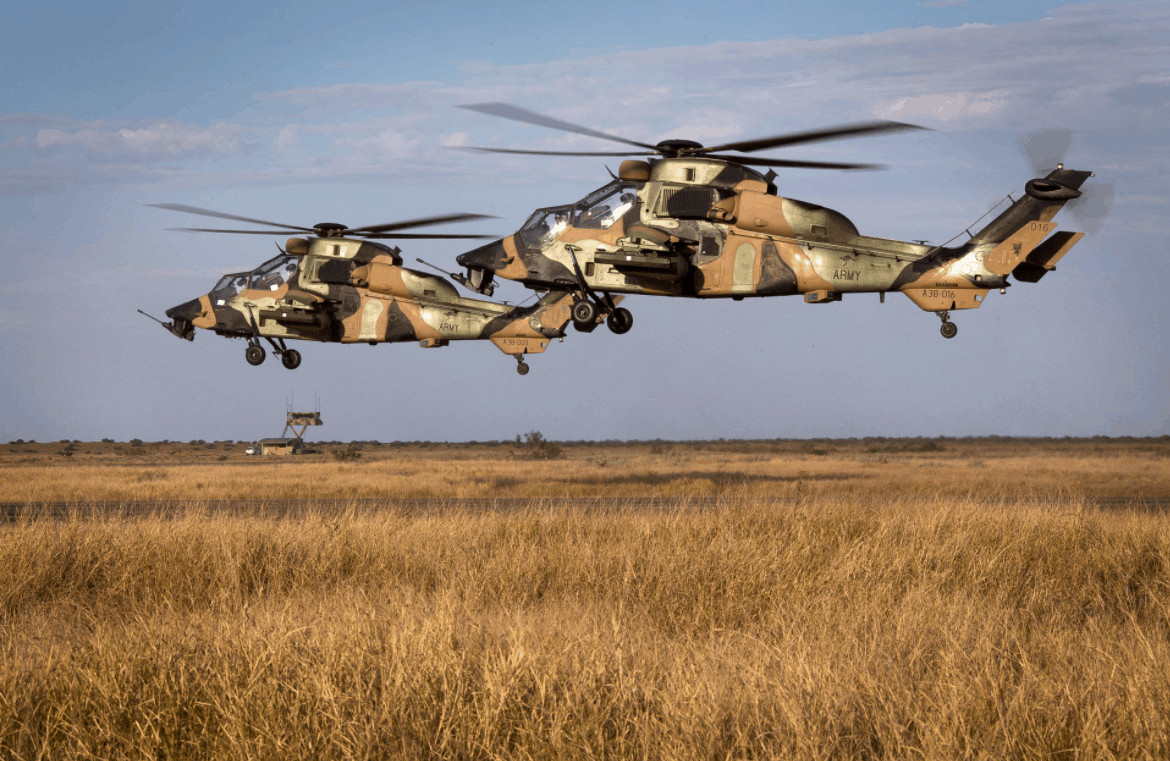
Ukraine has withdrawn its request for Eurocopter Tiger attack helicopters that Australia is currently retiring as it transitions to U.S. AH-64E Apache helicopters.
Vasyl Myroshnychenko, Ukrainian Ambassador to Australia, shared this news with Militarnyi.
Ukraine submitted a request for the helicopters in 2024, and substantive consideration of it began in 2025. According to the Ambassador, Australia was ready to transfer the aircraft, but after assessing the advantages and challenges of operating them, Ukraine decided to abandon the option. The request was withdrawn in early 2026.
The Ambassador noted that one factor was the U.S.-made equipment installed on the Australian Tigers, which is subject to ITAR export control rules. Its transfer to a third country would have required U.S. approval, while removing some of this equipment could have significantly limited the helicopters’ combat capabilities.
Another factor was the cost of keeping the helicopters operational and the limited number of operators of the type. After Australia retired the helicopters, the main operators of the Tiger family are France, Germany, and Spain.

For Ukraine, this would have meant establishing a separate training system for pilots and technical personnel, building up spare-parts stocks, and maintaining a relatively small helicopter type whose global fleet is gradually shrinking.
The Australian Army has a fleet of 22 ARH Tigers, which have been in service since 2004. They were initially planned to remain in service until about 2027-2028, but the transition to a new helicopter type accelerated their retirement.
Ukraine’s interest in the helicopters became publicly known in summer 2024. After the Australian government blocked the transfer of MRH-90 Taipan transport helicopters to Ukraine, Ukraine started discussing the possibility of receiving ARH Tigers.
In October 2024, the issue of a possible transfer was raised directly with the Australian government. Then-Defense Industry Minister Pat Conroy said Australia was developing a plan for the Tigers’ future while also discussing Ukraine’s needs with Kyiv.

An Australian Senate committee later supported the possible transfer, recommending that the government consider transferring the Tigers being retired to Ukraine along with other military equipment. In its response, the government said it had not yet approved a final plan for disposing of or transferring the helicopters and that a free-of-charge transfer remained among the options under consideration.
At the same time, Australia accelerated the Tigers’ retirement. On September 23, 2026, the country’s Department of Defense announced that the helicopters had completed flight operations in Darwin. Australia is replacing them with 29 AH-64E Apaches, the first of which it received in October 2025.
The Tiger was developed in the 1980s as a joint French-German attack helicopter. The first prototype flew in 1991. Australia ordered 22 helicopters in 2001. The procurement contract was valued at AUD 1.1 billion at the time.
The Australian variant was designated ARH — Armed Reconnaissance Helicopter — and was based on the French Tiger HAP, with a number of changes to its onboard equipment and armament.

The helicopter has a two-person crew. The Australian ARH Tiger is armed with a 30 mm movable cannon, 70 mm unguided rockets and AGM-114 Hellfire II anti-tank guided missiles. The aircraft is also equipped with an electro-optical system for detecting, tracking and designating targets.
Operational complexity itself became one of the main problems with the Australian program. In 2016, the Australian National Audit Office found that the Tiger achieved full operational capability about seven years later than originally planned.
At the time, auditors also identified 76 capability deficiencies, 60 of which the Australian Defense Department classified as critical.
The fleet’s technical availability was also problematic: in 2015, an average of only 3.5 of the 16 operational helicopters were serviceable at any given time, against a target of 12. The audit cited premature component failures and problems with the maintenance support system among the causes.
Operating costs were also high. As of June 2016, maintaining the Tigers cost about AUD 30,335 per flight hour, against a target of 20,000, while the long-term average was about AUD 39,500.
Problems with maintaining the fleet persisted toward the end of its service life. An official Australian Department of Defence report for 2024-2025 noted that Tiger availability and technical support remained problematic, and that some helicopters remained serviceable only by transferring components from helicopters already being retired.
In January 2021, Australia officially selected the AH-64E Apache Guardian to replace the Tiger. The Defense Department said at the time that its selection of the new aircraft considered problems encountered during Tiger operations and sought an established production platform with lower technical and financial risks.
Підтримати нас можна через:
Приват: 5169 3351 0164 7408 PayPal - [email protected] Стати нашим патроном за лінком ⬇
Subscribe to our newsletter
or on ours Telegram
Thank you!!
You are subscribed to our newsletter