




Popular
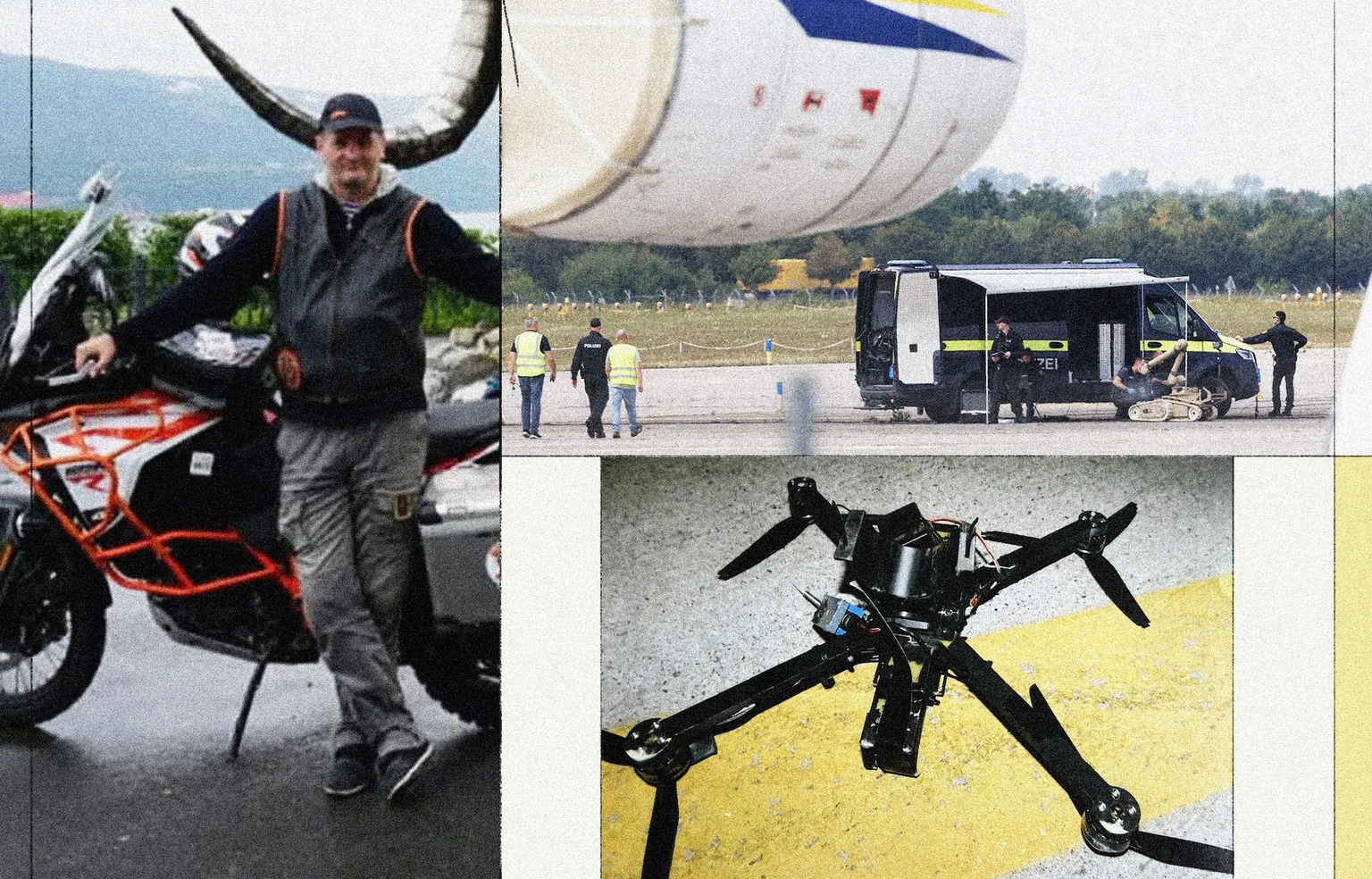
The Telegraph has identified the suspected organizer of the drone attack on Leipzig/Halle Airport and linked the sabotage attempt to Unit 29155 of Russia’s military intelligence agency, the Main Directorate of the General Staff of the Russian Armed Forces.
The investigation by the outlet states this, based on investigative materials and information from European security agencies.
The suspect has been identified as Oleg Levushkin, a Russian and Latvian citizen who, according to investigators, provided logistical support and helped prepare the attack.
At the end of July, Levushkin traveled via Turkey to Berlin Brandenburg Airport, and rented a car on July 27. On July 31, the vehicle was recorded near Leipzig/Halle Airport, where he allegedly conducted reconnaissance ahead of the attack.
According to a journalists’ source in the German security services, the explosives may have been transported to Germany via Bulgaria and Serbia, concealed in truck voids.

Levushkin had maintained ties with the Main Directorate of the General Staff of the Russian Armed Forces’ Colonel Denis Smolyaninov for about two decades. As WDR, NDR, and Süddeutsche Zeitung previously discovered, European security agencies knew him as a suspected Russian agent even before the attack, but he was not placed under close surveillance after arriving in Germany.
Investigators also found similarities between the explosive device on the drone in Leipzig and devices recovered from caches in Lithuania. In both cases, tin cans filled with explosives and metal plates with circular indentations were used. This similarity is being considered alongside data on the suspects’ movements and other intelligence information.
According to sources involved in the investigation, the Main Directorate of the General Staff of the Russian Armed Forces’ Unit 29155 plays a key role in Russia’s sabotage campaign in Europe, in the context of which they are considering the attack in Leipzig. At the same time, Levushkin’s affiliation with the unit has not been established.
Levushkin did not respond to the journalists’ request for comment. The Russian Embassy in Berlin denied Russia’s involvement in the attack and other acts of sabotage in Europe.

As Militarnyi reported, on the night of August 5, 2026, a drone carrying an explosive device was found near Ukrainian An-124 Ruslan transport aircraft at Leipzig/Halle Airport. The work of bomb disposal experts led to a temporary suspension of flights. Antonov uses the airport as a temporary base following the destruction of the airfield in Hostomel by Russian forces.
A subsequent analysis of video footage showed that on August 4, the drone had struck the wing of an An-124 near the fuel tanks but failed to detonate and fell to the ground.
The investigation revealed signs that at least three drones were involved. During the suspension of flights, a DHL cargo aircraft aborted its landing and collided with an unidentified object at an altitude of about 400 meters, believed to have been another drone. A third drone was found on August 14 in a field near the western part of the airport.
In August, Militarnyi reported on an assessment by U.S. intelligence that pointed to the involvement of the Main Directorate of the General Staff of the Russian Armed Forces. An ABC News source described the drone’s design and the explosives as typical of equipment used by Russian military intelligence.

On September 1, the German government officially held Russia responsible for the attack. In response, Berlin announced the closure of the Russian Consulate General in Bonn and the termination of the agreement under which the Russian House operated in Berlin.
Later, investigators identified two suspects: Oleg L. and Belarusian national Andrey K., who also holds a Russian passport. The second man’s DNA was found on one of the drones, inside a container with explosives, and on an antenna near the airport. The matches were found in databases in Lithuania and Finland.
According to preliminary investigation findings, Oleg L. left Germany two days before the attack. Andrey K. entered the Schengen Area on a tourist visa issued by the Italian mission in Minsk.
One of the suspects in the attempted sabotage was located in Finland. However, local police failed to detain him, as he left the country before a decision to detain him was made. Finnish law enforcement did not comment on the details, citing an ongoing pretrial investigation in another country.
Підтримати нас можна через:
Приват: 5169 3351 0164 7408 PayPal - [email protected] Стати нашим патроном за лінком ⬇
Subscribe to our newsletter
or on ours Telegram
Thank you!!
You are subscribed to our newsletter