


Popular
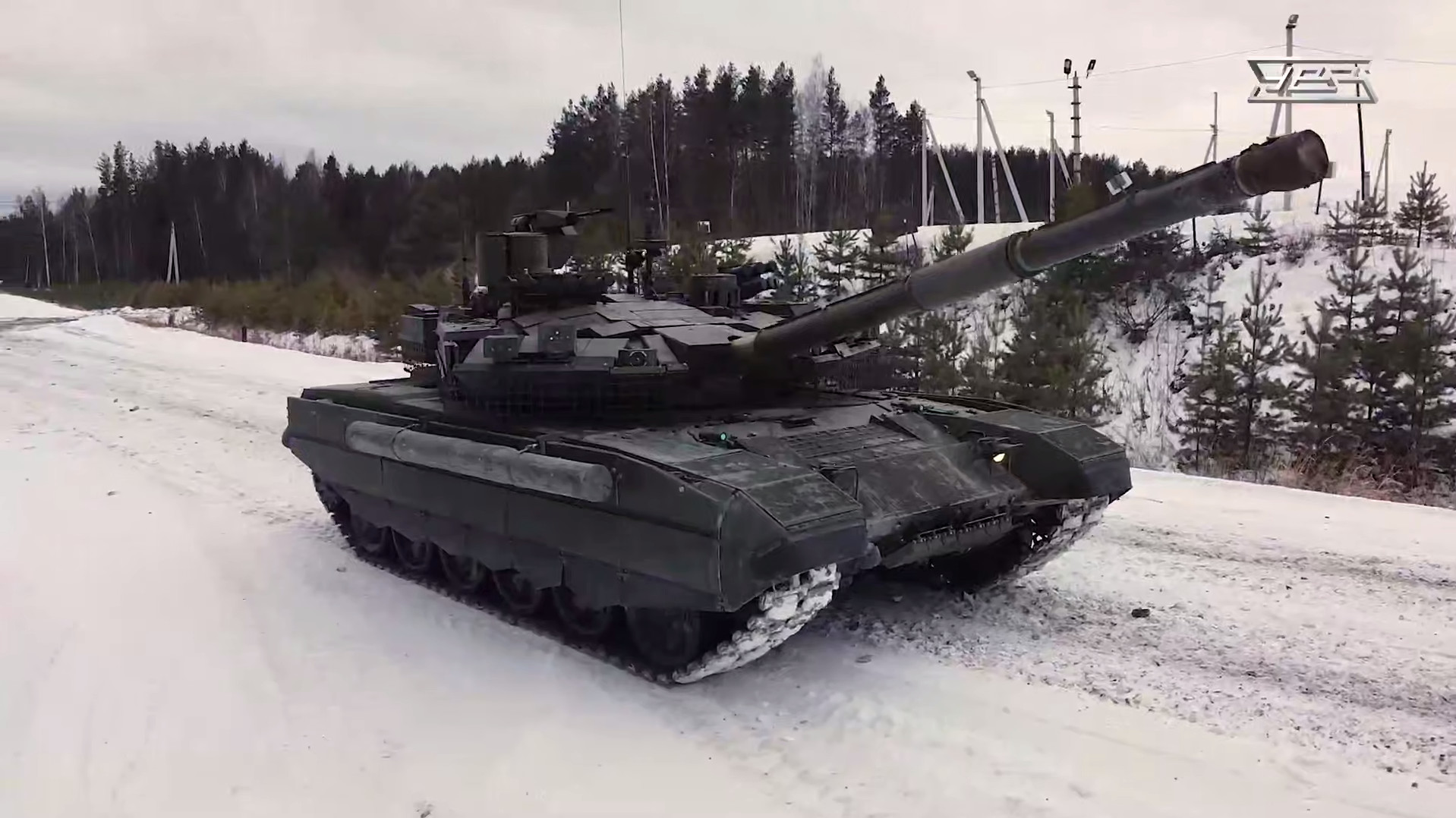
Russia has begun work on upgrading the Arena-M active protection system by increasing the number of interceptor munitions from 12 to 36.
Tank historian Andrii Tarasenko told Militarnyi about the development.
The change is part of the system’s third upgrade phase, which is scheduled to be completed by the beginning of the first quarter of 2027.
Tarasenko identified several key engineering challenges involved in implementing the upgrade. In particular, the installation of interceptor munitions is currently limited to the turret.
“The inability to install them on the hull in the current system configuration is due both to layout constraints and to the need to transfer digital data from the turret to the hull, which the existing rotary contact devices are not designed to handle,” the researcher said.
At the same time, adding more interceptor munitions would require widening the turret, which, for example, would prevent the engine-transmission compartment cover from being opened for maintenance.

Another important factor is the need to install the interceptor munitions at a precise angle, from 10 to 45 degrees, depending on the type of target being engaged: targets approaching on a horizontal trajectory or from above.
The Arena-M system also requires a high initial velocity for its interceptor munitions to engage anti-tank guided missiles. This requires a large propellant charge and heavy brackets welded to the turret to withstand recoil.
“Therefore, seemingly ‘obvious’ ideas such as mounting the interceptor munitions on a protective “grille” or some other external structure are not feasible,” Tarasenko said, referring to the placement of the active protection system on a protective structure.
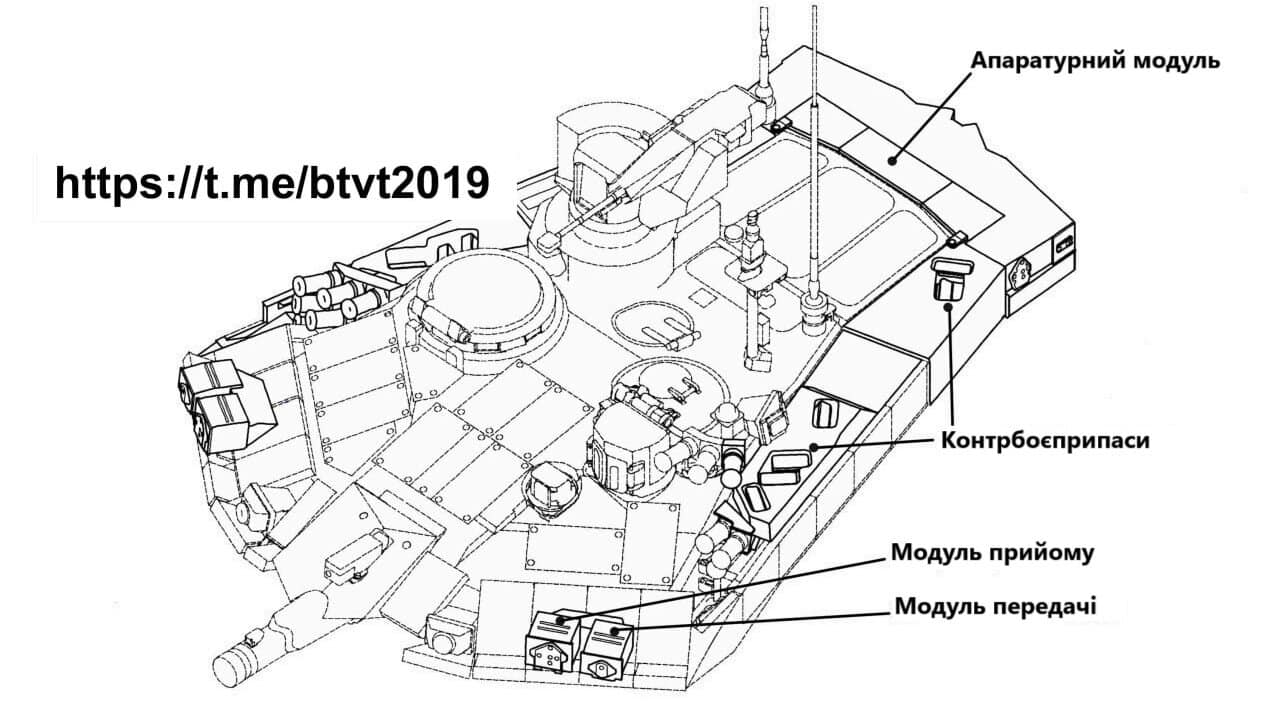
Tarasenko estimates that tripling the number of munitions within the existing dimensions is impossible. However, he said the existing munition could be replaced with a specialized anti-drone munition, as its effect is excessive against drones. Such a munition could be smaller, making it possible to increase the number threefold or more.
“Based on this, it can be concluded that the required threefold increase in interceptor munitions while retaining the existing type cannot be implemented. At the same time, the system’s architecture allows other types of protective munitions — high-explosive, fragmentation or other types — to be used either together with the standard protective systems or separately. Moreover, the standard interceptor munition, which was developed in the 1990s primarily to protect against ATGMs, is excessive for engaging low-speed targets such as FPV drones. Therefore, when selecting specialized anti-drone munitions, the requirements for reaction time, installation and dimensions are less stringent than those imposed on the standard interceptor munitions, making it possible to increase their number threefold or even more,” Tarasenko said.
The Arena-M active protection system was developed by Russia’s Kolomna-based Engineering Design Bureau as an upgrade of the Arena system, development of which began in the Soviet Union in the 1980s.
Compared with the original Arena, it uses impulse correction motors for its interceptor munitions. This eliminated the need for a ring of launch tubes around the turret, while the large radar module in the center of the turret was replaced with four smaller ones.
“However, this system was not capable of engaging ATGMs attacking from above — Javelin and similar weapons,” Tarasenko said.

Tarasenko told Militarnyi that the first stage of the Arena-M upgrade involved placing 4 of the 12 interceptor munitions at an angle of approximately 0 to 10 degrees, making it possible to engage missiles from anti-tank guided missile systems attacking from above. The installation of the radar transceiver modules was also modified.
“Once they completed this upgrade, Javelin was no longer the main threat. The second upgrade phase began: protection against drones was added, but it ‘unexpectedly’ turned out that there could be more than six or seven drones,” Tarasenko said.
In the researcher’s opinion, the next stage of the system’s development, following the increase in the number of anti-drone munitions, points to the possibility of integrating it with other weapons and armored vehicle systems. This would involve creating a layered anti-drone system, including the integration of AI elements.
“An example of interaction between an active protection system and a fire-control system, implemented back in the 1990s, is that after detecting and tracking an attacking weapon and calculating its approach angle — for example, an RPG — the active protection system sends a signal proportional to that angle to the turret traverse and elevation drives. This automatically directs the vehicle’s main armament toward the concealed tank-threatening target while simultaneously neutralizing the attacking weapon with an active protection munition. At the next stage of development, Arena-M could be integrated with optical and acoustic sensors, electro-optical systems, smoke-screen systems and additional vehicle-mounted weapons, such as machine-gun mounts, to create a layered anti-drone system, including AI elements. This expansion capability is already built into the system’s architecture but has not been implemented,” Tarasenko said.
The first and so far only reported use of the Russian Arena-M tank active protection system occurred in July 2026, when Russian forces assaulted Ukrainian positions near the settlement of Mayak in the Donetsk region. Ukraine’s Omega Special Operations Center of the National Guard then destroyed a T-72B3A equipped with the system in the first publicly reported combat use of Arena-M.

Ukrainian forces used seven drones to deplete the active protection system, while destroying the Russian tank required a total of 15 to 20 FPV drones.
Development of Russian active protection systems began during the Soviet period. Despite numerous demonstrations of the system and claims that it would be deployed on a large scale, it was not integrated into combat units on a serial basis at the time.
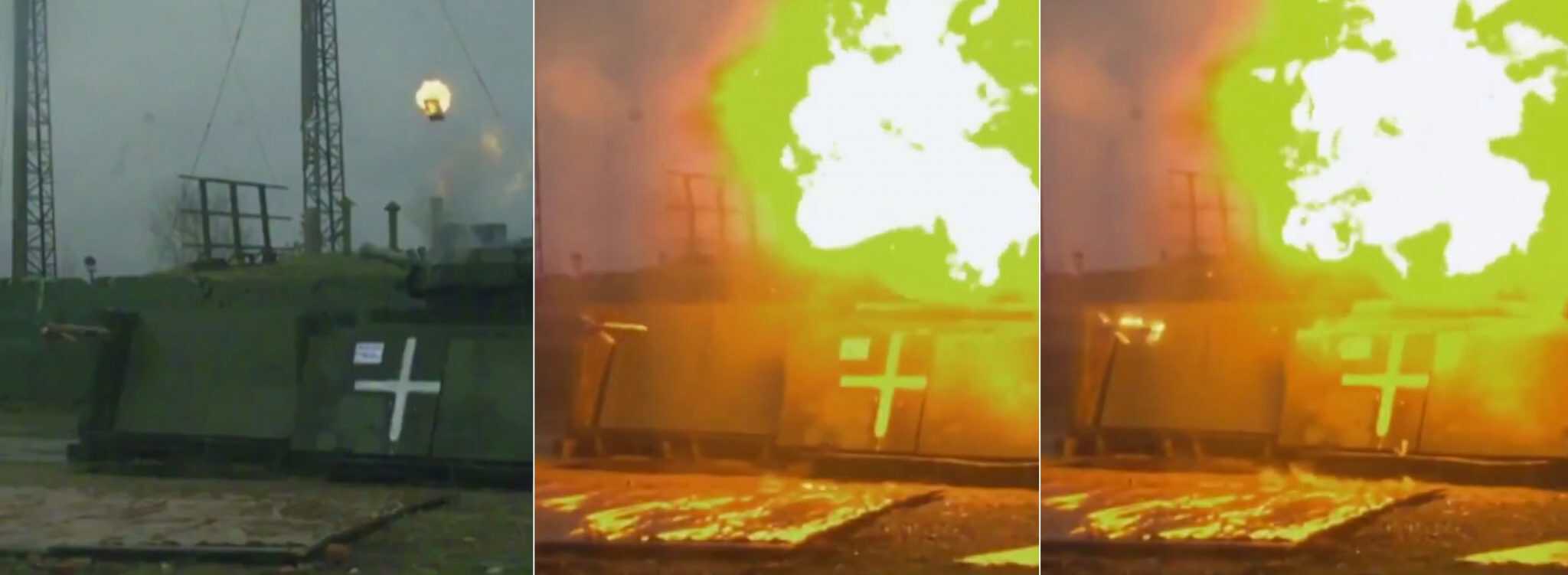
Russian designers had been working on integrating the Arena active protection system onto T-72B3 and T-90M tanks since at least 2019, while live-fire tests were conducted in 2021, as confirmed by footage from a test range broadcast on Russian television.
After the start of the full-scale invasion, Russia claimed several years ago that T-72 tanks equipped with Arena-M had been sent to the front, but they did not appear in combat at the time. Instead, the vehicles were used in the filming of a propaganda movie.
Підтримати нас можна через:
Приват: 5169 3351 0164 7408 PayPal - [email protected] Стати нашим патроном за лінком ⬇
Subscribe to our newsletter
or on ours Telegram
Thank you!!
You are subscribed to our newsletter