




Popular
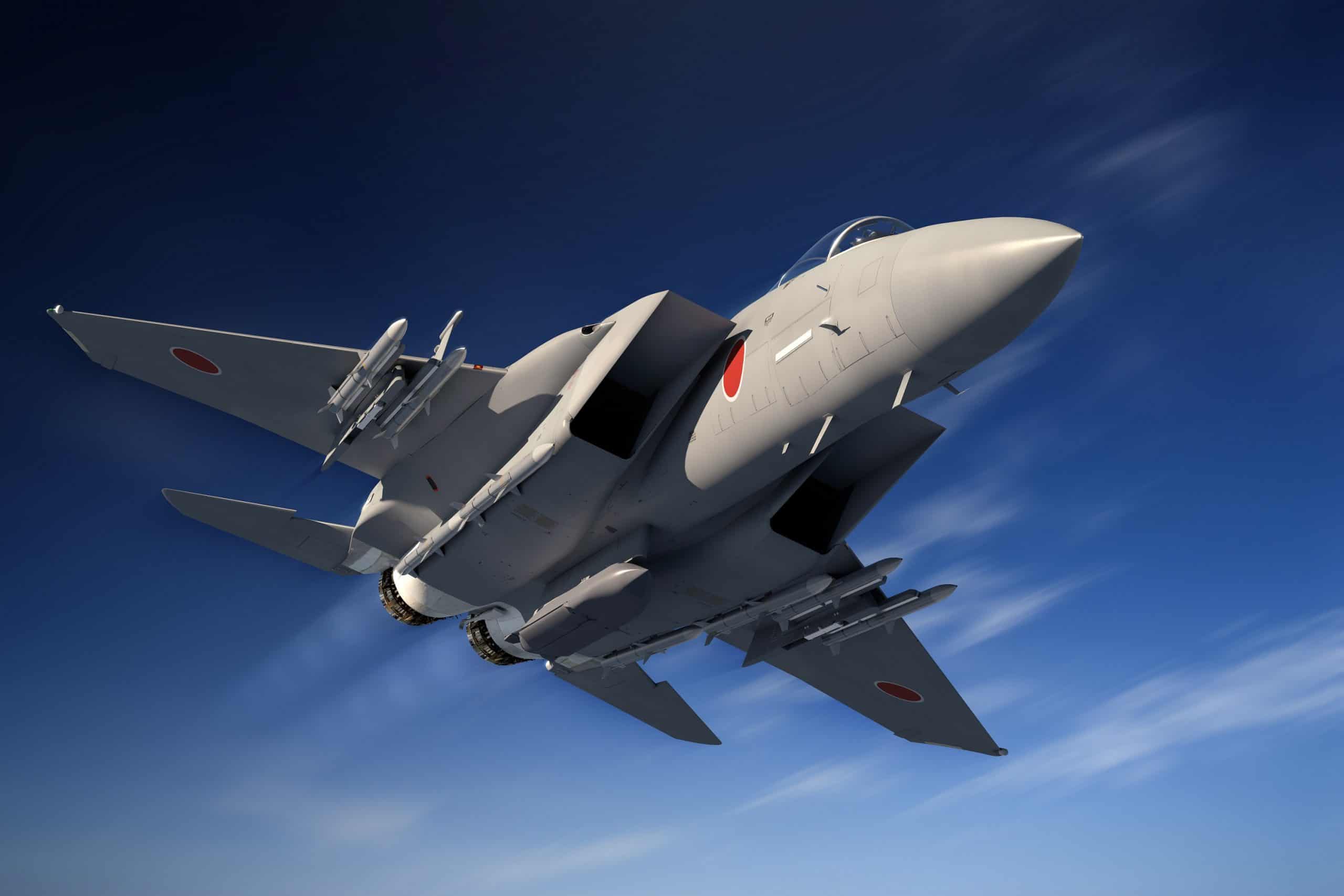
Japan’s Ministry of Defense has signed four new contracts as part of the F-15J modernization program to the JSI configuration, according to the Ministry’s documents.
The contracts were signed in May 2026. They cover the procurement of equipment for the modernization of fighter jets, communications systems, flight support equipment, and logistics support for the serial modernization of the F-15J.
The U.S. Air Force is the contracting party in all four agreements. The procurements are being conducted under the Foreign Military Sales (FMS) program.
In particular, Japan will purchase equipment to enhance the combat capabilities of its F-15Js for ¥34,598,728,358 (approximately $217.2 million).

A separate contract for communications systems maintenance equipment is worth ¥3,223,462,424 (approximately $20.2 million).
Equipment to support flight operations of the upgraded F-15Js (MDS) will cost ¥36,742,200 (around $230,600).
Another contract covers the procurement of logistics support for the serial modernization of the F-15J, worth ¥4,794,000,798 (about $30.1 million).
Thus, the total value of the four contracts is ¥42,652,933,780, or $267,751,622.

Militarnyi has previously reported that IHI Corporation is looking for ways to sell 200 Pratt & Whitney F100 engines removed from F-15J Eagle fighter jets.
The F-15JSI (Japan Super Interceptor) program involves a large-scale modernization of the Japan Air Self-Defense Force’s fleet of F-15J fighter jets. It is being carried out by Boeing and Mitsubishi Heavy Industries under a U.S. Foreign Military Sales (FMS) agreement.
The contract was finalized at the end of 2021. The program is intended to transform aging F-15Js into fighters with capabilities comparable to those of the modern F-15EX/F-15QA, while making use of the airframe’s remaining service life.
A key element of the modernization will be the replacement of the radar. The fighters will receive the AN/APG-82(V)1 active electronically scanned array (AESA) radar instead of the mechanically scanned AN/APG-63(V)1.

Meanwhile, under a contract with Japan’s Ministry of Defense, Mitsubishi is studying the possibility of installing a Japanese AESA radar on the upgraded fighters. No further information on the work is currently available.
At the same time, the electronic warfare suite, radar warning receivers, and communications equipment are being upgraded, bringing the onboard equipment in line with Advanced Eagle standards.

The combat load will also increase significantly. An unmodernized F-15J can carry up to eight air-to-air missiles, while the upgrade will allow this number to more than double. The exact list of the F-15JSI’s missile armament is currently unknown. Meanwhile, Mitsubishi is testing AAM-4 (Type 99) missiles for use with the upgraded fighter.
In addition, Japan is considering equipping the upgraded aircraft with air-launched cruise missiles, including the JASSM.

In total, Japan plans to upgrade approximately 98 fighter jets to the F-15JSI standard. The Japanese Ministry of Defense has previously funded the modernization of 68 aircraft. At the same time, the updated Defense White Paper sets the target number of funded F-15JSI aircraft at 54.
Підтримати нас можна через:
Приват: 5169 3351 0164 7408 PayPal - [email protected] Стати нашим патроном за лінком ⬇
Subscribe to our newsletter
or on ours Telegram
Thank you!!
You are subscribed to our newsletter