





Popular
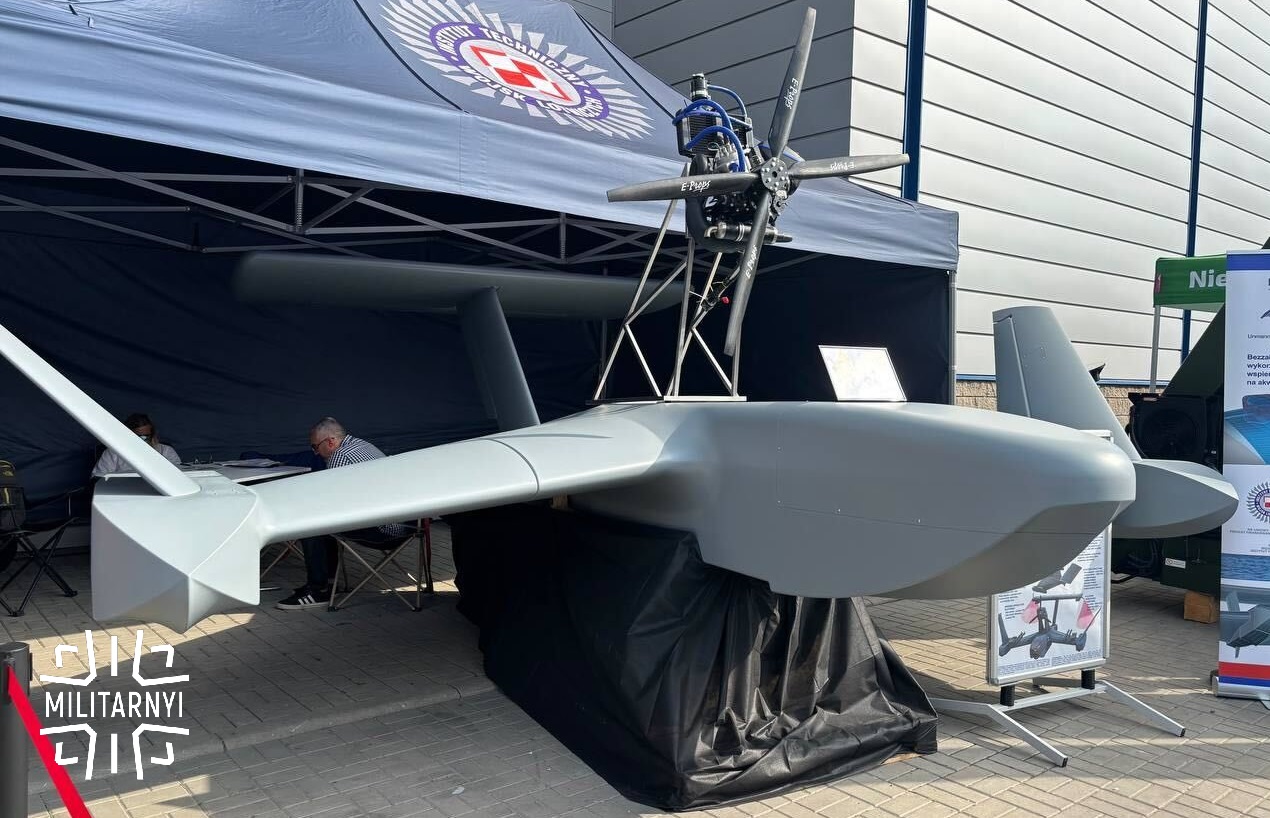
Polish developers have presented a prototype of an unmanned GEV for maritime reconnaissance and logistics at the MSPO defense exhibition.
The developers of the consortium, which includes the Gdańsk University of Technology, the Jarosław Dombrowski Military Polytechnic University, and the Air Force Institute of Technology, discussed the project’s features with Militarnyi’s reporters.
The concept of an unmanned ground-effect vehicle originated in the minds of the designers back in 2012 and was implemented in seven interim projects before being fully realized in metal only in 2021.
Drozd uses the effect of airflow shielding that occurs when flying at low altitudes above the surface and creates additional lift like an “air cushion.” This enables the transportation of large loads at high speeds with considerable efficiency.
The project founders emphasize that their product is not a copy of the Caspian Monster, the legendary Soviet project codenamed Lun, but is based on the original design by Alexander Lippisch. The main difference is the use of a reverse delta wing configuration, which provides a stable, engine-free shielding flow.
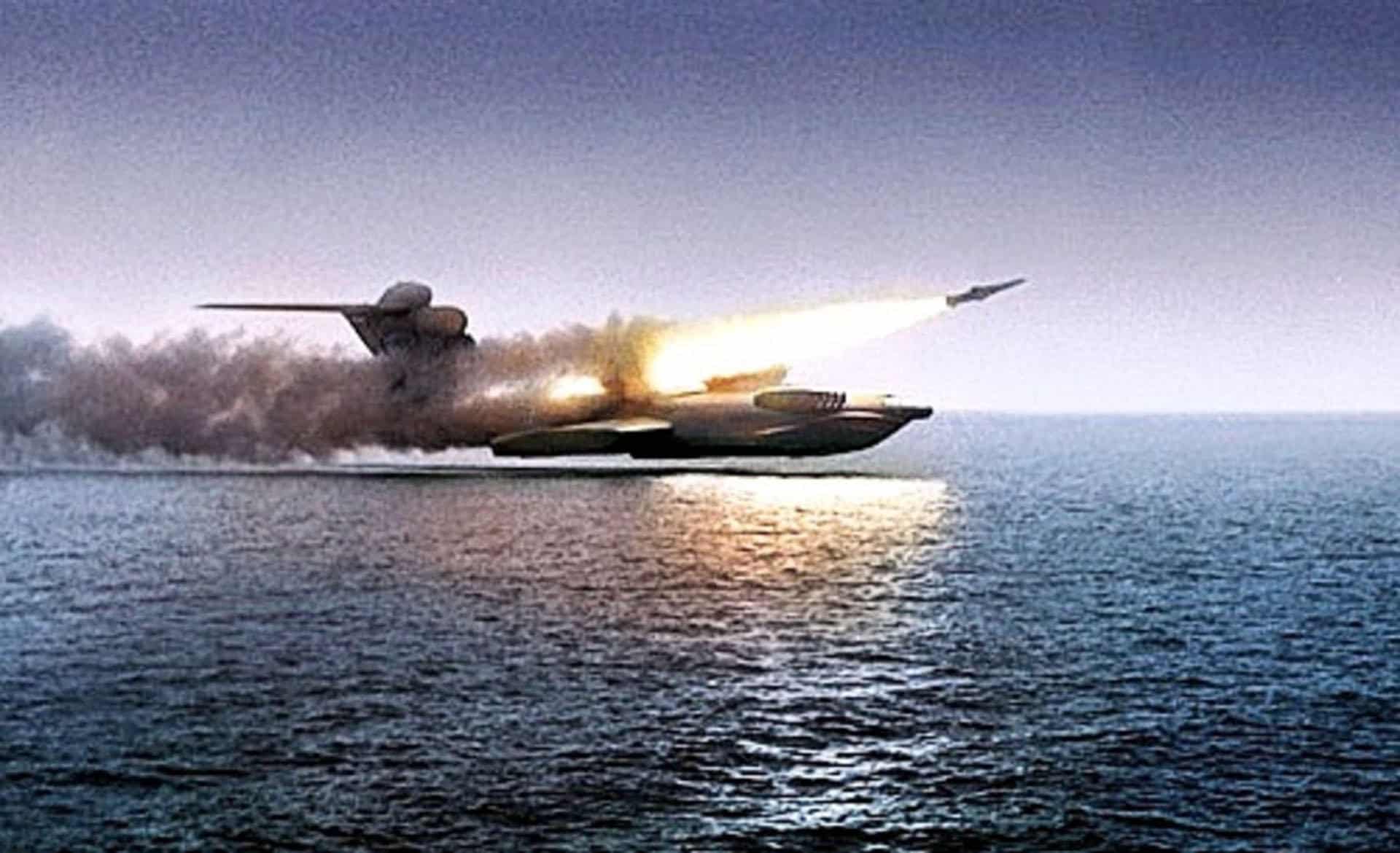
The product of Polish developers is much smaller than the Soviet project and is being built to meet the specific needs of the Special Operations Forces, which have shown interest in the project as a means of logistical support at sea.
“We are also considering the possibility of using our product not only in marine areas but also on rivers. In particular, various government agencies could use it, at least for the purposes of monitoring the marine environment. For this purpose, of course, it is necessary to install the appropriate equipment and sensors,” the developers say.
The drone features a remote control system that relies on a military communications network, allowing the basic control radius of 15 km to be scaled up to 300 km.
According to the developers, the primary navigation tool is an electronic map; the product also has sonar and collision warning radars to scan the surface far in front of it.
In the future, the payload may be equipped with hydrophones or a trailed sonar to monitor the marine and underwater environment. However, the developers are currently focusing on perfecting the prototype as a multi-purpose platform.
Representatives noted that countering their GEV would be a challenge, as its speed reaches 30 m/s. In this context, the potential as a kamikaze drone is obvious, but the interlocutors did not want to develop this topic because of the risk of classifying the “blackbird” as a military device with further bureaucratic restrictions.
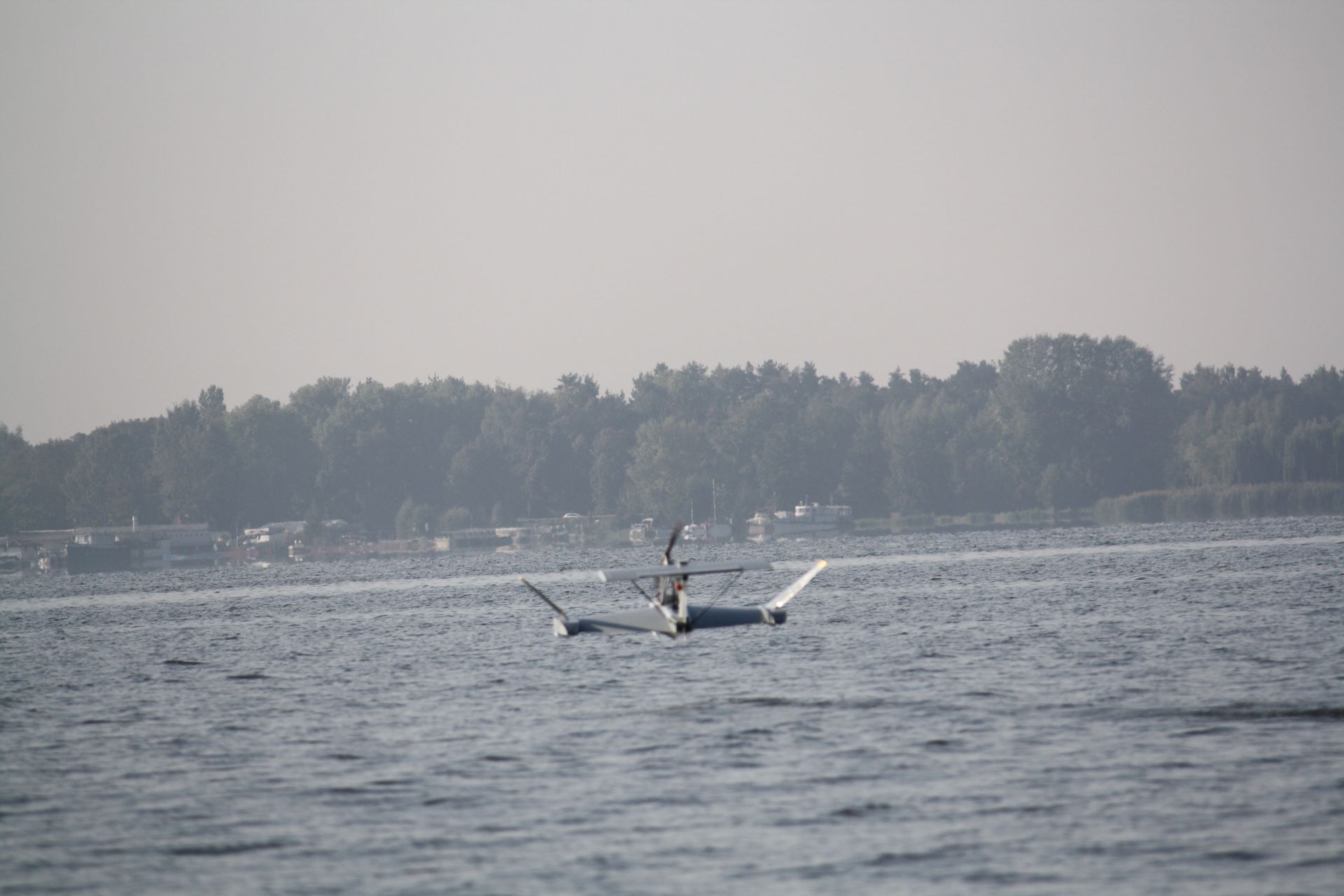
To conclude, it is worth noting that in addition to the obvious advantages, the GEV has a significant drawback: like the failed Lun, these aircraft are extremely weather-dependent and cannot operate in high waves. This problem is somewhat less severe on rivers, where a small Drozd will have room to maneuver.
Підтримати нас можна через:
Приват: 5169 3351 0164 7408 PayPal - [email protected] Стати нашим патроном за лінком ⬇
Subscribe to our newsletter
or on ours Telegram
Thank you!!
You are subscribed to our newsletter