






Popular
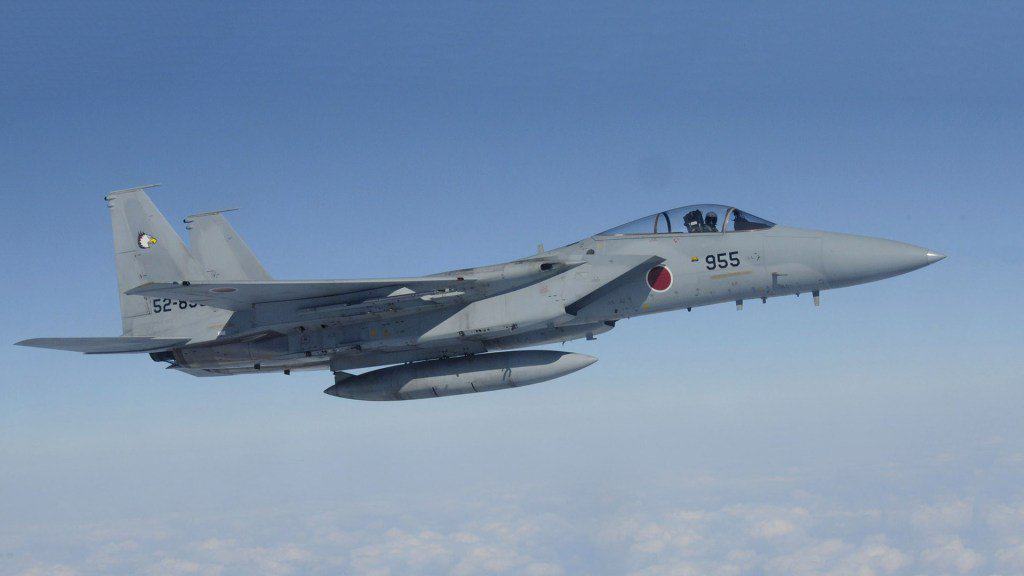
A Chinese J-15 fighter jet tracked a Japanese F-15 on radar, indicating potential readiness to engage, while flying in international waters.
Bloomberg reported on this.
The two countries offered conflicting accounts of the incident. Japan said a Chinese plane aimed its radar at Japanese aircraft over international waters on Saturday. China, meanwhile, accused the Japanese fighters of interfering with its air training.
“Radar illumination is a dangerous act that goes beyond what is necessary for the safe flight of aircraft. This is extremely regrettable. We have strongly protested to China and demanded measures to prevent a recurrence,” Prime Minister Sanae Takaichi told reporters.
Japanese Defense Minister Shinjiro Koizumi said a Chinese J-15 had periodically targeted two Japanese F-15 jets over waters southeast of Okinawa Prefecture.

The first incident occurred shortly after 4:30 p.m. Saturday, when a Chinese aircraft targeted a Japanese F-15 for about three minutes. The second took place about two hours later, lasting roughly 30 minutes, when a J-15 targeted another F-15.
The F-15s were scrambled to verify that aircraft from a Chinese carrier were not approaching Japanese airspace.
A Chinese navy spokesman said Japanese Self-Defense Force aircraft repeatedly approached and interfered with Chinese fighter jets during training, seriously endangering flight safety.
The episode is likely to heighten tensions between the two countries, which have been rising since Japan’s prime minister said in November that a Chinese attack on Taiwan could pose a “threat to Japan’s survival.”

That time, Prime Minister Takaichi told a House of Representatives budget committee hearing that if an emergency in Taiwan were accompanied by military action from another party, such as a naval blockade, the Japanese government “may” consider it an “existential threat” and, accordingly, take collective self-defense measures.
The statement was seen as a significant development in Japan’s security policy. Akio Yaita, director general of the Indo-Pacific Strategy Think Tank, called it a “historic turning point” symbolizing the emergence of a new Japanese defense posture.
Beijing accused Japan of interfering in its internal affairs and imposed economic and diplomatic measures, demanding that the statement be withdrawn. Japan’s prime minister refused, saying its position had not changed.
China advised its citizens not to travel to Japan, submitted protest notes to the United Nations, and appealed to other countries to reaffirm support for the “one China” principle. The Yomiuri newspaper reported that Japanese companies faced delays in obtaining Chinese permits to import minerals, including rare earths.
In mid-November, four Chinese Coast Guard ships entered Japanese territorial waters in the East China Sea near the Senkaku Islands in Okinawa Prefecture, a region Beijing considers disputed.
Підтримати нас можна через:
Приват: 5169 3351 0164 7408 PayPal - [email protected] Стати нашим патроном за лінком ⬇
Subscribe to our newsletter
or on ours Telegram
Thank you!!
You are subscribed to our newsletter