




Popular

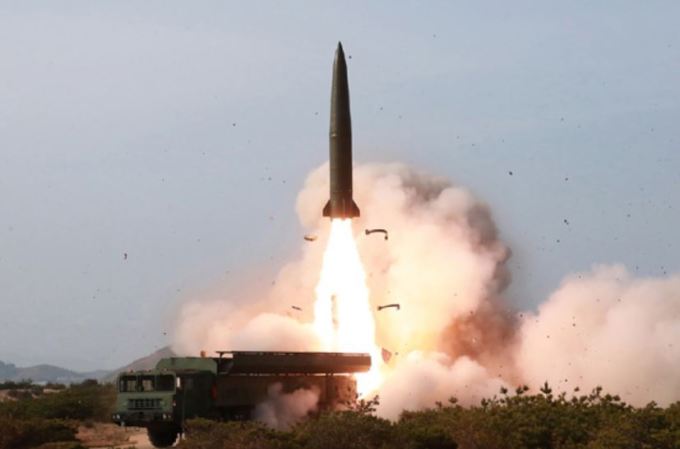
During the shelling of Ukraine on the night of July 30, Russia launched two North Korean-made KN-23 ballistic missiles on Kryvyi Rih, not one.
This was reported by Vladyslav Vlasiuk, the President of Ukraine’s Representative for Sanctions Policy.
The first missile struck a private house in Radushne settlement near Kryvyi Rih. Six people were killed, including three children, and five minors are considered missing. Nine more people sustained injuries of varying severity.
The crater caused by the impact of the second North Korean KN-23 ballistic missile was discovered in a field approximately 3.5 kilometers from the impact site of the first missile.

“There are no potential targets within a 5-kilometer radius. That’s the level of precision,” he emphasized.
Prior to this, Russian troops had last used North Korean KN-23 ballistic missiles to strike Ukrainian territory in early 2025.
As Ukrainian President Volodymyr Zelensky reported in late July, Russia wants to receive another 30,000 troops from North Korea, and preparations for their deployment are already underway in the Voronezh region.
In addition, North Korea is preparing to transfer new ballistic missile launchers to Russia, presumably along with ammunition.
The KN-23, also known as the Hwasong-11Ga, is a North Korean solid-fuel short-range ballistic missile. According to open-source estimates, the base version is capable of delivering a warhead weighing about 500 kilograms to a range of up to 450 kilometers, and with a reduced payload, up to 690 kilometers.
Russia first used the ballistic missiles it received from North Korea against Ukraine on December 30, 2023: one of them fell in an open field in the Zaporizhzhia region, and on January 2, 2024, such a missile struck Kharkiv.
Military engineers and scientists from the Ukrainian Ministry of Defense conducted laboratory research on the debris of North Korean missiles and determined the extent of their “uniqueness” compared to Russian models.
North Korean missiles are distinguished by their specific geometry. In particular, the KN-23’s diameter at the tail section is 110 cm and tapers to 90 cm at the front. A diameter of 110 cm has not been recorded in any other country in the world except the DPRK.
The Ukrainian Ministry of Defense has concluded that the KN-23 missiles are not direct copies of Soviet-Russian models and were not manufactured “under license” from the 9M723 Iskander ballistic missile 9M723 ballistic missile, but rather a modified version of one of the early designs related to the “Iskander.”
The missiles from North Korea use less energy-efficient fuel, so North Korean engineers had to make the engines about one and a half times larger than their Russian counterparts to achieve a comparable range.
Підтримати нас можна через:
Приват: 5169 3351 0164 7408 PayPal - [email protected] Стати нашим патроном за лінком ⬇
Subscribe to our newsletter
or on ours Telegram
Thank you!!
You are subscribed to our newsletter