





Popular

USS Gerald R. Ford, a nuclear-powered aircraft carrier (CVN 78), has returned to the Naval Station Norfolk in Virginia after completing a record 326-day deployment.
The US Navy Command reported this.
This deployment was the longest continuous carrier strike group deployment since the end of the Vietnam War. The flagship of the US Navy departed in June 2025 for a planned rotation in the Mediterranean Sea.
However, due to a sharp escalation in geopolitical tensions in various regions, the Pentagon extended the mission several times. Instead of the standard six months, the ship spent almost 11 months on deployment.
The carrier’s operational area changed repeatedly in line with US national security requirements and allied commitments.
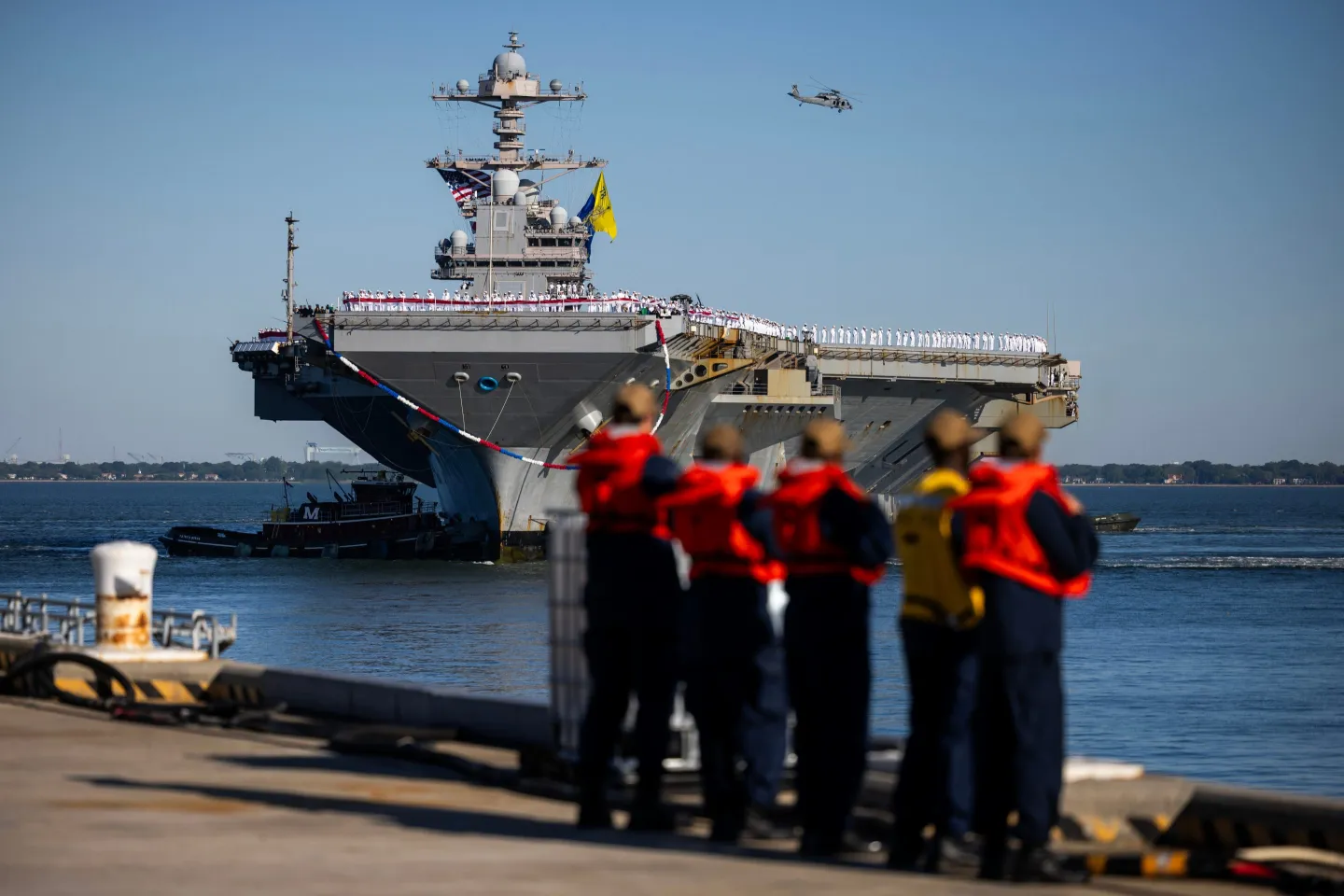
From the eastern Mediterranean, the ship was redeployed to the coast of South America to deter a potential conflict around Venezuela. It was later moved to the Red Sea, where it supported the protection of commercial shipping and defense against aerial threats.
The final stage of the deployment included deterrence operations near Iran.
Over its 326-day deployment, USS Gerald R. Ford sailed more than 57,700 nautical miles and completed 23 underway replenishments. Carrier-based aircraft conducted more than 12,200 takeoffs from the deck.
The ship is now in Norfolk for scheduled maintenance, system repairs, and post-deployment refurbishment.
The USS Gerald R. Ford is the largest and most expensive warship ever built, with a construction cost exceeding $13 billion.
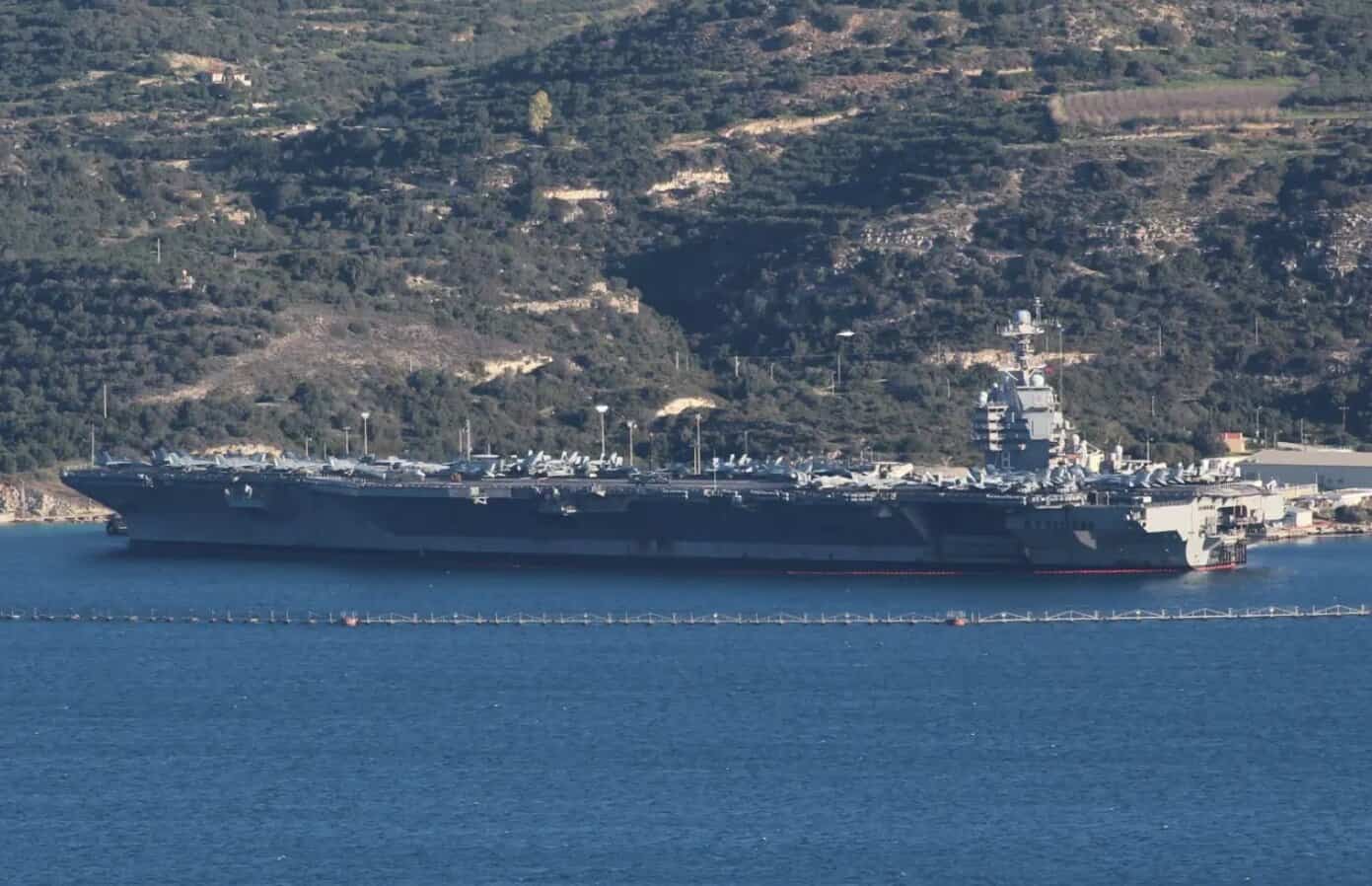
It is the first ship of the US Navy’s Ford-class carriers, which are replacing the Nimitz class.
The vessel is more than 330 meters long, has a flight deck width of 78 meters, and a full-load displacement of about 100,000 tons. Two A1B nuclear reactors power it.
Its key technological feature is the replacement of steam catapults with the EMALS electromagnetic launch system.
Together with the Advanced Arresting Gear system, it enables faster launch cycles and higher sortie rates.
The redesigned island superstructure is smaller and positioned further aft, increasing usable deck space and allowing up to 160-220 sorties per day.
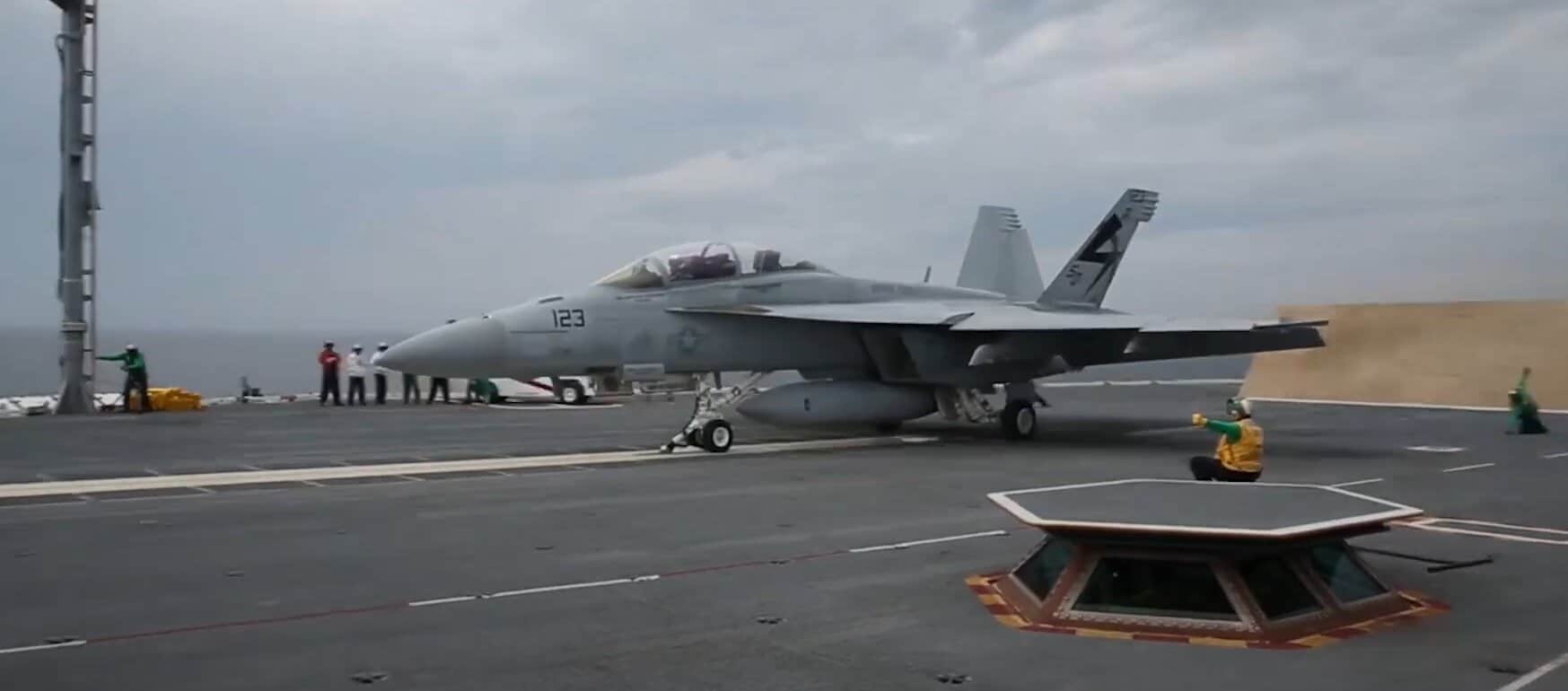
The carrier can embark more than 75 aircraft. Carrier Air Wing 8 includes F-35C Lightning II fighter jets, F/A-18E/F Super Hornet jets, EA-18G Growler electronic warfare aircraft, E-2D Advanced Hawkeye airborne early warning aircraft, as well as anti-submarine helicopters and unmanned aerial vehicles.
The ship’s crew and air wing personnel total about 4,500 service members. For air and missile defense, the carrier is equipped with ESSM and RAM systems, as well as Phalanx close-in weapon systems.
Підтримати нас можна через:
Приват: 5169 3351 0164 7408 PayPal - [email protected] Стати нашим патроном за лінком ⬇
Subscribe to our newsletter
or on ours Telegram
Thank you!!
You are subscribed to our newsletter