





Popular
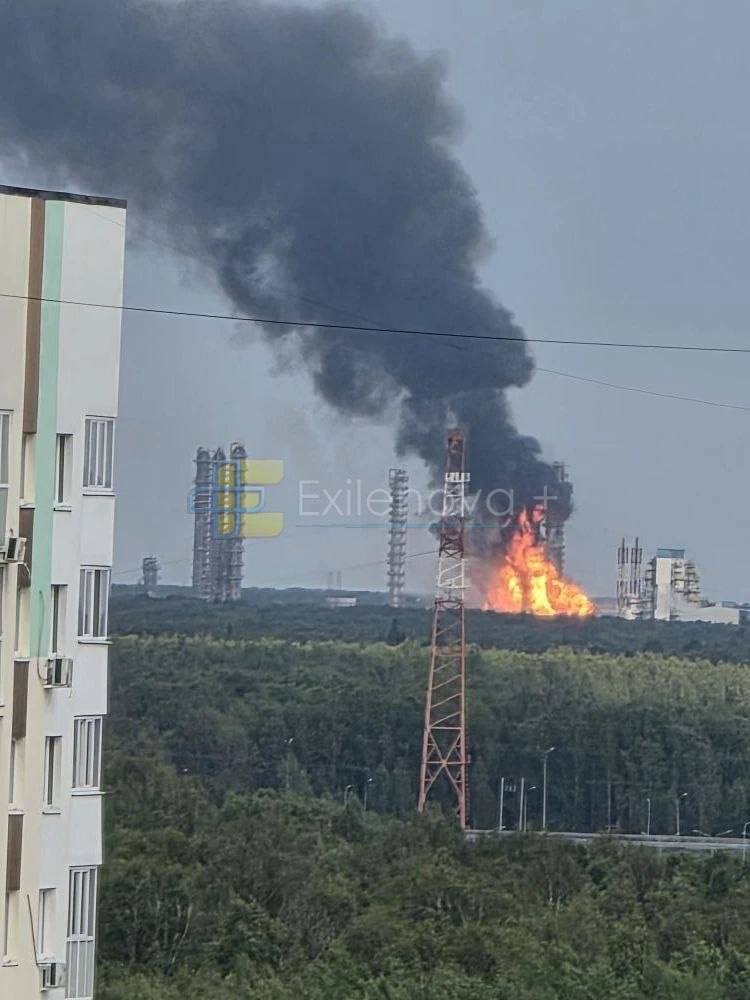
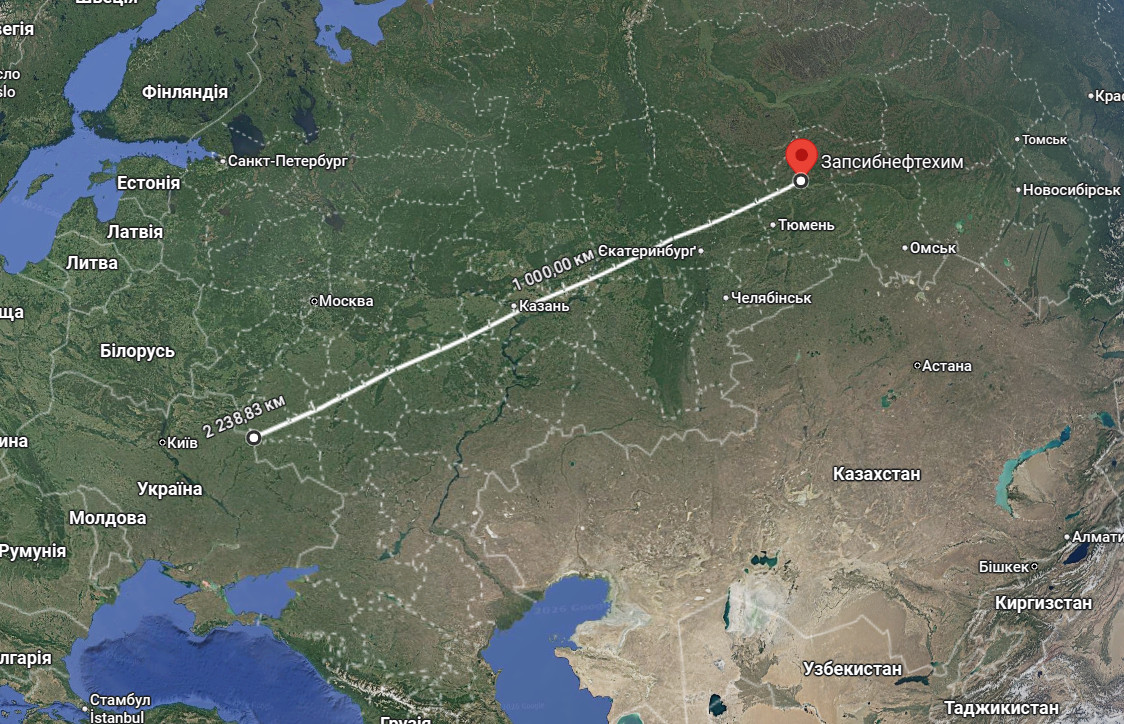
On August 10, the Armed Forces of Ukraine struck ZapSibNeftekhim — Russia’s largest petrochemical complex, located in the city of Tobolsk, more than 2,200 kilometers from the front lines.
Footage of the damaged facility was published by the Exilenova+ community.
Tyumen Region Governor Alexander Moor confirmed the attack on the region. He stated that “a fire broke out on the grounds of one of the industrial facilities after several drones crashed.”
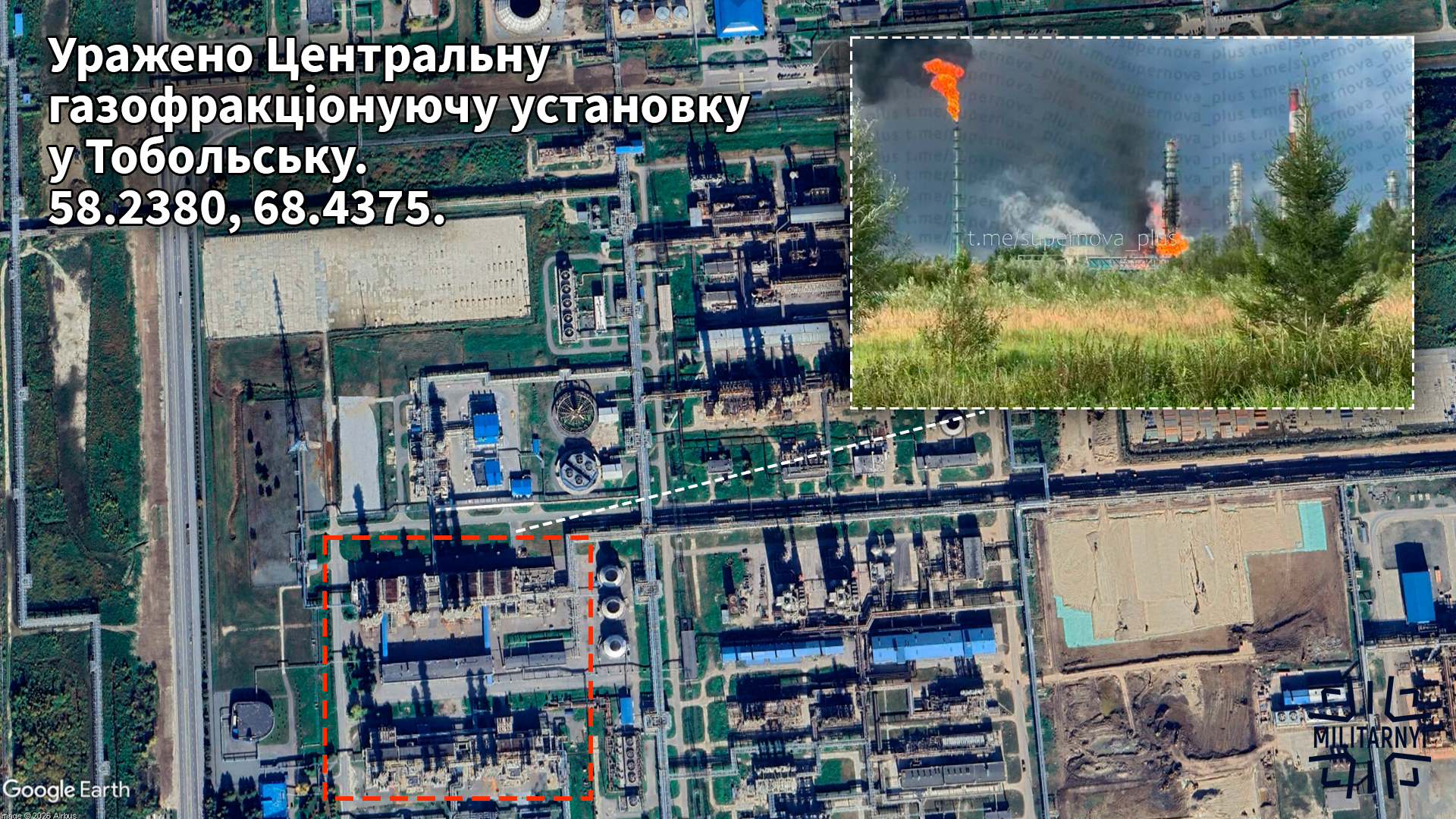
According to the results of an OSINT analysis by Militarnyi, the facility’s Central Gas Fractionation Unit was targeted in the attack.
The Central Gas Fractionation Unit (CGFU) is the first stage in the production chain of the Tobolsk petrochemical complex. It processes a broad fraction of light hydrocarbons obtained during the processing of associated petroleum gas and gas condensate.
At the CGFU, the feedstock is sequentially separated in distillation columns according to the boiling points of its components. The resulting liquefied gases serve as feedstock for other parts of the plant, where they are processed into polymer materials and raw materials for the chemical industry.
The Central Gas Fractionation Unit itself consists of two separate processing units — GF-1 and GF-2. Following a 2016 modernization, the processing capacity was increased to 8 million metric tons per year.
ZapSibNeftekhim is Russia’s largest producer of base polymers and one of the world’s largest integrated petrochemical complexes. The plant is owned by the oil and gas chemical company Sibur.
According to the company’s own statements, the Tobolsk site accounts for approximately half of Russia’s total production of polyethylene and polypropylene.
In 2022, ZapSibNeftekhim launched Russia’s only maleic anhydride production facility, with a capacity of over 45,000 metric tons per year. It is primarily used to manufacture unsaturated polyester resins, which form the basis of fiberglass composites widely used in aircraft and drone manufacturing.

It is known that the parent company, Sibur, had contracts to supply raw materials to enterprises in the Russian defense industry. In particular, to the Kamensk Plant, which produces solid rocket propellant, solid-fuel charges, and rocket engines used in the Grad, Smerch, and Uragan multiple launch rocket systems.
It is also known that raw materials were supplied to the Perm Powder Plant, which produces charges for multiple launch rocket systems and air defense systems, engine charges for air-to-surface missiles, launch and acceleration systems for cruise missiles, and spherical gunpowder for small arms. The company’s products were also supplied to explosives manufacturers — the Sverdlov Plant and the Biysk Oleum Plant.
Підтримати нас можна через:
Приват: 5169 3351 0164 7408 PayPal - [email protected] Стати нашим патроном за лінком ⬇
Subscribe to our newsletter
or on ours Telegram
Thank you!!
You are subscribed to our newsletter