





Popular

Russian forces are building underground passages on the left bank of the Dnipro River in the Kherson region to support offensive operations.
Colonel Alim Kerimov, chief of staff of the Ukrainian Armed Forces’ 34th Separate Marine Brigade, said this in an interview with Crimea.Realities.
The tunnels allow Russian troops to approach Ukrainian positions in areas where Ukraine’s Defense Forces control the airspace and prevent enemy forces from moving across open terrain.
In some areas, underground tunnels account for about 20-30% of the occupied left bank. However, Russian forces have not created a continuous, interconnected network.
The passages are labyrinth-like tunnels ranging from 50 to 150 meters in length.

Russian forces have resorted to this method of advance because they cannot move safely across open terrain.
They first try to advance above ground, then dig tunnels and build shelters.
Despite Russian efforts to construct these tunnels, Ukrainian units detect their entrances and destroy them.
In addition to the left bank of the Dnipro in the Kherson region, Russian troops have used underground infrastructure to move personnel covertly in the Kupiansk and Avdiivka sectors.
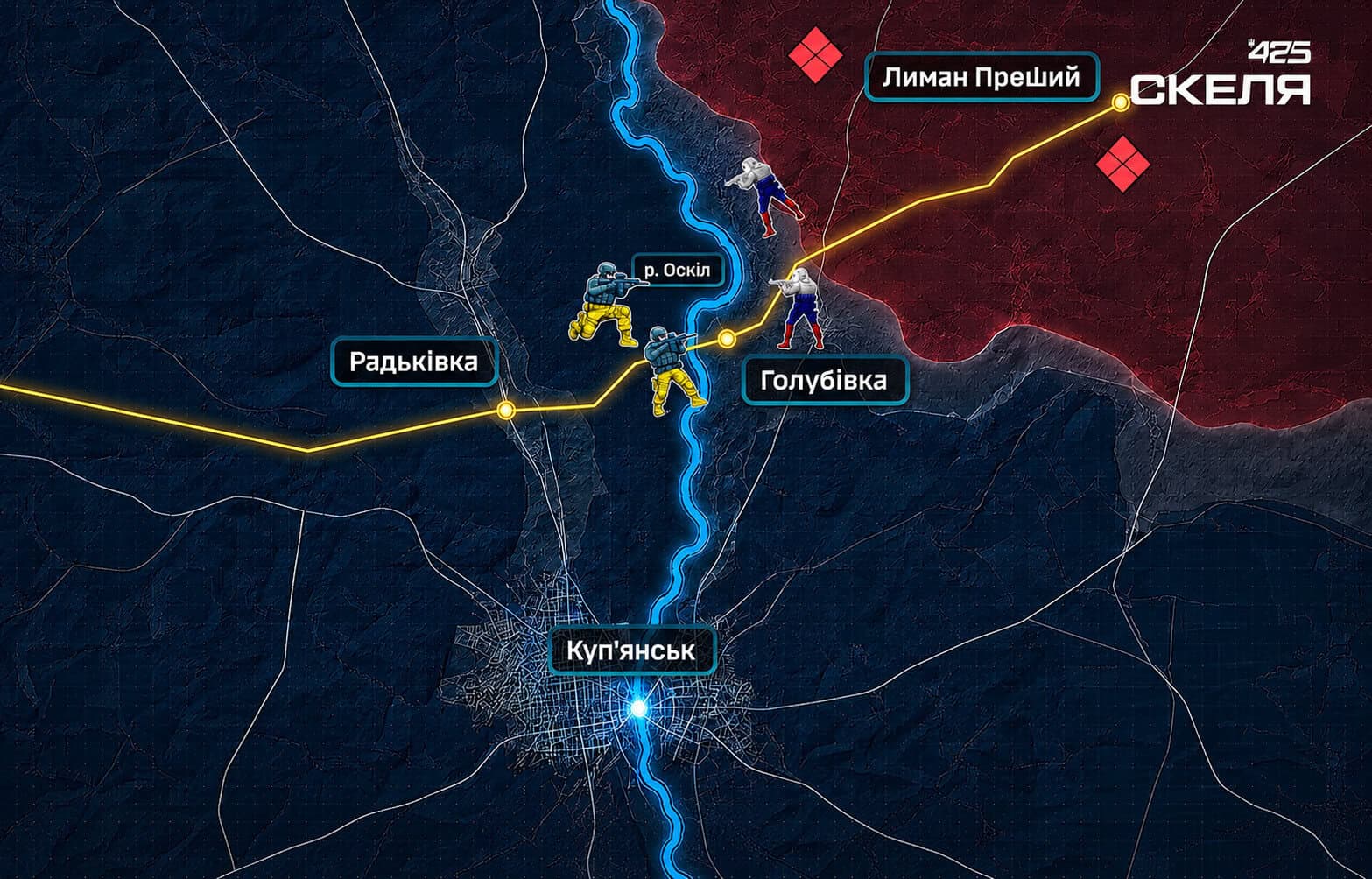
On October 23, 2026, Militarnyi reported that troops from the Skelya 425th Separate Assault Regiment had joined an operation to clear a main gas pipeline.
Near Holubivka and Radkivka in the Kupiansk area, Russian groups used gas pipelines running near Ukrainian positions and beneath the Oskil River to infiltrate the area.
Ukrainian assault troops were tasked with cutting off this route, clearing the pipeline and securing the positions they had taken.
A similar incident was reported during the battle for Avdiivka in 2024. At the time, Russian troops used a sewer collector to covertly reach the rear of Ukrainian units.
Meanwhile, Ukraine’s Defense Forces also use underground infrastructure to move personnel covertly and conduct operations. Ukrainian troops use such routes to approach enemy positions and reach their rear.
In particular, Ukrainian defenders conducted Operation Veles, an offensive operation under the command of the Khartia 2nd Corps of the National Guard of Ukraine. Ukrainian units advanced more than 15 kilometers through underground infrastructure, combining movement inside pipelines with operations on the surface and drone strikes.
As a result, Ukrainian troops restricted Russian forces’ use of the gas pipeline and created conditions for further operations in the Kupiansk sector.
Підтримати нас можна через:
Приват: 5169 3351 0164 7408 PayPal - [email protected] Стати нашим патроном за лінком ⬇
Subscribe to our newsletter
or on ours Telegram
Thank you!!
You are subscribed to our newsletter