

Popular
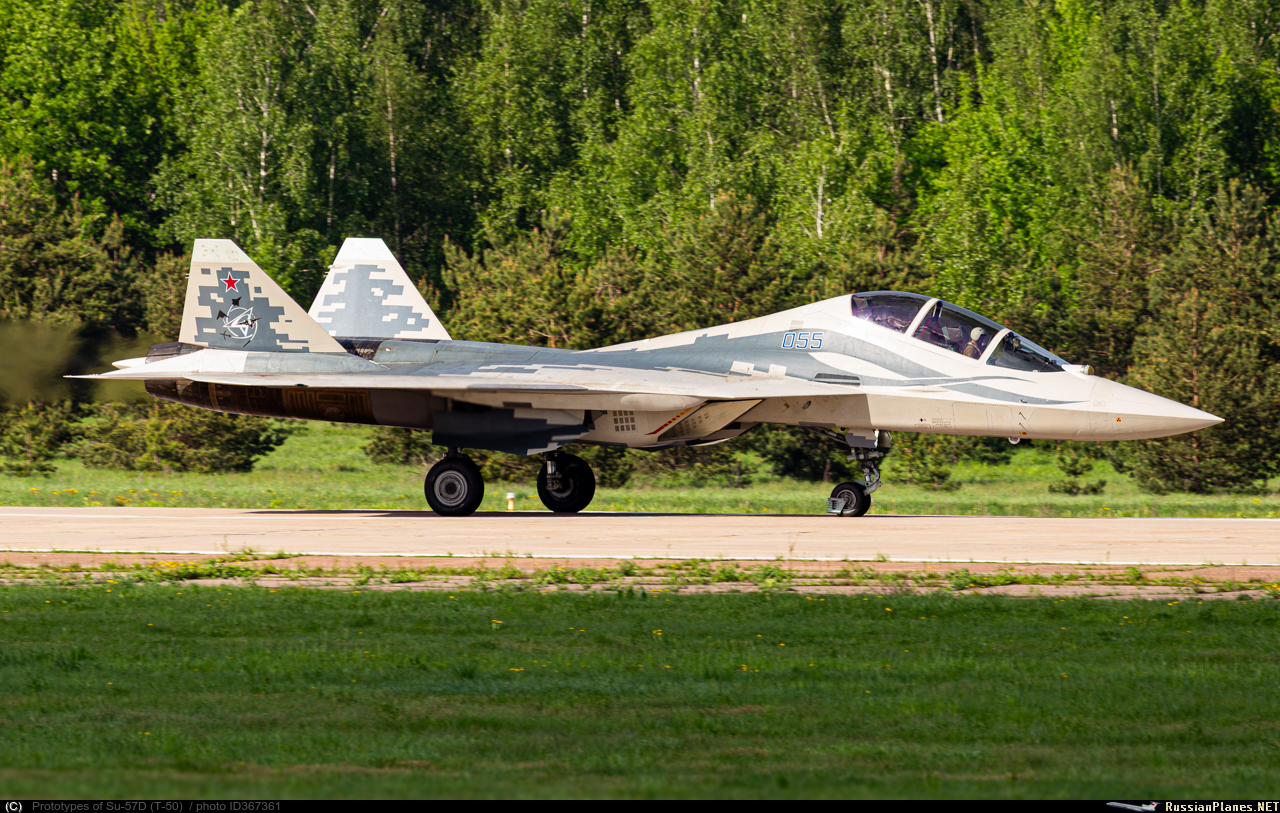
Russia will use the two-seat Su-57D as a platform for testing sixth-generation fighter technologies.
This was announced by Mikhail Strelets, chief designer at Sukhoi.
The idea involves using the second seat for an operator who, according to Strelets’ plan, will control unmanned aerial vehicles, specifically the S-70 “Okhotnik.
The two-seat Su-57D was developed based on one of the early T-50-4 flight prototypes with tail number “054.”
The aircraft began taxiing tests on May 16, 2026, and on May 19, it completed its first test flight, which lasted about 40 minutes. The aircraft was piloted by Sergey Bohdan of the Sukhoi Design Bureau.
Russian two-seat Su-57D to serve as a testbed for sixth-generation fighter technologies
Its second cockpit will allow one pilot to control UAV such as the S-70 Okhotnik. Su-57D will also be used to test combat artificial intelligence according to chief designer Sergey Strelets. pic.twitter.com/9DdnpKwqDN— H. Memarian (@HEMemarian) August 14, 2026
Strilets cited a second application for the two-seat version: testing combat artificial intelligence, which is currently being developed by specialists at the design bureau.
Thus, the Su-57D is effectively becoming a flying laboratory for integrating autonomous decision-making algorithms into the control loop of the aircraft and the unmanned systems under its command.

However, Strelets did not provide any details regarding the sixth-generation fighter. Nevertheless, given the constant delays in implementing new programs, the development of a new-generation fighter for Russia could stretch out over decades if the country seeks to create an aircraft capable of competing with Western models, such as those under the GCAP or F-47 programs.
Currently, Russia is only ramping up production of the Su-57 fighter to supplement its fleet of fourth-generation aircraft. At the same time, production rates remain quite low compared to fighter production in other countries.
Because of this, it may take several more decades for the Su-57 to become the backbone of Russia’s fighter fleet. Additionally, Russia is working to improve the aircraft’s flight and technical characteristics. For example, on February 9, Militarnyi reported that the Russian Air Force had received a new batch of Su-57s, which, according to UAC, the manufacturer had equipped with modernized onboard systems and an aviation weapons suite.
No details regarding the upgrades were provided at that time.
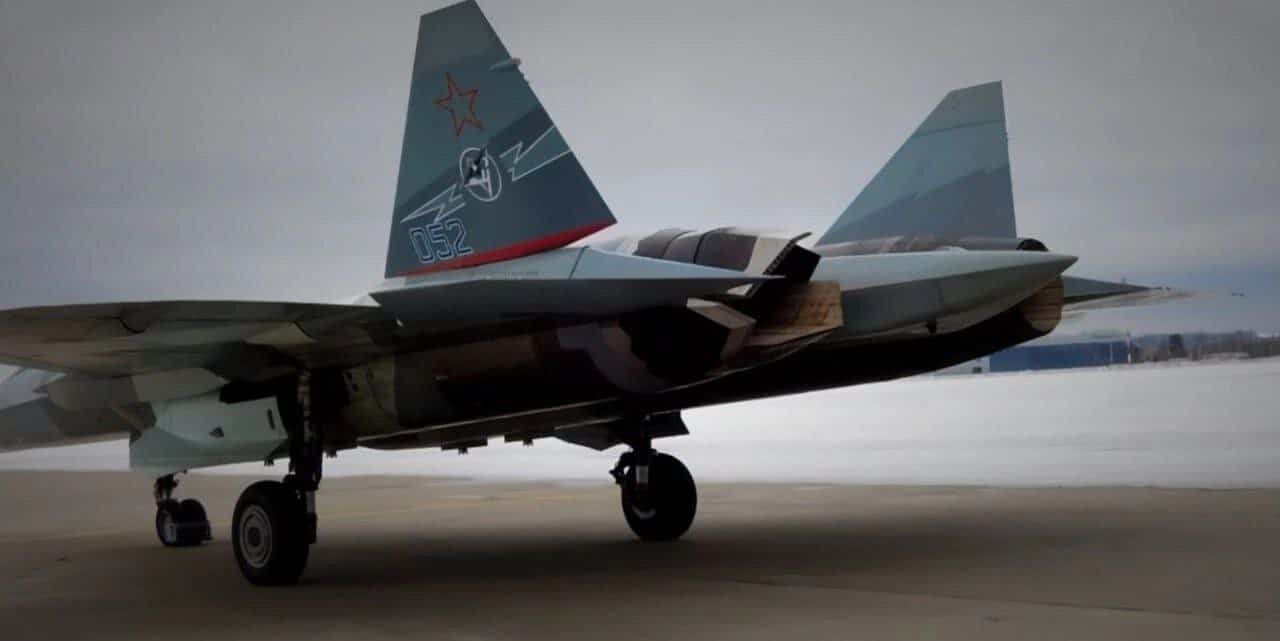
Prior to this, in December 2025, the Russians flew the T-50-2 “052” prototype, which was equipped with new engines—Product 177.
This engine is being developed specifically for the Su-57, Su-30, and Su-35 fighters. It is expected to outperform the current AL-41F1 in terms of performance. The declared thrust of Product 177 on afterburner reaches 16,000 kgf. The developers also claim reduced fuel consumption and an extended engine service life.
At the same time, Russia is continuing to develop the second-stage engine for the Su-57—Product 30.
Furthermore, in December 2024, the same T-50-2 “052”—on which the Russians are currently testing new engines—was spotted during testing of an engine with a flat nozzle.
It is currently unknown exactly what the purpose of these tests is. Initially, the Russians planned to install a flat nozzle on the S-70 Okhotnik unmanned aerial vehicle, but the test models were equipped with a conventional round nozzle.
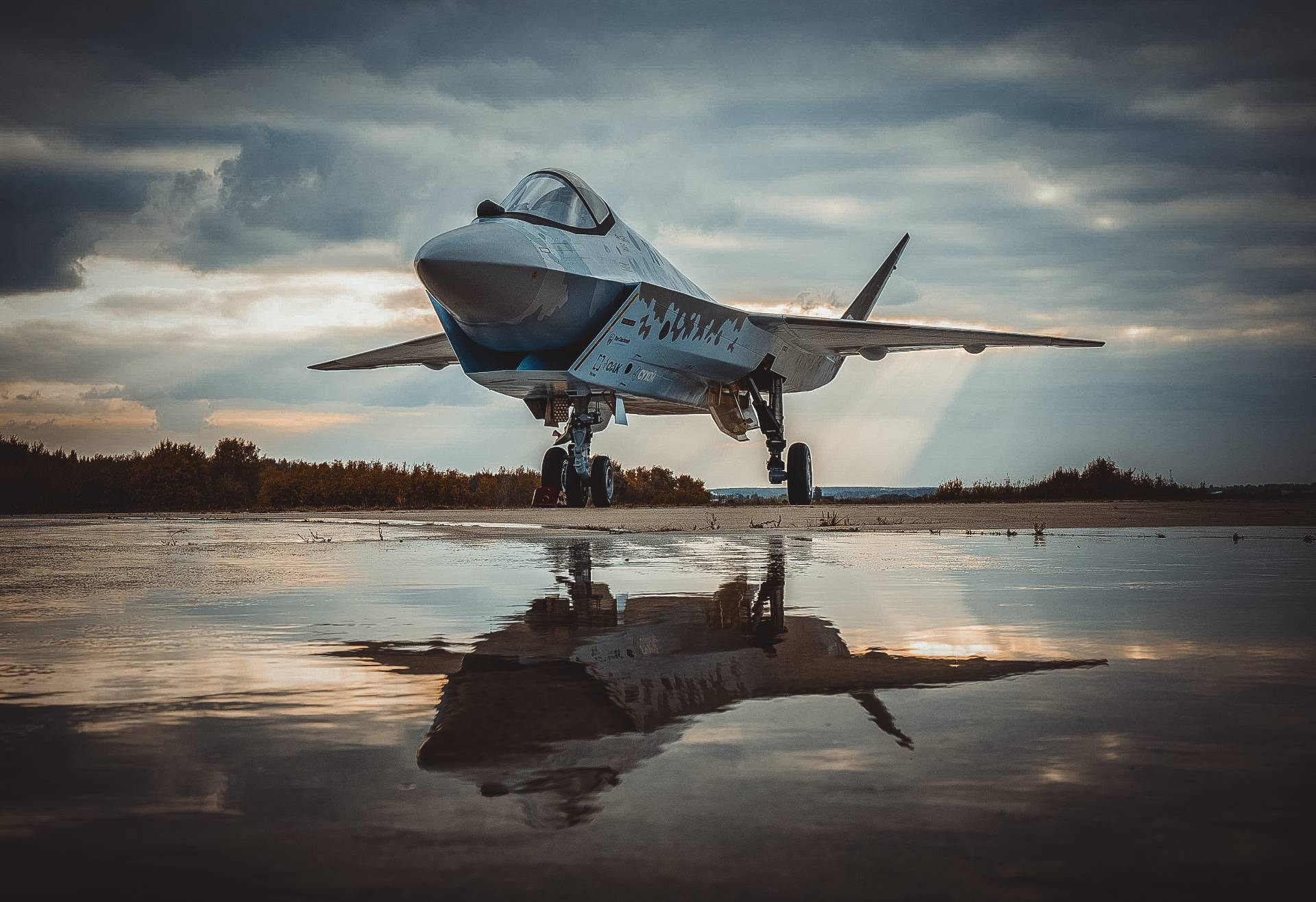
In parallel with the Su-57, Russia is developing the Su-75 fighter, which is positioned as a light platform to complement heavy fighters. In June, Vadim Badekha, CEO of the United Aircraft Corporation (UAC), announced that construction of the first flight prototype is currently underway.
Підтримати нас можна через:
Приват: 5169 3351 0164 7408 PayPal - [email protected] Стати нашим патроном за лінком ⬇
Subscribe to our newsletter
or on ours Telegram
Thank you!!
You are subscribed to our newsletter