



Popular

Poland has no firm guarantees that K2PL tank production will begin in 2028.
A source cited by Rzeczpospolita reported this.
As of now, the practical implementation of the agreements with the South Korean side faces several discrepancies and problems that are still being resolved.
In a comment to Militarnyi, Defence24 editor Damian Ratka, who specializes in armored vehicles, said preparations are underway for the third executive contract (EC3) for K2PL tanks, covering 2026-2034, provided it is signed by the end of 2026. He also clarified that K2PL production is scheduled to begin in 2028-2029.
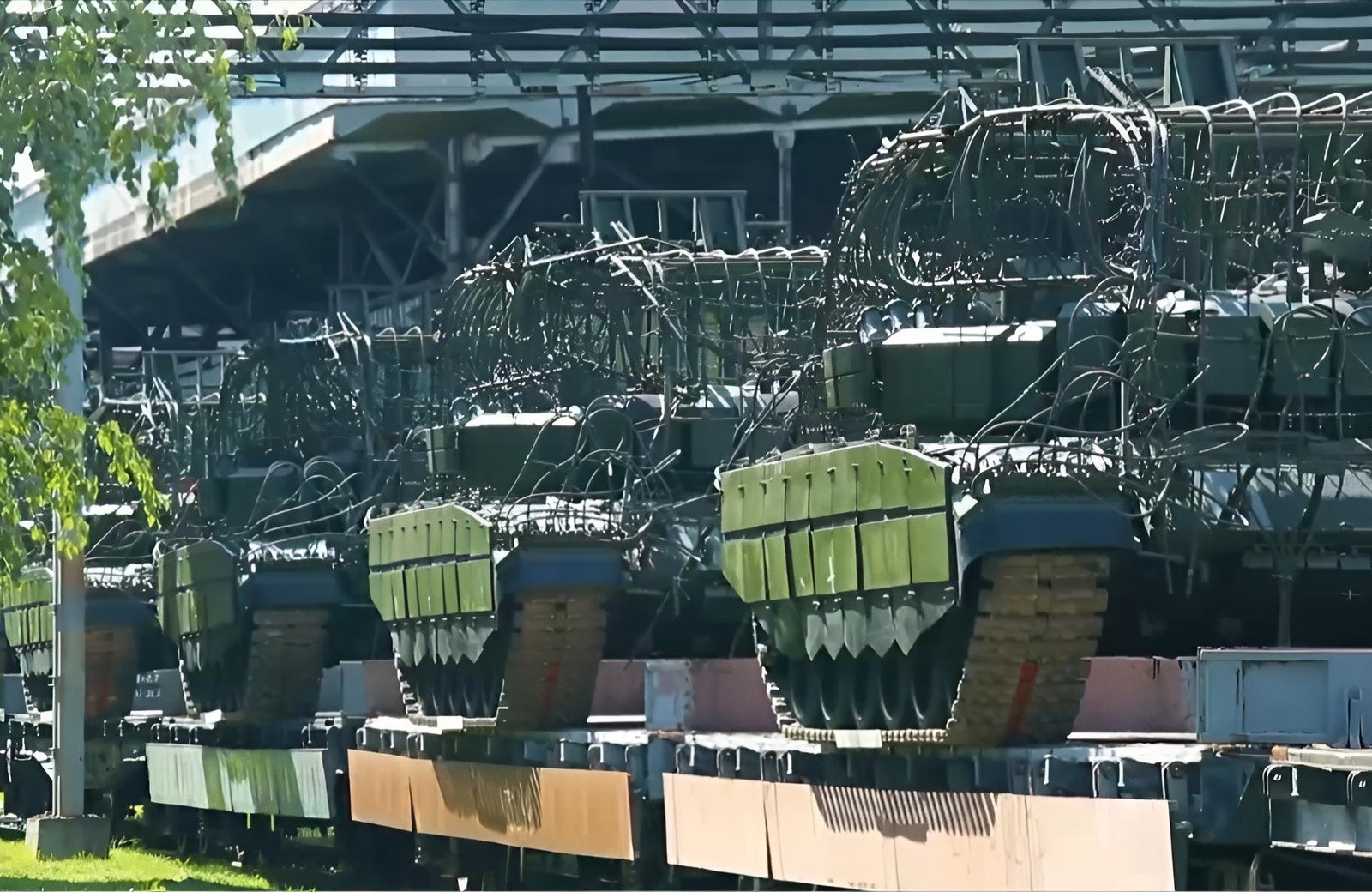
The Polish Army currently has more than 200 South Korean-made K2 tanks. The first 180 have already been delivered under the 2022 contract.

A little over a year ago, on August 1, 2025, a second contract was signed for 180 K2 tanks to be delivered between 2026 and 2030. Of these, 116 are in the current K2GF configuration, with deliveries scheduled for 2026–2027, while 64 are in the K2PL configuration.
“Three K2PL tanks, the so-called reference tanks, are to be manufactured in South Korea. Poland, meanwhile, is to manufacture 61 serial-production K2PL tanks between 2029 and 2030,” Ratka said, describing the current production agreements.
The Polish side believes that South Korean requirements for protecting the acquired technologies are too vague, while the South Korean side is reluctant to share information about these technologies. For example, some documentation is currently available only in Korean. In addition, Poland believes that the costs of training specialists in maintenance and repair, which are to be covered under the agreement, are significantly overstated in some cases.
The South Korean company also disagrees over the maintenance of tank engines. According to Rzeczpospolita, the South Korean Ministry of Defense wants the technology transfer to take place at Bumar-Łabędy rather than at Wojskowe Zakłady Motoryzacyjne, which already has expertise in repairing Leopard 2 engines for the Polish Army.
At the same time, the South Korean side is reportedly being very inflexible in the negotiations. As a result, investment costs for some companies are so high that businesses such as Bumar-Mikulczyce and Zakłady Mechaniczne Tarnów are considering withdrawing from the project.
Speaking to Militarnyi, tank-building historian Andrii Tarasenko said the reasons cited are more of a cover for deeper problems.
“For example, if you have purchased technical equipment and machine tools to localize production but did not have enough money for a Korean translator, it looks more like an excuse. Disputes over who should be the contractor, Bumar or WZM, are typical business conflicts between interested parties. There is not much I want to comment on here — these are modern realities everywhere,” Tarasenko shared.
He also said these are consequences of choosing a development concept based on purchases from abroad.
“At first glance, they look economically attractive, but in the long term they lead to the loss of domestic capabilities and dependence, and when procurement volumes are large, the economic attractiveness begins to disappear — Polish money is being used to develop South Korean technology and science,” Tarasenko noted.
Regarding the possibility of production starting in 2028, he was skeptical, since even conducting a tender to purchase the necessary equipment would take more than two years.
Ratka said the Polish Army’s overall tank program is not under threat and that even if problems arise with the K2PL program, Poland has an alternative in the form of an order for 366 Abrams tanks. This includes 116 M1A1FEP tanks and 250 M1A2 SEPv3 tanks.
“As I understand it, the Americans are still offering joint production of M1A2 SEPv3 tanks. Eight Polish companies are already producing 52 different components for these tanks, both for the Polish and U.S. armies and for other customers,” Ratka said.

In his view, the cooperation will likely continue to expand, and more companies may become involved in production.
Підтримати нас можна через:
Приват: 5169 3351 0164 7408 PayPal - [email protected] Стати нашим патроном за лінком ⬇
Subscribe to our newsletter
or on ours Telegram
Thank you!!
You are subscribed to our newsletter