





Popular
The U.S. Air Force is seeking a ground-based air defense artillery system to protect air bases in various countries around the world from drones and cruise missiles.
The U.S. Air Force published a Request for Information (RFI) on the government’s procurement portal.
The military is looking for companies that can offer a medium-caliber ground-based air defense gun system with relatively inexpensive ammunition. The primary targets are to be subsonic cruise missiles and drones.
Previously, ground-based air defense for U.S. military facilities was primarily the responsibility of the U.S. Army, and the Air Force did not have its own gun systems. That is why the U.S. Air Force is now seeking its own capabilities.
For now, this is only a market study, not a procurement of a specific system.
The request refers to a Ground-Based, Medium-Caliber Gun Weapon System—a ground-based, medium-caliber air defense gun system.

A specific caliber has not been specified. However, the U.S. Army classifies 20, 25, 30×113 mm, 30×173 mm, and 40 mm as medium calibers.
The U.S. Air Force seeks a system equipped with capabilities for target detection, tracking, and engagement. Fifteen key operational and technical parameters have been identified for evaluating the systems, including the probability of hitting a target with a single salvo, range and altitude of operation, ammunition characteristics, sensor capabilities, mobility, and cost of operation, among others.

One of the key performance indicators will be the salvo probability of kill (Pk)—the probability of destroying a target with several shots or a salvo.
The system must be lightweight, modular, and capable of being rapidly deployed to areas with limited infrastructure. C-130 Hercules, C-17 Globemaster III, and C-5 Galaxy military transport aircraft can be used to transport it.
The need to strengthen gun-based air defense became particularly apparent following the attacks by Iran. The massive strikes highlighted the problem of the high cost of intercepting large numbers of relatively inexpensive targets.
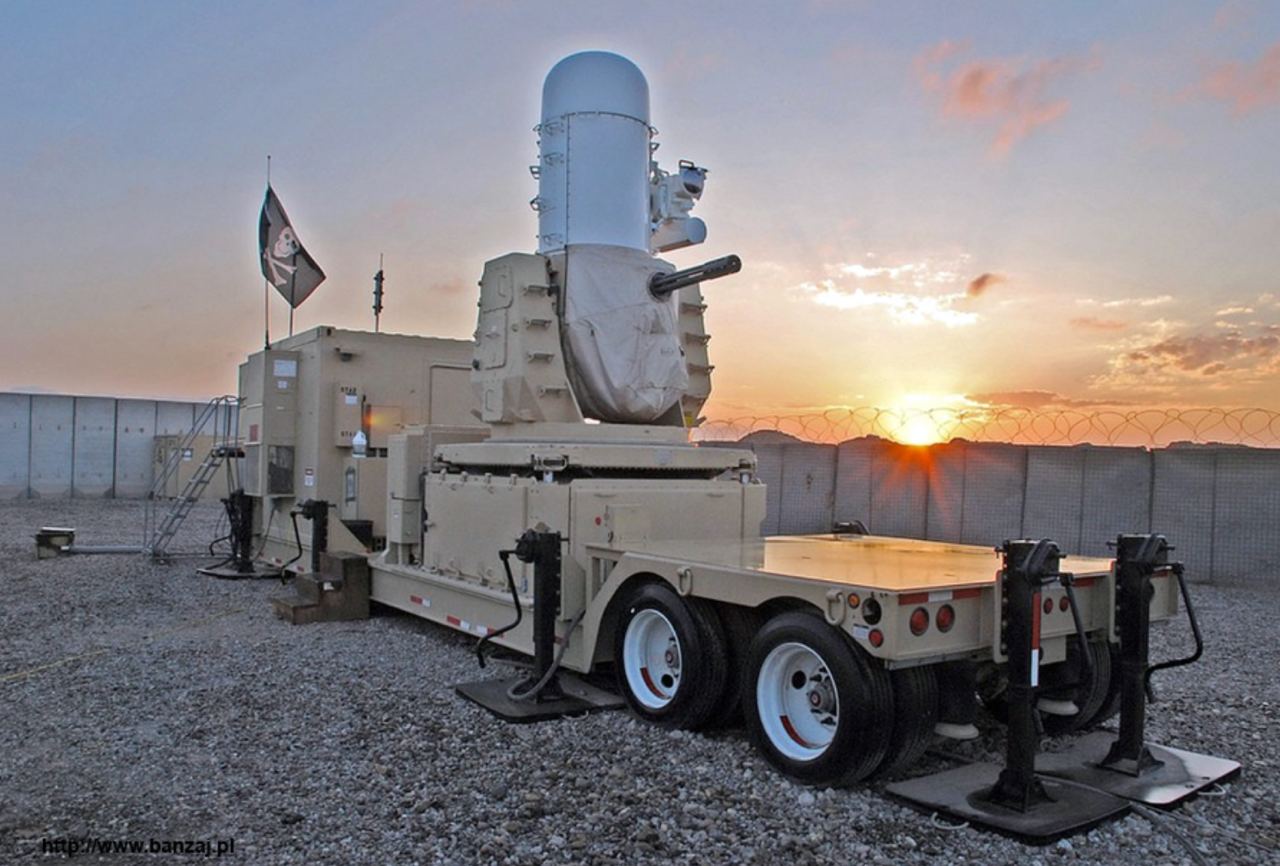
Similar systems are already in use by the U.S. Army and the Marine Corps. Specifically, the Centurion C-RAM is equipped with a 20 mm M61 Vulcan cannon, while the Sgt. Stout is equipped with a 30 mm XM914 cannon with programmable ammunition.
For example, a Shahed-136 is estimated to cost $35,000–$50,000, while a Patriot PAC-3 missile can cost around $5 million. Cannon systems can serve as a first line of defense and reduce the cost of countering such targets.
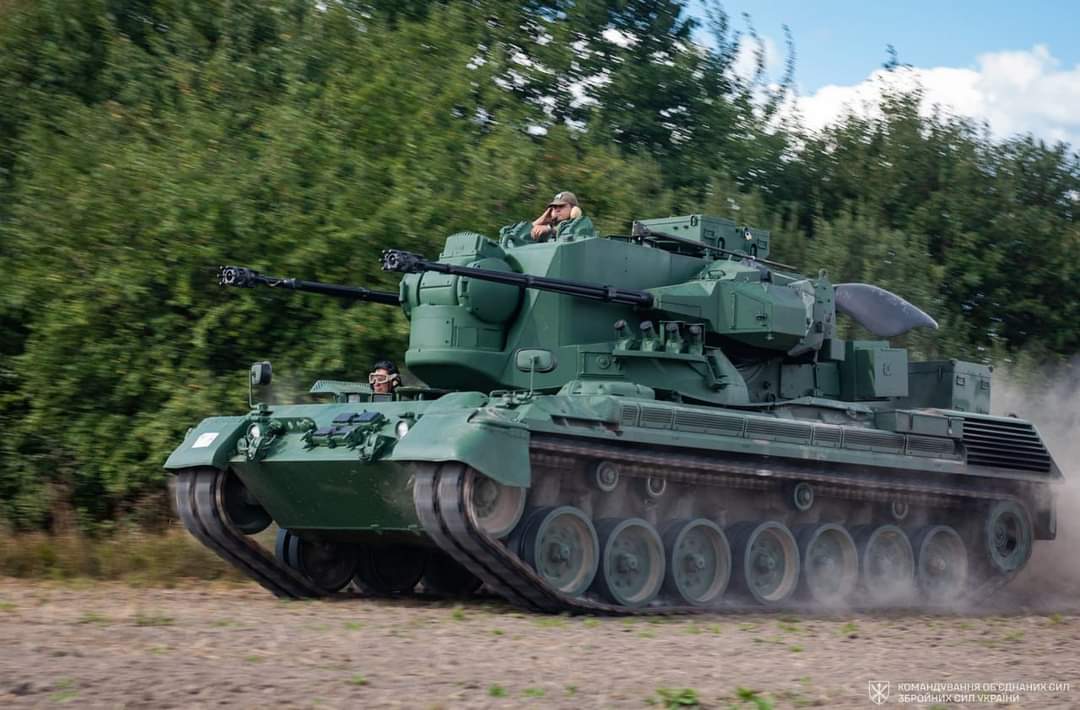
Interest in such weapons has also been influenced by Ukraine’s experience. The Ukrainian military is using German Gepard systems equipped with two 35 mm cannons against attack drones, demonstrating the effectiveness of cannon-based air defense against large numbers of aerial targets.
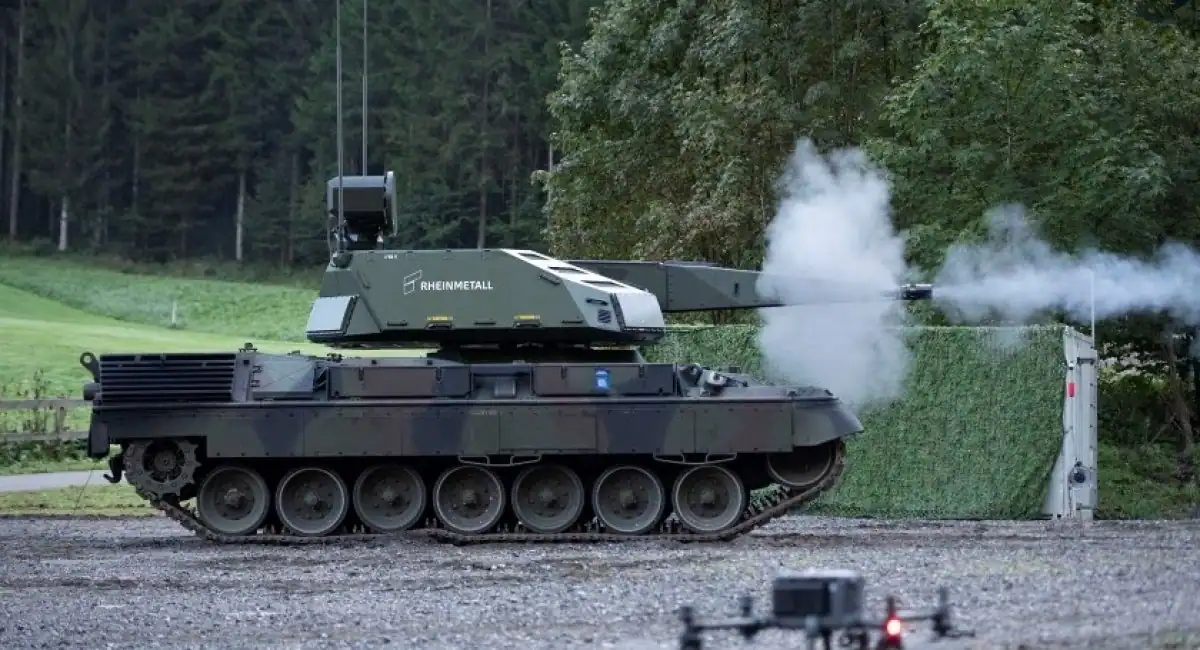
One potential option is the Skyranger 35 from Germany’s Rheinmetall. The system uses a 35 mm KDG 35/1000 cannon with a rate of fire of up to 1,000 rounds per minute and an effective range of up to 4,000 meters.
The system can use AHEAD programmable air-burst munitions and can be mounted on various wheeled and tracked armored platforms. Ukraine is already receiving such systems, and their combat use demonstrates the capabilities of modern cannon-based air defense against drones.
Another potential option is the new American Raid Hunter from Northrop Grumman. The company has unveiled a 50 mm ground-based air defense gun system that combines an automatic cannon, guided 50 mm ammunition, and a networked command-and-control system.
Підтримати нас можна через:
Приват: 5169 3351 0164 7408 PayPal - [email protected] Стати нашим патроном за лінком ⬇
Subscribe to our newsletter
or on ours Telegram
Thank you!!
You are subscribed to our newsletter