






Popular
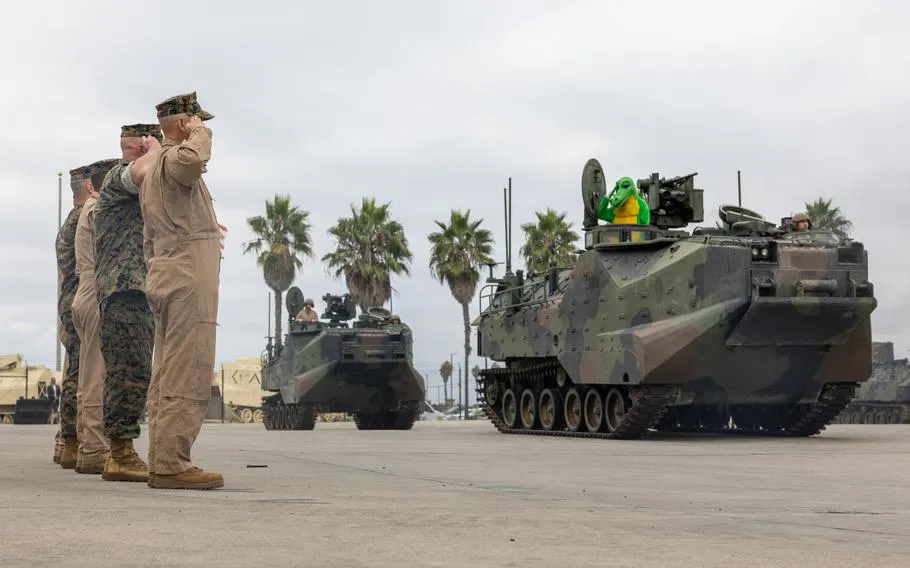
The US Marine Corps held an official farewell ceremony for AAV-7 — the Assault Amphibian Vehicle Sundown Ceremony — at the Amphibious Assault School at Camp Pendleton.
The event was reported by the Marine Corps press service.
According to the service, the ceremony honored 53 years of the vehicle’s service in the Marine Corps, as well as the Marines and sailors who served with it.
“AAV-7 served as many things: a ship-to-shore vehicle, an armored fighting vehicle, an infantry transport, a logistics platform, and sometimes even a rescue boat. Most importantly, it was where Marines made their mark in combat, service, and sacrifice,” said Col. Lynn W. Berendsen, commanding officer of the Assault Amphibian School.
AAV-7, nicknamed the Alligator by the military, entered service in 1972 and featured a water-jet propulsion system and a stern ramp for faster ship-to-shore landings. As part of the Life Extension Program in the 1980s, the vehicle received a new engine, transmission, and combat module, after which it was reclassified as AAV-7A1.

In the late 1990s, AAV-7 underwent another major upgrade, including a second engine replacement and suspension improvements. A1 variants received the same engine used in Bradley infantry fighting vehicles, providing additional logistical advantages.
In the 1990s, the Marine Corps began developing a replacement for AAV-7: the Expeditionary Fighting Vehicle (EFV). The EFV was capable of moving on water at speeds of nearly 30 miles per hour (48 kilometers per hour) thanks to its planing hull.
This feature was intended to allow US Navy ships to land vehicles at greater distances from shore during amphibious operations. The EFV was also equipped with a turret mounting a 30 mm automatic cannon, significantly increasing its firepower.
However, the estimated cost of a single EFV eventually reached about $20 million — more than the then-modern modifications of the M1 Abrams tank. Rising costs led to the program’s cancellation in 2011.
Over time, AAVs also became increasingly prone to serious and sometimes fatal incidents, including fires and flooding, which resulted in deaths. In late 2021, the Marine Corps halted regular AAV deployments and prohibited them from entering the water.
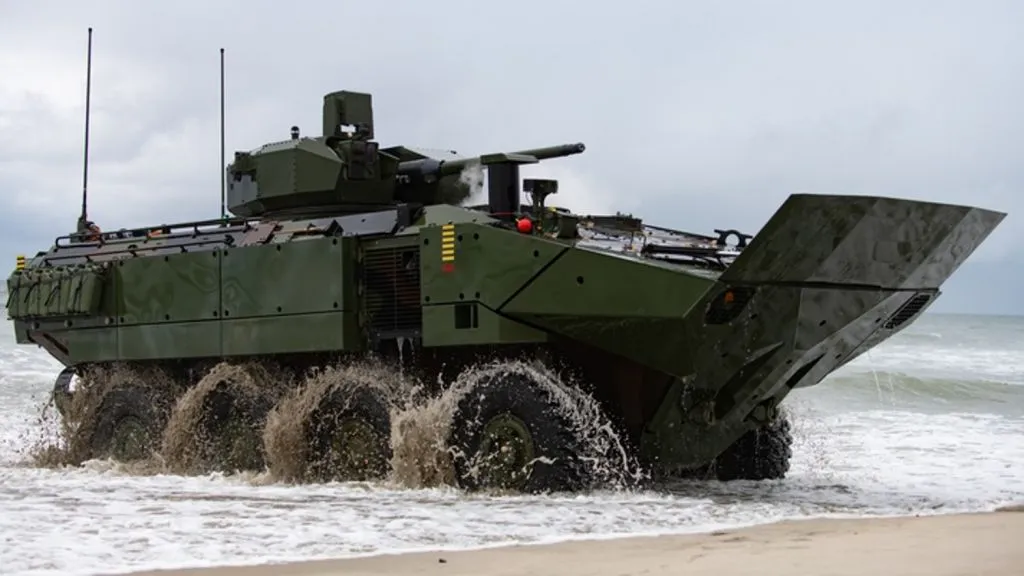
In 2019, the US Marine Corps ordered its first batch of wheeled ACV armored personnel carriers from BAE Systems. The vehicles, based on the Italian Iveco SuperAV, were designed to replace AAV-7. In May 2025, the first batch of ACVs equipped with a 30 mm combat module was ordered.
With arriving replacements and the complete retirement of the AAV, the US has begun actively selling surplus vehicles to NATO allies, including Romania and Greece, as well as to Taiwan.
Підтримати нас можна через:
Приват: 5169 3351 0164 7408 PayPal - [email protected] Стати нашим патроном за лінком ⬇
Subscribe to our newsletter
or on ours Telegram
Thank you!!
You are subscribed to our newsletter