







Popular
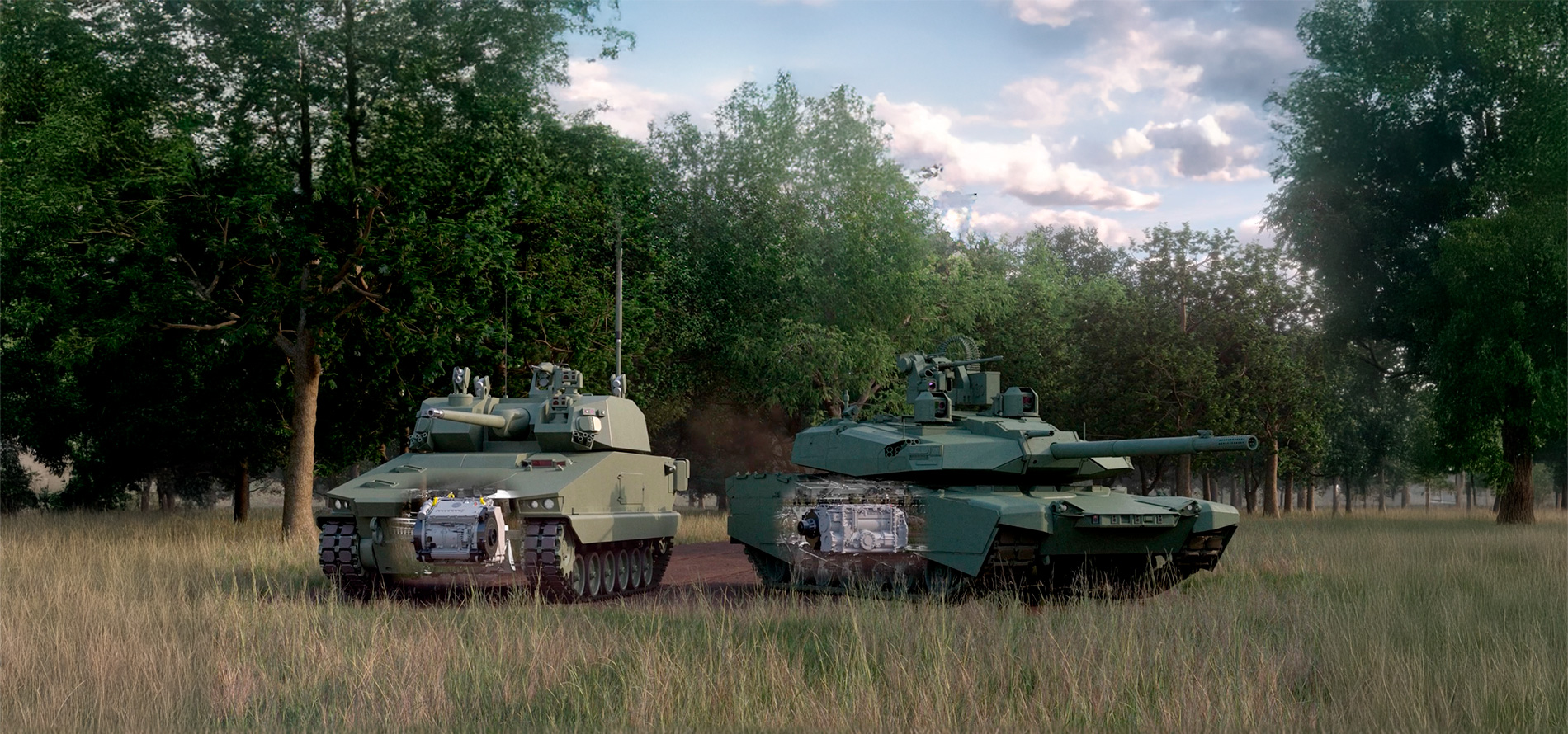
General Dynamics Land Systems has delivered the first prototype XM30 Wolf IFV to the U.S. Army for testing. The XM30 Wolf is currently competing with the XM30 Lynx as the future replacement for the Bradley IFV.
This was announced by Jeffrey Norman—a retired U.S. Army brigadier general who currently serves as director of strategy and development for General Dynamics Land Systems in the U.S.—on his LinkedIn page.
“We will continue to improve the XM30 Wolf every day through new software versions, new technologies that integrate easily via our modular, open system architecture, and an innovative digital design built from the ground up with upgradeability in mind,” he stated.
The XM30 is already the sixth U.S. Army program since the 1980s aimed at replacing the Bradley, while all previous programs have failed.

In early 2020, the Lynx KF41 from the Raytheon-Rheinmetall consortium and the Griffin III from General Dynamics Land Systems competed in the contest for a new infantry fighting vehicle.
However, both proposals were disqualified. The first due to the lack of a finished prototype, and the second due to non-compliance with requirements. Following this, the U.S. Army announced a relaunch of the program in 2021.
The Wolf is a new design that is likely based in part on existing solutions from the European ASCOD IFV developed by General Dynamics European Landsystems. The Lynx is based on the KF41 Lynx design, which Rheinmetall Landsysteme, together with partners from Hungary and Italy, manufactures for the Hungarian, Italian, and Ukrainian markets. However, the vehicle has been significantly modified to meet U.S. requirements.

Both vehicles feature a layout typical of infantry fighting vehicles and a two-person crew seated side-by-side behind the engine and transmission compartment. The troop compartment at the rear of the hull is designed to carry six infantrymen.
Instead of a turret, the prospective IFV features an unmanned combat module that does not protrude into the hull. It is armed with a Northrop Grumman XM913 50 mm cannon, developed specifically for this project, which fires 50×228 mm ammunition. The cannon is paired with a standard 7.62 mm M240 machine gun.

The vehicles can also be equipped with an additional 12.7 mm Browning M2A1 heavy machine gun in a remotely controlled combat module mounted on the turret roof. The armament is complemented by a universal launcher for TOW or CCMS-H family anti-tank guided missiles, as well as for loitering munitions.
The level of armor protection has not been disclosed, but it is expected to be robust and modular. The protection package is complemented by Elbit’s Iron Fist active protection system, which was also selected for the M2A4ED1 Bradley.
The XM30 is expected to enter service in the early 2030s, gradually replacing the upgraded Bradleys in combat units.
Підтримати нас можна через:
Приват: 5169 3351 0164 7408 PayPal - [email protected] Стати нашим патроном за лінком ⬇
Subscribe to our newsletter
or on ours Telegram
Thank you!!
You are subscribed to our newsletter