


Popular
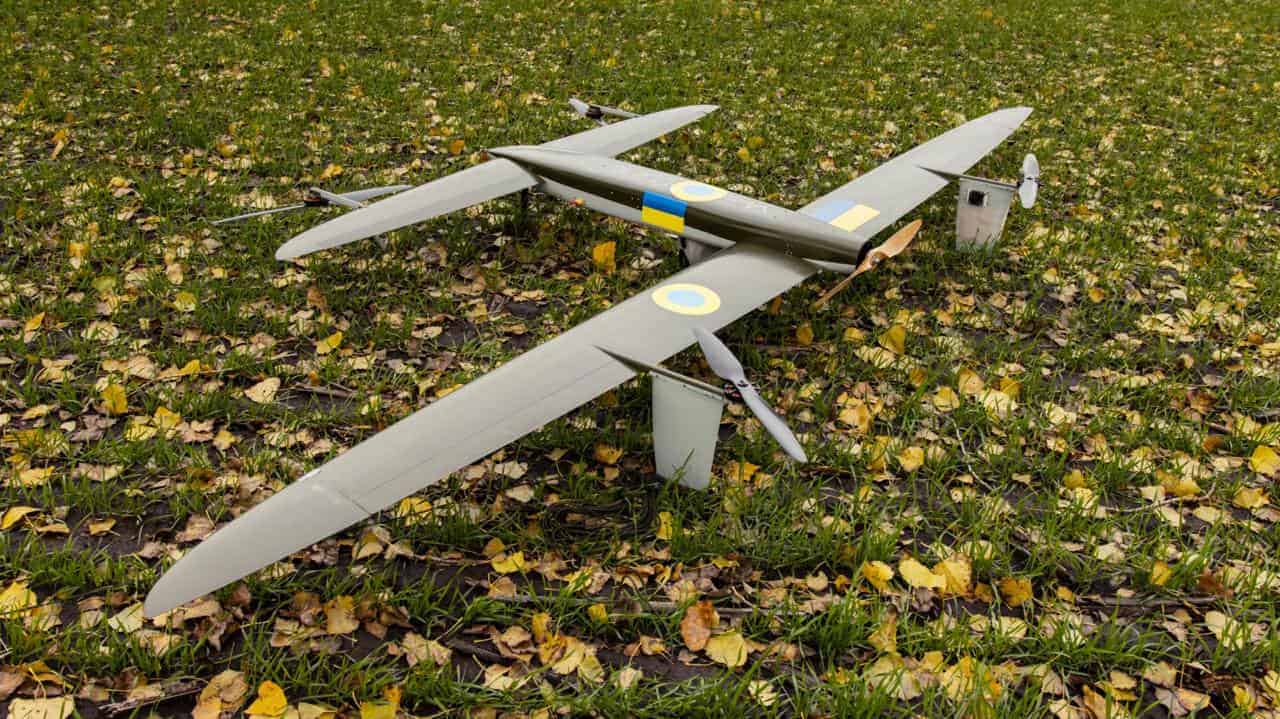
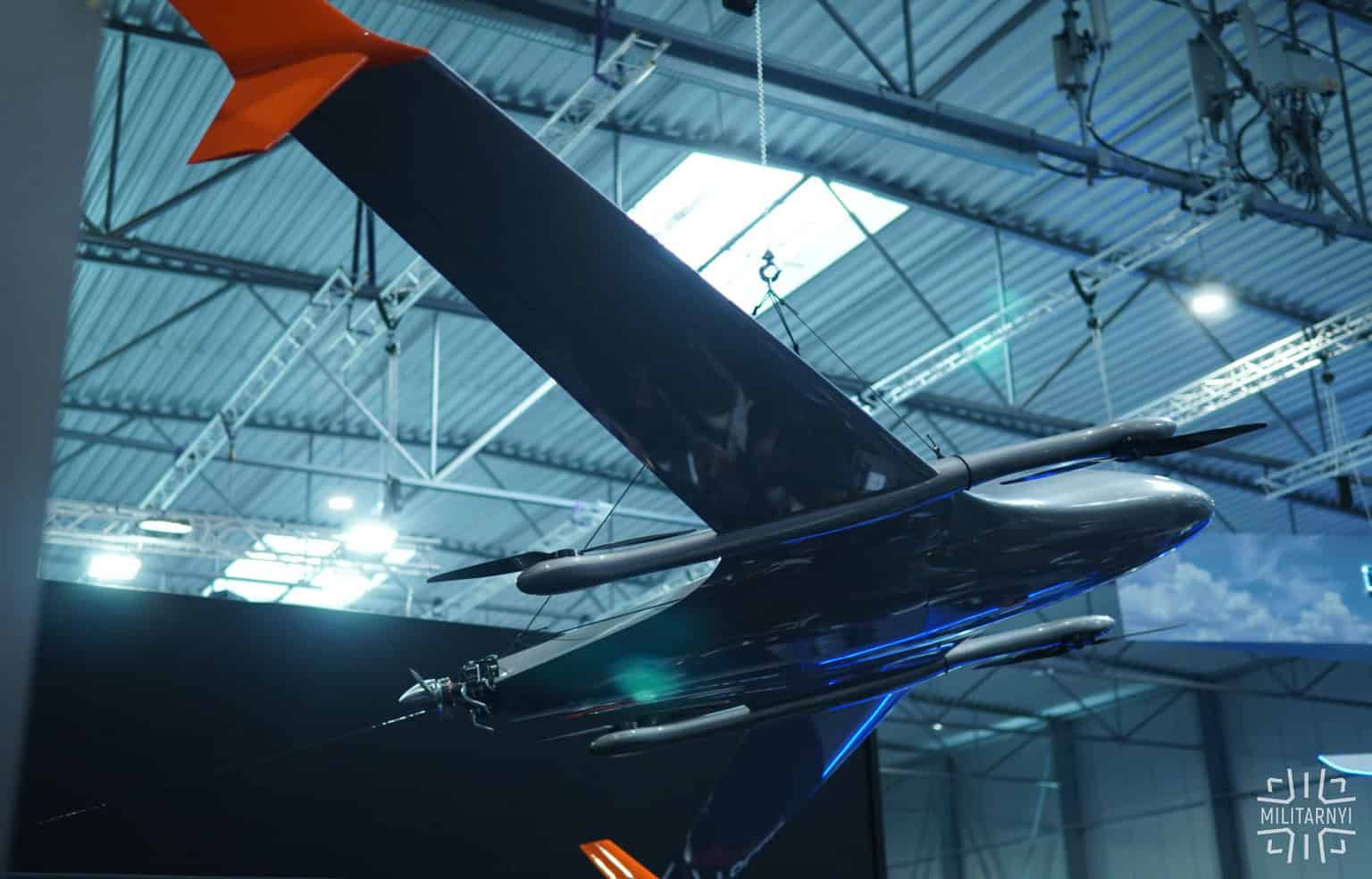
Ukrainian company ANT has unveiled an upgraded version of its Mercury reconnaissance unmanned aerial system.
The company shared this with Militarnyi.
After the modernization, the vehicle can stay airborne for up to five hours and cover up to 300 km. It has also received improved communications and navigation systems for operating in intense electronic warfare environments.
Compared to the previous version, the maximum operating altitude has increased from 3,000 to 4,000 meters, and flight endurance has increased from 2.5 to 4 hours.
In practical use, flight endurance can reach five hours. The maximum range has increased from 170 to 250 km and, under operational conditions, can reach up to 300 km, according to the developer.
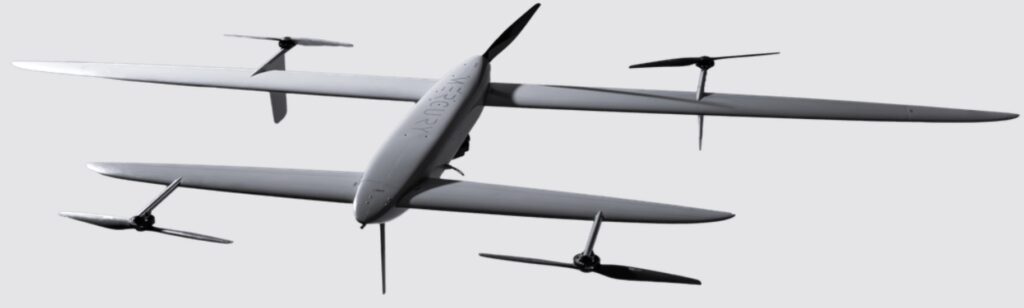
The upgraded Mercury has a maximum speed of 126 km/h and cruises at 90 km/h. Its takeoff weight has increased from 13 to 19 kg.
One key upgrade was improved resistance to electronic warfare. Mercury is equipped with two communication channels: a primary channel at 5.8 GHz and a backup channel at 433 MHz. The backup channel uses frequency-hopping spread spectrum (FHSS) technology, making it more difficult to jam.
The UAS also supports flight using GPS and GLONASS satellite signals, inertial navigation without satellite signals, and radio beacon navigation. Other features include autonomous waypoint navigation, radio-silent mode, and auto-return to the launch point.
Ukrainian company Aviation New Technologies unveiled its Mercury reconnaissance unmanned aerial system in June 2025.
It was developed in cooperation with military personnel for tactical reconnaissance, target detection, and fire adjustment in environments with active electronic warfare.
At the time of its unveiling, the UAS had a stated range of up to 200 km and a flight endurance of up to three hours. The system has undergone combat testing and received codification from Ukraine’s Ministry of Defense.
In September 2025, the company showcased Mercury at the Defense Tech Valley exhibition. The system consists of two drones, a ground control station, and a communications antenna. Two operators can deploy it in 15 minutes.
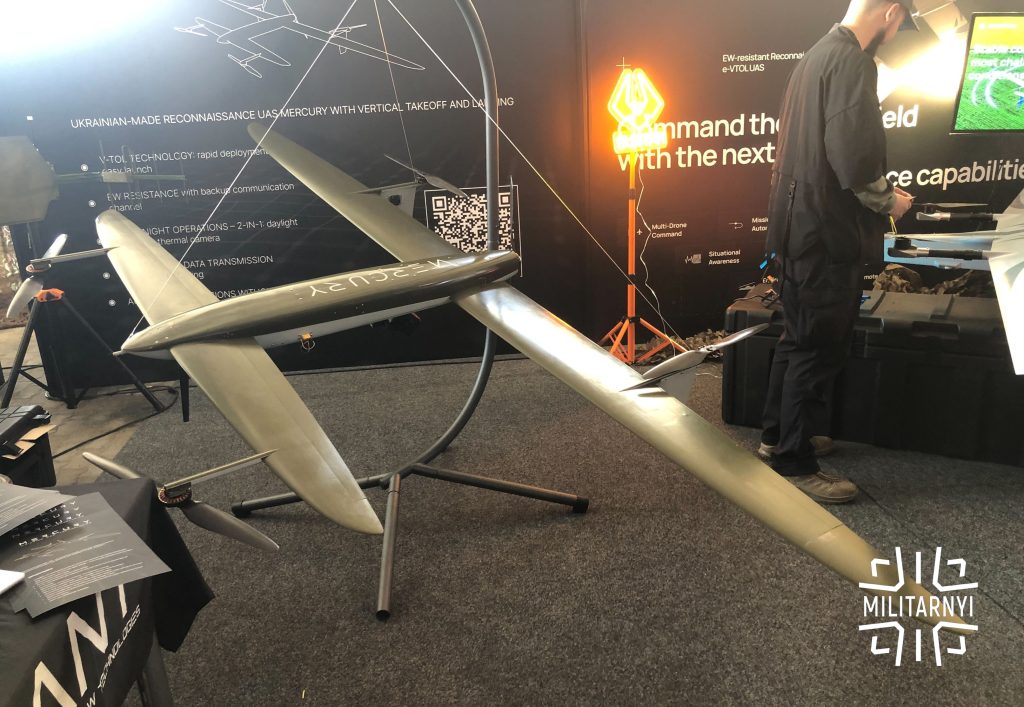
MERCURY uses a vertical take-off and landing (VTOL) design, eliminating the need for a catapult or runway. A 5 × 5-meter area is sufficient for launch and landing, simplifying field deployment.
In April 2026, MERCURY was equipped with a new high-sensitivity optical system combining a daylight camera and a thermal imager. The daylight camera supports up to 210× zoom, while the thermal imager features a 1280 × 1024-pixel matrix and 4× zoom. According to the developer, the system can detect vehicles up to 20 km away and people up to 15 km away. The camera also provides 360-degree horizontal coverage and a vertical view of up to 110°.
Підтримати нас можна через:
Приват: 5169 3351 0164 7408 PayPal - [email protected] Стати нашим патроном за лінком ⬇
Subscribe to our newsletter
or on ours Telegram
Thank you!!
You are subscribed to our newsletter