




Popular

The Ministry of Foreign Affairs, in coordination with the Ministry of Digital Transformation, appealed to the International Telecommunication Union (ITU) to exclude Ukraine’s national territory from the declared coverage areas of the Russian Rassvet satellite communications system in all frequency bands.
This was reported by Ukrainian Foreign Minister Andrii Sybiha on his X page.
A corresponding note was transmitted to the ITU Radiocommunication Bureau through Ukraine’s Permanent Mission to the United Nations and other international organizations in Geneva.
“The purpose of Russia’s use of such satellites over Ukrainian territory is perfectly clear and has absolutely nothing to do with civilian purposes. Instead, Moscow seeks to use them to support its war, kill people, and commit crimes of genocide,” the ministry emphasized.

Ukrainian diplomats called on all partners to support the position and block the operation of the Rassvet system—not only over Ukraine’s sovereign territory but also over the sovereign territories of other countries.
The International Telecommunication Union (ITU) is a specialized agency of the United Nations that coordinates the international use of the radio frequency spectrum and satellite orbits, as well as develops technical standards in the field of telecommunications. The organization includes member states, as well as companies and other participants in the telecommunications sector.
The organization plays a key role in the allocation and international coordination of radio frequencies used by satellites and ground stations. Through the ITU, countries register frequency assignments and the parameters of satellite networks to avoid harmful radio interference between systems in different countries.
The organization establishes international rules for the use of spectrum and orbital resources and provides a coordination mechanism in cases where the operation of one system may interfere with another.
On March 23, 2026, Russia launched into orbit the first group of 16 production Rassvet communications satellites from the company Bureau 1440, which are intended to serve as the Russian counterpart to the Starlink system. One satellite fell out of orbit, 12 formed an operational constellation, and three more continued to raise their orbits. The second batch of 16 satellites was launched on July 19.
An analysis of the orbits shows that the first operational constellation was already providing at least two stable communication windows per day over Ukraine, each lasting more than an hour. Russia can already plan specific operations while the satellites are passing overhead, even if it is not yet capable of maintaining a constant communication link.

In June, Russian dictator Vladimir Putin directly linked the Bureau 1440 project to the prospect of controlling heavy drones. According to Russian plans, the number of units is set to grow rapidly, with commercial operation scheduled to begin in 2027.
Bureau 1440 base subscriber terminals measure up to 60 cm in length and width and weigh less than 15 kg. Each terminal has a bandwidth of up to 1 Gbit/s. Like Starlink terminals, the Russian terminals are based on active phased array (APAR) technology, which allows the terminal to automatically locate a satellite, establish, and maintain communication with it.
It is also known that Bureau 1440 is developing an aviation-grade subscriber terminal to provide satellite internet access on board aircraft, and has already created satellite communication terminals for trains capable of operating at speeds of up to 400 km/h.
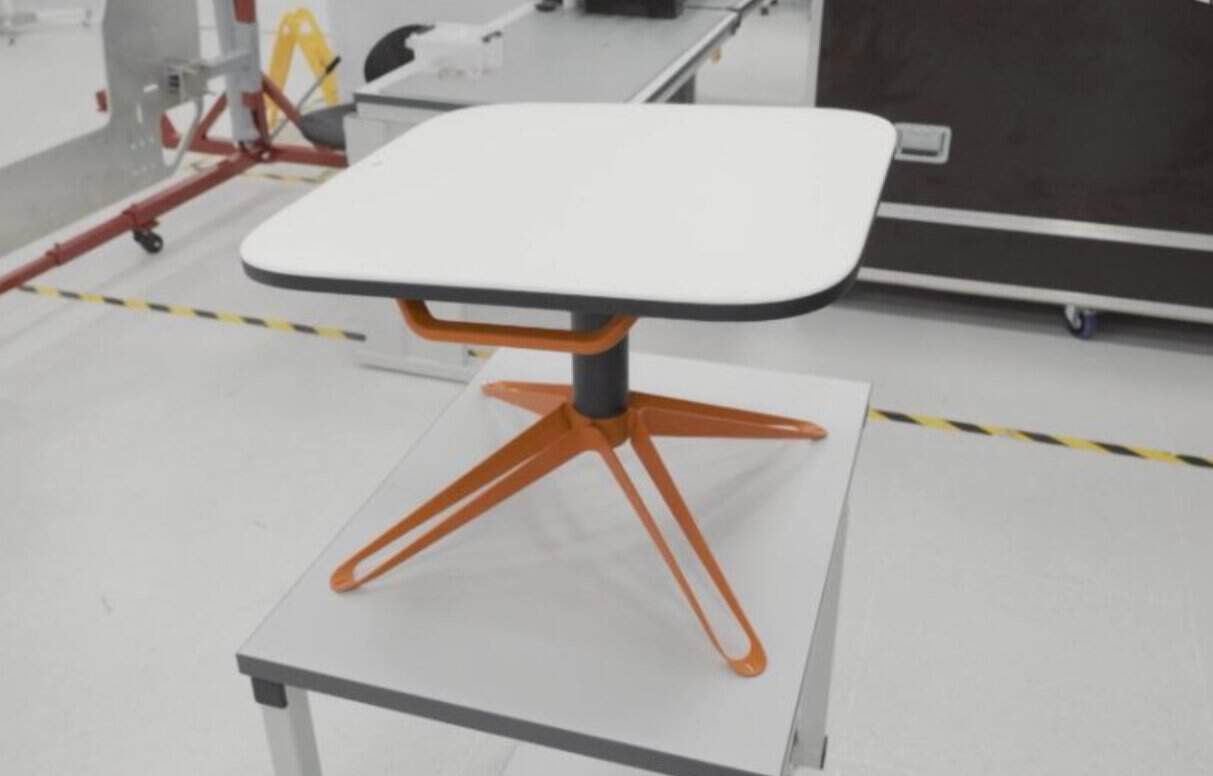
This indicates that satellite communication terminals could be used not only for online control of strike and reconnaissance drones based on the Geran-2 and Garpiya UAV platforms, but also for guiding jet-powered drones and, potentially, cruise missiles.
Підтримати нас можна через:
Приват: 5169 3351 0164 7408 PayPal - [email protected] Стати нашим патроном за лінком ⬇
Subscribe to our newsletter
or on ours Telegram
Thank you!!
You are subscribed to our newsletter