






Popular
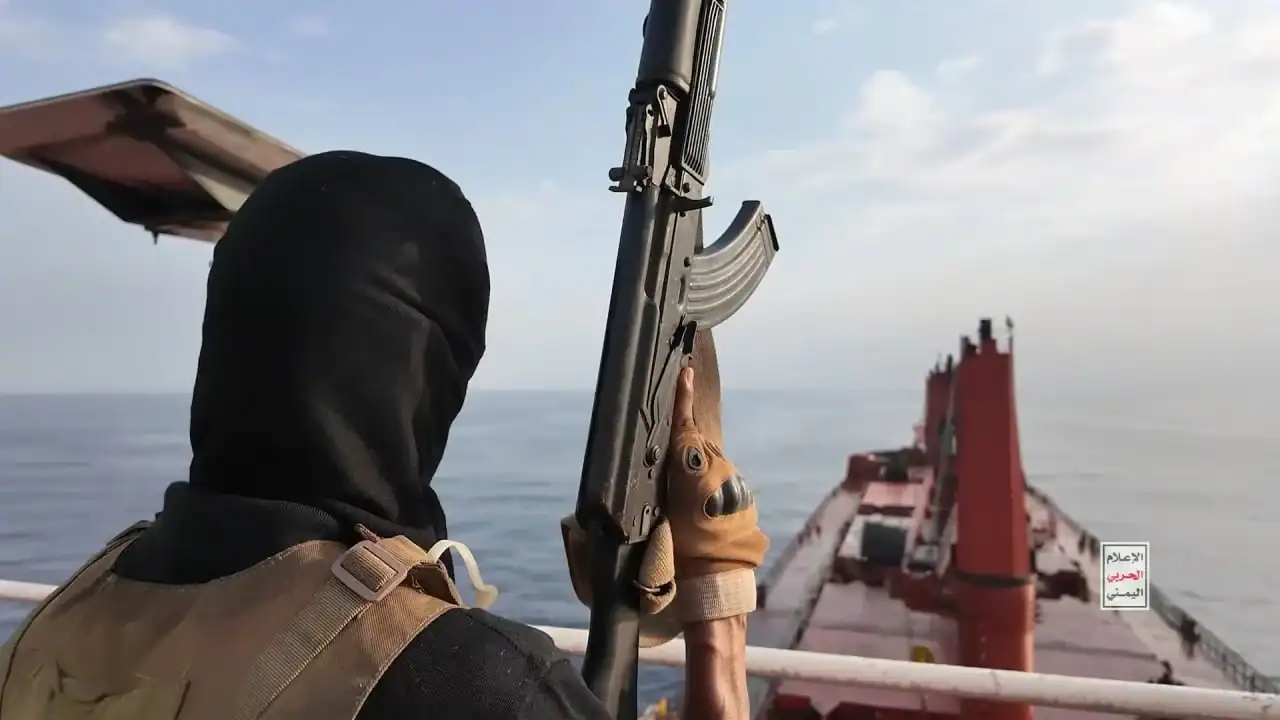
Saudi Arabia has established a naval task force to counter the Houthis and protect shipping in the Red Sea and adjacent straits.
The creation of the coalition was announced in a joint statement by its members and reported by the Critical Threats research project and think tank.
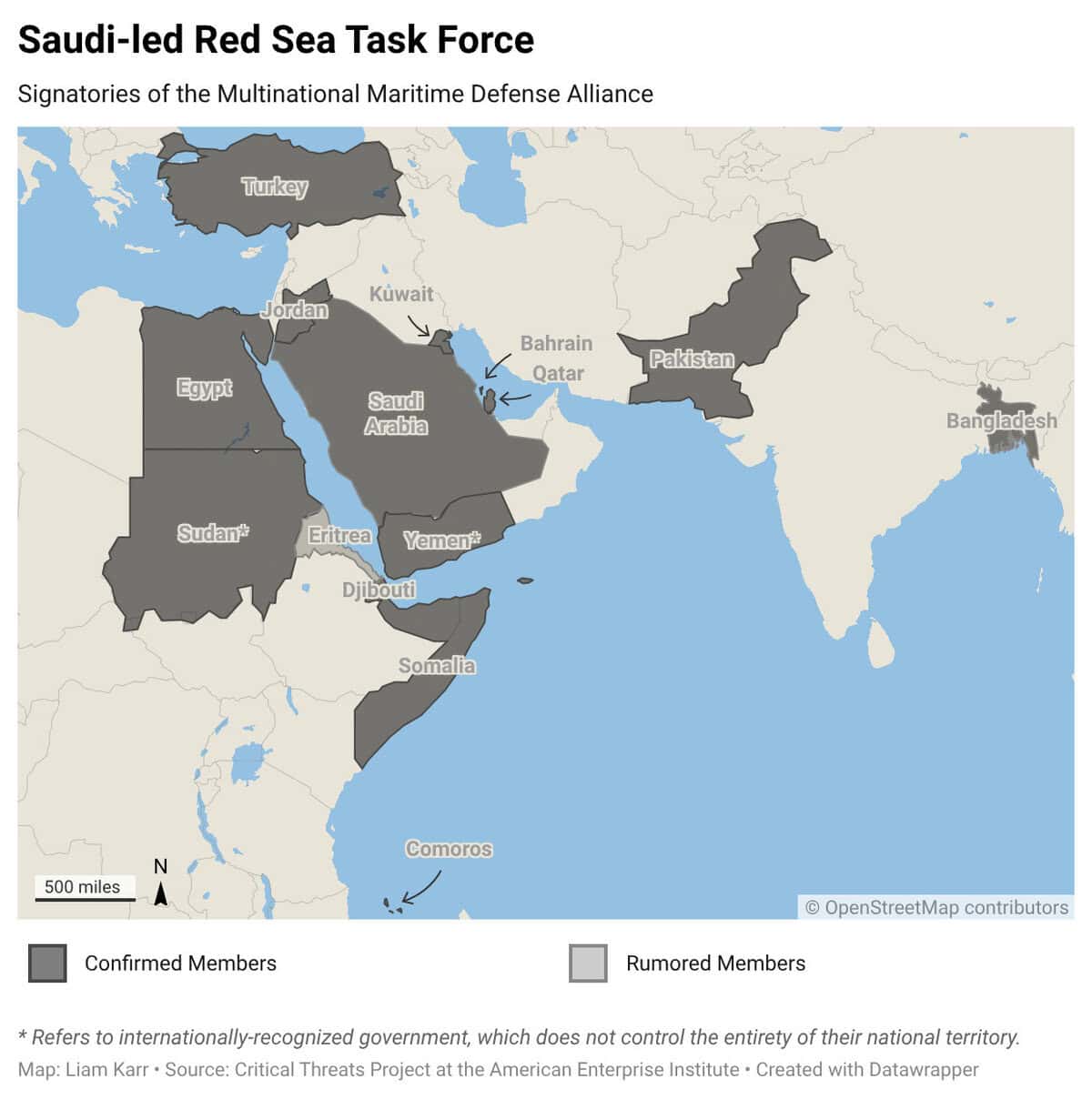
The new structure includes 14 countries: Bahrain, Bangladesh, Comoros, Djibouti, Egypt, Jordan, Kuwait, Pakistan, Qatar, Saudi Arabia, Somalia, Sudan, Turkey, and the Yemeni government.Eritrea has also reportedly joined the coalition.
The task force is headquartered in Saudi Arabia. In total, around 50 countries, including the United States and European Union member states, have been invited to participate.
The coalition was established in response to the growing threat to commercial shipping in the Red Sea and the Bab el-Mandeb Strait.Houthi activity has already reduced vessel traffic through the strait by approximately 20%.
The Houthis continue to attack vessels linked to Saudi Arabia while expanding their missile and drone capabilities with support from Iran’s Islamic Revolutionary Guard Corps.
The group has also threatened to expand its maritime blockade and impose a complete isolation of the region.
The coalition’s core members are Saudi Arabia and Egypt. These countries operate the largest navies by tonnage among the states bordering the Red Sea.
Turkey and Pakistan will also contribute naval capabilities. At the same time, the smaller member states generally have forces suited to coastal defense and patrol missions.
The United Arab Emirates is not part of the new structure. This is linked to the longstanding rivalry between Abu Dhabi and Riyadh over regional influence, particularly in Yemen and Somalia, as well as disagreements over the war in Sudan.

Despite recent statements of solidarity, the UAE has lost access to several military facilities on Yemeni islands near the Bab el-Mandeb Strait and in northern Somalia.
Israel is also absent from the coalition. Saudi Arabia previously suspended the normalization process under the Abraham Accords amid the fighting in Gaza, Lebanon, and Syria, as well as Israel’s recognition of the self-proclaimed state of Somaliland.
It remains unclear how the new coalition will coordinate its operations with Western naval missions already operating in the region.
These include the U.S.-led Combined Task Force 153, which operates under Egyptian command, and the European Union’s naval operation Aspides.
Since February 2024, Operation Aspides has provided protection and escort for commercial vessels in the Red Sea amid ongoing Houthi attacks.
For the navies of Djibouti, Eritrea, Somalia, and Sudan, which do not operate frigates or corvettes, the new task force could provide a platform for combating piracy and smuggling.
Another key task will be to disrupt illicit maritime routes used to deliver Iranian weapons to the Houthis.
According to analysts, Eritrea and Sudan are among the territories used as transit hubs for these weapons shipments.
Some of the weapons are also reportedly transferred to forces linked to al-Shabaab and the Islamic State affiliate in Somalia.
The new coalition is therefore intended not only to protect commercial shipping in the Red Sea but also to disrupt weapons supply routes to the Houthis and other armed groups operating in the region.
Підтримати нас можна через:
Приват: 5169 3351 0164 7408 PayPal - [email protected] Стати нашим патроном за лінком ⬇
Subscribe to our newsletter
or on ours Telegram
Thank you!!
You are subscribed to our newsletter