



Popular
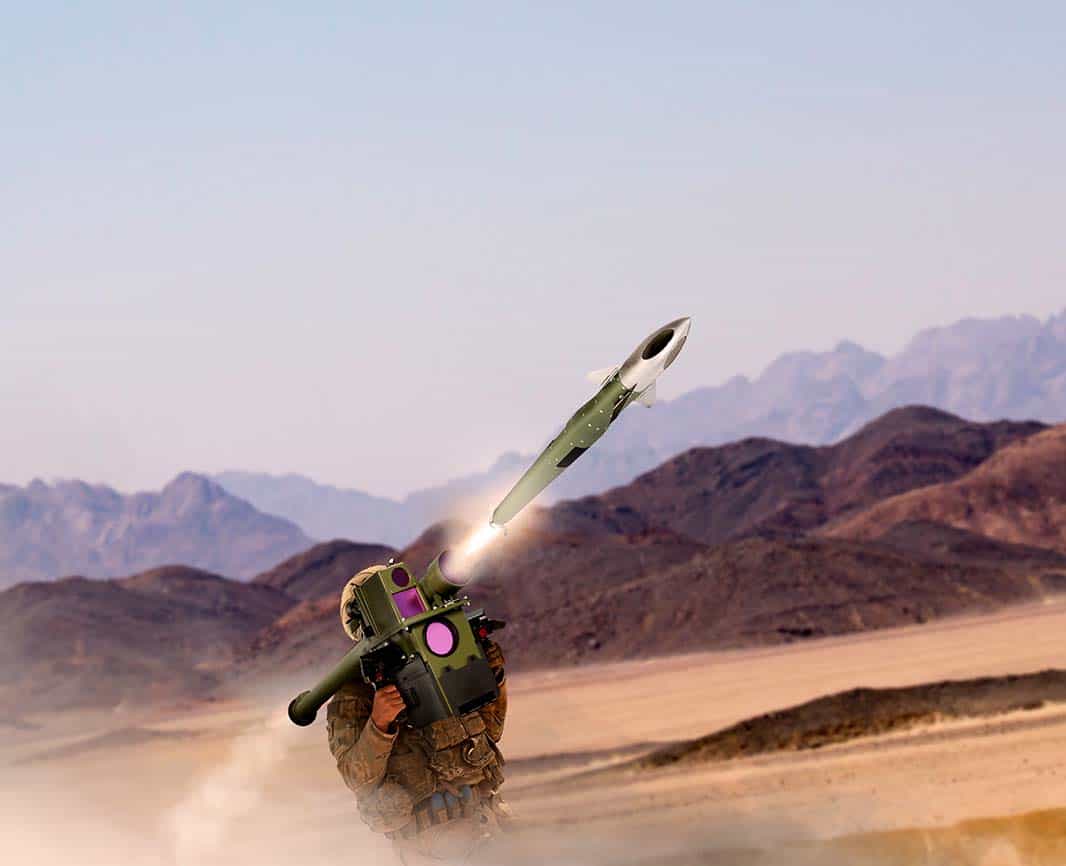
The United States is seeking a third candidate to replace the Stinger man-portable air defense system (MANPADS) missile under its Next Generation Short Range Interceptor (NGSRI) program.
The Defence Blog reported on this.
The U.S. Army plans to invite the most promising contenders to demonstration tests in May and June 2027, with one or more prototype development contracts expected to be awarded in September.
Lockheed Martin and Raytheon are already participating in the competition. The third contender is expected to provide the U.S. Army with an alternative missile option and increase price competition ahead of the production decision.

According to the program requirements, the MANPADS being developed under NGSRI must feature a fire-and-forget guidance system and provide a high probability of engaging helicopters, aircraft, and Group 2 (9.5–25 kg takeoff weight) and Group 3 (25–600 kg takeoff weight) unmanned aerial systems (UAS).
The missile must also ensure backward compatibility, including the ability to be launched from existing FIM-92 Stinger launchers and integrated into the U.S. Army’s SGT STOUT short-range air defense (SHORAD) system (formerly M-SHORAD), based on the Stryker armored vehicle, as well as the U.S. Marine Corps’ MADIS (Marine Air Defense Integrated System).

According to the test requirements, one launch must successfully engage a Hot Plate-type thermal target suspended at least 25 meters above the ground at a range of 6 km.
Two additional launches must demonstrate the interception of Group 3 unmanned aerial systems (UAS) at ranges of 5–8 km: one against a target approaching head-on and the other against a target crossing laterally at a 90-degree angle. Each test will be evaluated on a pass/fail basis. For comparison, the Stinger missile’s engagement range on the SGT STOUT system is approximately 4.8 km.
To participate in the competition, companies must confirm their readiness to conduct live-fire tests in May 2027. They must also be prepared to deliver at least 50 test missiles and six launchers within three months of the firing trials. In addition, they must demonstrate the ability to begin initial low-rate production no later than the fourth quarter of fiscal year 2028.
Participants must estimate the cost of manufacturing at least 11,000 missiles and 2,200 launchers over ten years. The U.S. Army has set target prices of less than $200,000 per missile and less than $200,000 per launcher.
However, the primary evaluation criterion will be successful target interception, followed by the ability to deliver test units and begin production, with cost assessed thereafter.
In January 2026, Lockheed Martin successfully conducted flight tests of its missile developed under the NGSRI program. The company claims that, in certain engagement scenarios, the new missile more than doubles the performance of the legacy Stinger MANPADS in terms of range, probability of kill, and resistance to countermeasures.
The system incorporates artificial intelligence (AI) and machine learning (ML) to improve target recognition and guidance in complex electronic warfare environments.
On February 2, 2026, Raytheon announced a successful ballistic test demonstrating a shoulder-launched missile launch and drone tracking. In July, the company reported conducting several guided NGSRI missile launches at the Dugway Proving Ground in Utah.
Raytheon claims that its missile offers greater range and higher speed than the Stinger, enabling it to respond more effectively to emerging threats.
Підтримати нас можна через:
Приват: 5169 3351 0164 7408 PayPal - [email protected] Стати нашим патроном за лінком ⬇
Subscribe to our newsletter
or on ours Telegram
Thank you!!
You are subscribed to our newsletter