


Popular
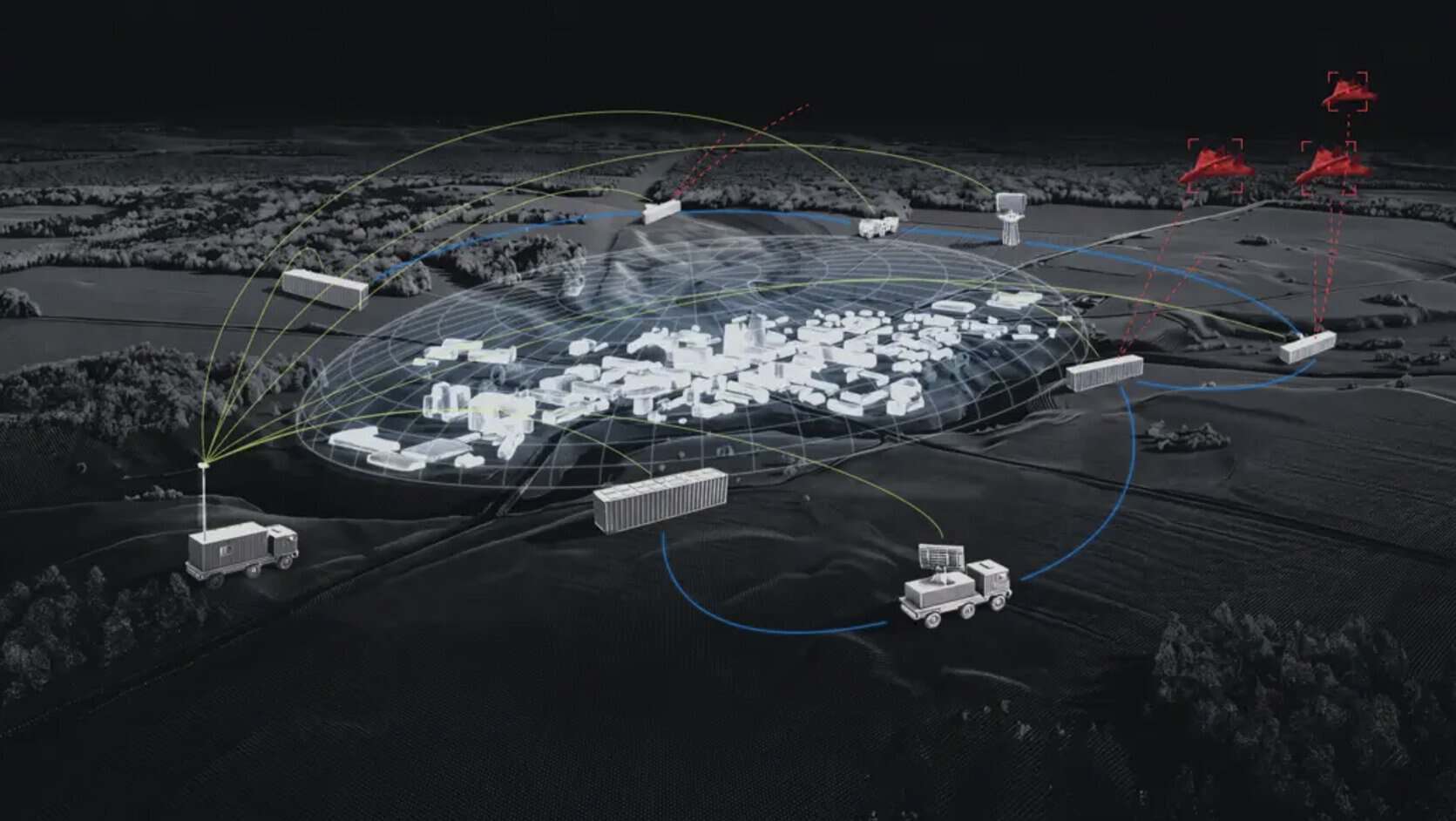
Helsing has developed the Contra autonomous AI-controlled air defense system, which independently controls interceptors.
Militarnyi reported this based on the company’s presentation, which took place at its new office in Berlin.
Contra enables the simultaneous detection and engagement of hundreds or thousands of air targets—including drones and missiles. To do this, the system integrates sensor and weapons data into a unified air picture and autonomously decides on target interception while maintaining human oversight.
The system was designed from the outset to integrate third-party equipment. Specifically, this includes other interceptors, laser systems for countering UAVs, anti-drone cannons, and net-based interception systems.
“Contra is capable of defending against massive attacks, missiles, and the latest generation of attack drones. It is a single system for various tasks, independent of the type of equipment,” the company states.
As part of the Contra project, Helsing has developed two high-speed interceptors: the AD-1 Inferno, powered by a jet engine, and the AD-2 Ambush, powered by a solid-fuel rocket engine.

“They are designed to outperform even the fastest threats posed by jet-powered drones and cruise missiles in terms of speed and effectiveness,” the company says.
Helsing has already signed a contract to supply Contra, while the AD-1 and AD-2 interceptors are currently undergoing testing.
Contra is powered by Altra—Helsing’s military artificial intelligence, command, and control platform.

Altra integrates data from radar, electro-optical, infrared, and acoustic sensors from various manufacturers via open, published interfaces. The platform also enables interoperability with the SitaWare system and national combat management systems.
Contra is designed to operate even under conditions of electronic warfare, loss of communication channels, and failure of individual system components.
The AD-1 is a jet-powered interceptor designed to fill gaps in defense capabilities. It is intended for situations where threats outmatch electric interceptors in flight performance and traditional missile systems are too expensive for widespread use.
The Inferno launches immediately upon target detection and receives guidance commands during the cruise phase from the Contra system’s ground-based radar stations.

The interceptor can remain airborne for extended periods in standby mode, operate as part of a swarm, and re-engage targets in flight.
The AD-1 is designed for mass production in Europe under European control. According to the developers’ concept, it is intended to provide a more favorable cost-to-effect ratio for the defending side in terms of weapons and interception capabilities. The AD-1 integrates into the Contra system at the basic architecture level.
The AD-2 is an interceptor equipped with a solid-fuel rocket engine, designed to rapidly intercept targets in the upper threat range.
It can destroy high-speed, single-use strike drones flying at high altitudes, as well as subsonic cruise missiles beyond the AD-1’s range.

The Ambush is designed for mass production. This enables defense forces to maintain intensive interception of large numbers of targets without relying on a single production line.
The AD-2 integrates with Contra at the system’s basic architecture level and receives guidance commands during the cruise phase from Contra’s ground-based radar stations.
Most affordable homing heads use electro-optical (EO) or infrared (IR) cameras.
Electro-optical cameras are unable to reliably track targets in the dark, and both types of cameras may perform poorly in cloudy or foggy weather.

According to the developers, the AD-1 and AD-2 radar homing heads overcome these limitations. They are also built with standard, commercially available components.
AI optimizes the interceptor’s flight path to maximize the probability of a successful hit.
Підтримати нас можна через:
Приват: 5169 3351 0164 7408 PayPal - [email protected] Стати нашим патроном за лінком ⬇
Subscribe to our newsletter
or on ours Telegram
Thank you!!
You are subscribed to our newsletter