




Popular
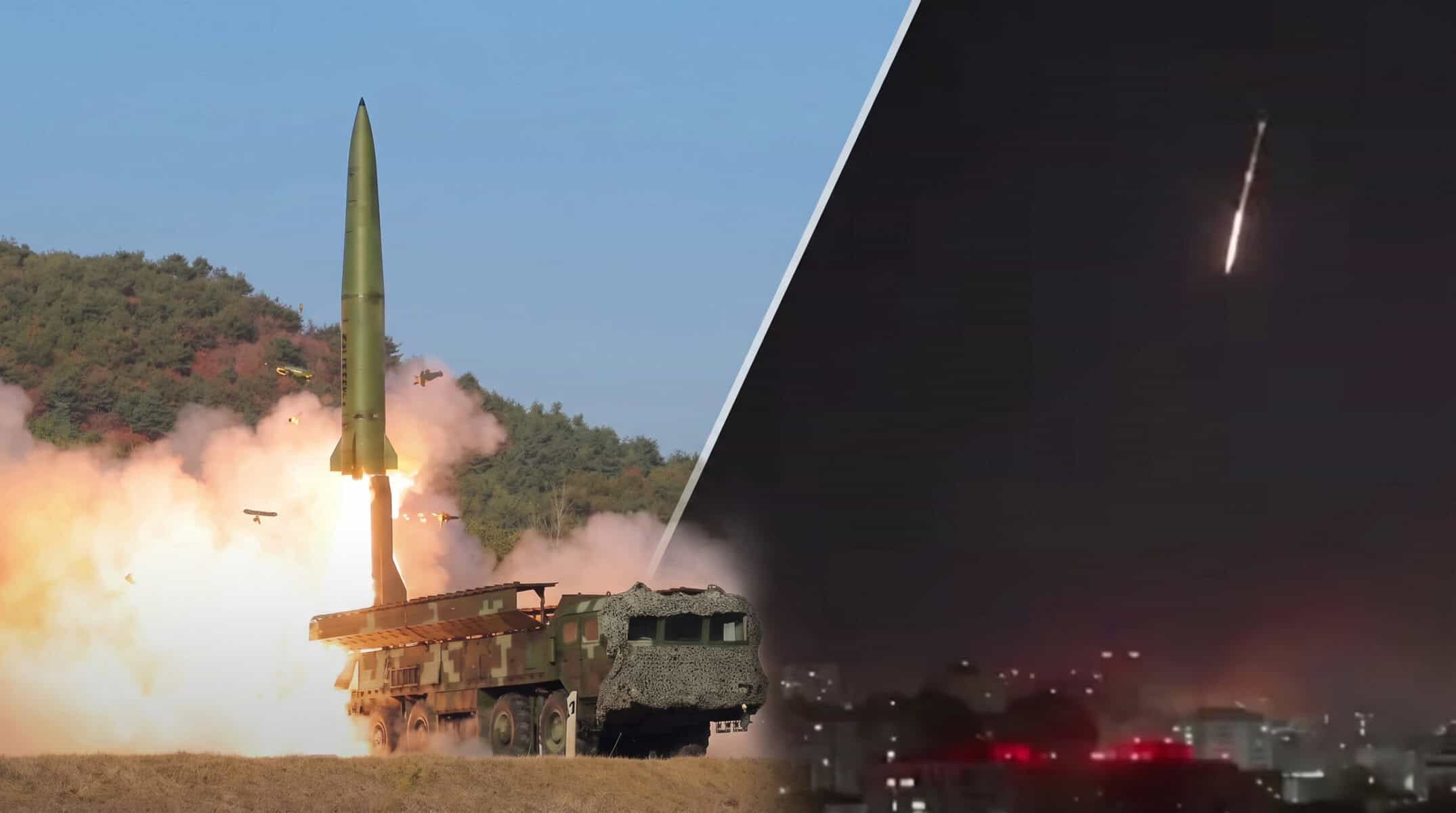
During the Russian missile and drone attack on Ukraine on November 7, Ukrainian President Volodymyr Zelensky reported that Russia had used North Korean-made KN-23 ballistic missiles to strike Ukrainian cities.
Ukrainians can identify these missiles by a distinctive feature. In most cases, when North Korean missiles were fired, they left behind a distinctive fiery trail, also known as a comet trail.
This characteristic during the final stage of flight is, to some extent, an unusual phenomenon related to the missile’s design and guidance system.
The North Korean KN-23 (Hwasong-11Ga) is a single-stage, short-range ballistic missile with a solid-fuel engine.
The KN-23 has an elongated body with a characteristic front taper. According to a debris analysis by Ukrainian experts, the body diameter near the main engine at the rear is about 110 cm, while at the front it tapers to 90 cm.

The main engine occupies much of the body. A nozzle sits at the rear, and a special duct—the gargrot—runs along the outer surface. Inside, cables connect the control system to the actuators of the aerodynamic control surfaces.
The front section of the main engine casing also features special compartments for satellite navigation receivers. The designers engineered the rocket’s nose cone to withstand the intense heat generated during atmospheric reentry. A graphite fairing and a special heat-shield coating provided thermal protection.
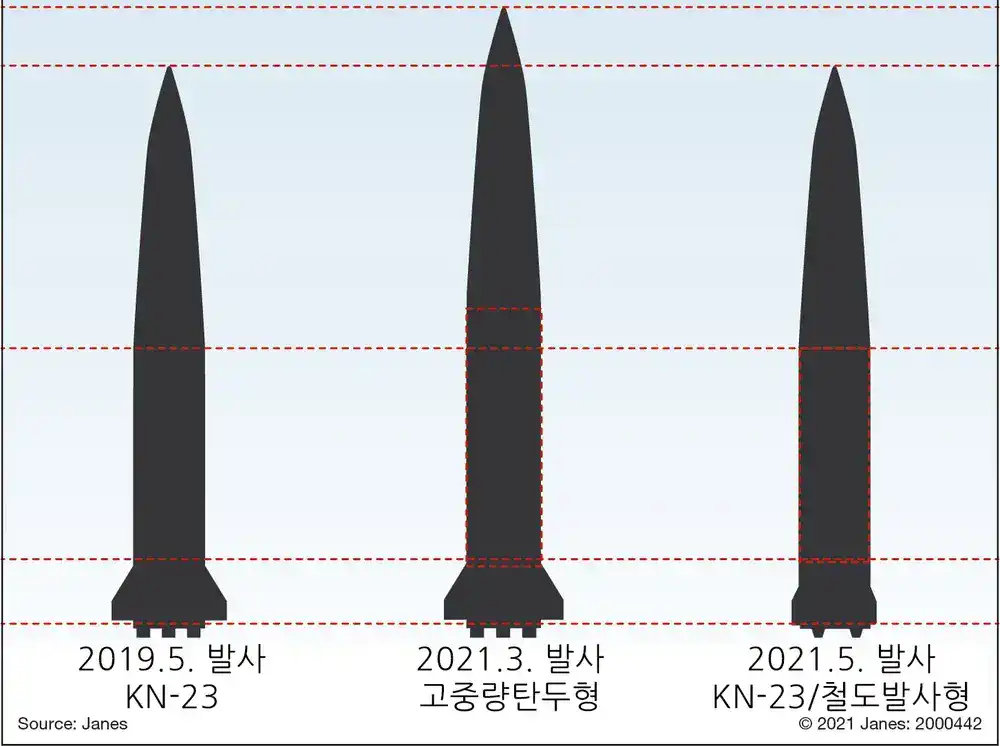
The main engine occupies a significant portion of the missile’s body. According to estimates by Ukrainian experts, the KN-23 uses lower-energy solid propellant than the Russian Iskander-M missile.
Therefore, to ensure the required flight range, North Korean designers had to increase the engine’s size and fuel capacity. According to estimates by Ukrainian experts, the KN-23’s engine is approximately one and a half times larger than its Russian counterpart.
The KN-23’s maximum range is estimated at 690 km.
The fiery trail that North Korean KN-23 ballistic missiles leave during the final stage of flight may result from several physical processes. One factor contributing to this glow could be the missile’s motion as it enters denser layers of the atmosphere.
In particular, this phenomenon may accompany the destruction of the missile’s structure and the separation of the warhead. As it enters denser layers of the atmosphere, the missile body is subjected to significant thermal and mechanical stress, which can cause it to break apart.
As it descends, the rocket moves through increasingly dense layers of the atmosphere at very high speeds. A shock wave forms ahead of its nose, sharply compressing the air and raising its temperature. As a result, the rocket’s surface and the gases surrounding it are subjected to intense heating.
Incandescent fragments of the body, remnants of solid fuel, and other structural elements form a characteristic luminous trail.
This phenomenon may also involve plasma formation. At sufficiently high temperatures, some air molecules break apart, and the atoms become ionized. A plasma sphere forms around the missile, which can emit light. Some of the heated gas enters the wake behind the missile, forming a visible luminous trail.
It is also important to note that, despite their outward resemblance to the Russian missile, the KN-23 and the Iskander-M have significant design differences, particularly in their guidance systems.
The Russian Iskander-M missile can reduce speed before entering the dense layers of the atmosphere to activate its terminal guidance system. Lower speed reduces aerodynamic heating.
At the same time, according to the monitoring group Aeris Rimor, early versions of the KN-23 missiles did not correct their trajectory upon atmospheric entry, so they maintained high speed during the descent phase toward the target.
As a result, the warhead materials gradually break down and vaporize, dissipating heat from the structure. If individual elements of the casing break apart or detach, their fragments continue to move at high speed and heat up. The incandescent debris can form several separate glowing fragments that visually resemble a long fiery tail.
The Ukrainian Ministry of Defense also notes that during the missile attack on Kharkiv on January 2, 2024, one of the North Korean missiles broke apart in midair. Ukrainian experts identified poor-quality welds in certain areas. In total, prosecutors examined debris from 21 of the approximately 50 North Korean ballistic missiles that Russia attempted to use to strike Ukraine between late December and late February.
“About half of the North Korean missiles deviated from their programmed trajectory and exploded in midair; in such cases, no debris was found,” the Office of the Prosecutor General noted.
Thus, the combat use of the KN-23 against Ukraine has served as a testing ground for North Korea to test and refine its own missile technologies. Cooperation with Russia further accelerates this process, allowing Pyongyang to eliminate design flaws, improve missile performance, and gradually increase the effectiveness of its missile arsenal.
For example, while examining the debris from the first KN-23s used against Ukraine, experts discovered components from the civilian automotive production of the NTK company.
In particular, similar parts are used in mass-produced Toyota Corolla vehicles. The original components were later replaced with more advanced equivalents. Such design flaws could have affected the missiles’ accuracy during the initial stages of their deployment.
This also applies to the materials used in the missile’s casing. At the same time, cooperation with Russia enables North Korea to address technical shortcomings more quickly and modernize its missile systems.
Підтримати нас можна через:
Приват: 5169 3351 0164 7408 PayPal - [email protected] Стати нашим патроном за лінком ⬇
Subscribe to our newsletter
or on ours Telegram
Thank you!!
You are subscribed to our newsletter