



Popular
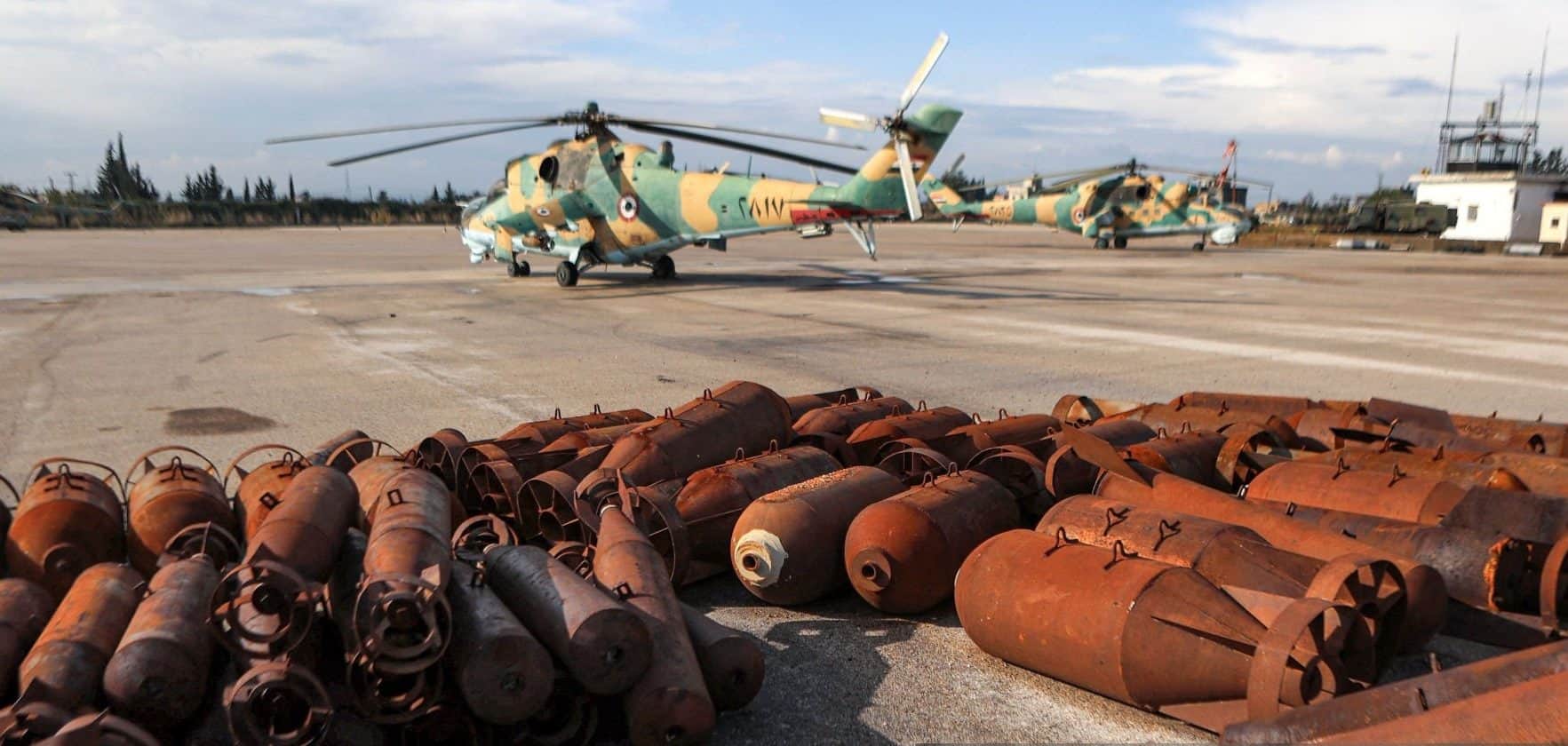
The process of destroying the remaining chemical weapons belonging to Bashar al-Assad’s regime has officially begun in Syria.
The authorities in Damascus are carrying out the destruction of these deadly arsenals under the supervision of experts from the Organization for the Prohibition of Chemical Weapons (OPCW), according to military and OSINT analyst Qalaat Al Mudiq.
Video footage released shows the process of dismantling aerial bombs specifically designed to deliver toxic substances. These munitions have two separate compartments that ensure the chemical components are mixed before sarin is released.
The history of Syria’s chemical arsenal spans decades of building up massive stockpiles with the support of foreign specialists. For a long time, Syria maintained one of the world’s largest stockpiles of nerve agents, including sarin and VX, as well as mustard gas (yperite).
The destruction of Assad’s chemical weapons has officially begun.
The video shows aerial bombs being dismantled – designed with 2 compartments to mix the chemical agent before dispersing sarin.
These chemical weapons were supposed to be destroyed over a decade ago, but Assad… https://t.co/dL9IbRetu0 pic.twitter.com/eRjbGcnsyj
— Qalaat Al Mudiq (@QalaatAlMudiq) September 3, 2026
The international community forced Syria to renounce chemical weapons in 2013 following a sarin attack in the Eastern Ghouta suburb. At that time, hundreds of civilians were killed as a result of the use of sarin-filled rockets.
Facing the threat of a direct military operation by the U.S. and its allies, the Assad regime agreed to join the Chemical Weapons Convention. At the same time, a large-scale international mission under the auspices of the OPCW and the UN was launched to completely remove and destroy Syria’s stockpiles.
In 2014, the Organization for the Prohibition of Chemical Weapons (OPCW) reported on the removal and subsequent neutralization of Syria’s declared stockpiles.
However, Bashar al-Assad deceived the international community and concealed a significant portion of the munitions and components used to produce sarin. Despite official reports of the complete elimination of the chemical weapons program, the regime retained the technological capabilities to use them in the future.
Assad continued to use these hidden arsenals repeatedly against his own citizens and rebels during the civil war. The most notorious incident was the sarin attack on the town of Khan Sheikhoun in Idlib Governorate in April 2017, which killed more than 80 people.

The response to the crime in Khan Sheikhoun was a U.S. missile strike on Shayrat Airbase, from which planes carrying chemical bombs had taken off. This marked the first direct U.S. military operation against Assad’s forces in the entire history of the Syrian conflict.
Subsequent investigations by the OPCW and the UN repeatedly confirmed the regime’s guilt in the systematic use of sarin and chlorine in Khan Sheikhoun, Douma, and other towns. Despite all the evidence, Damascus, with Russia’s support, categorically denied any involvement.
It is worth recalling that in May, the Syrian transitional government announced the discovery of chemical weapons remnants linked to former President Bashar al-Assad’s program.
Підтримати нас можна через:
Приват: 5169 3351 0164 7408 PayPal - [email protected] Стати нашим патроном за лінком ⬇
Subscribe to our newsletter
or on ours Telegram
Thank you!!
You are subscribed to our newsletter