


Popular
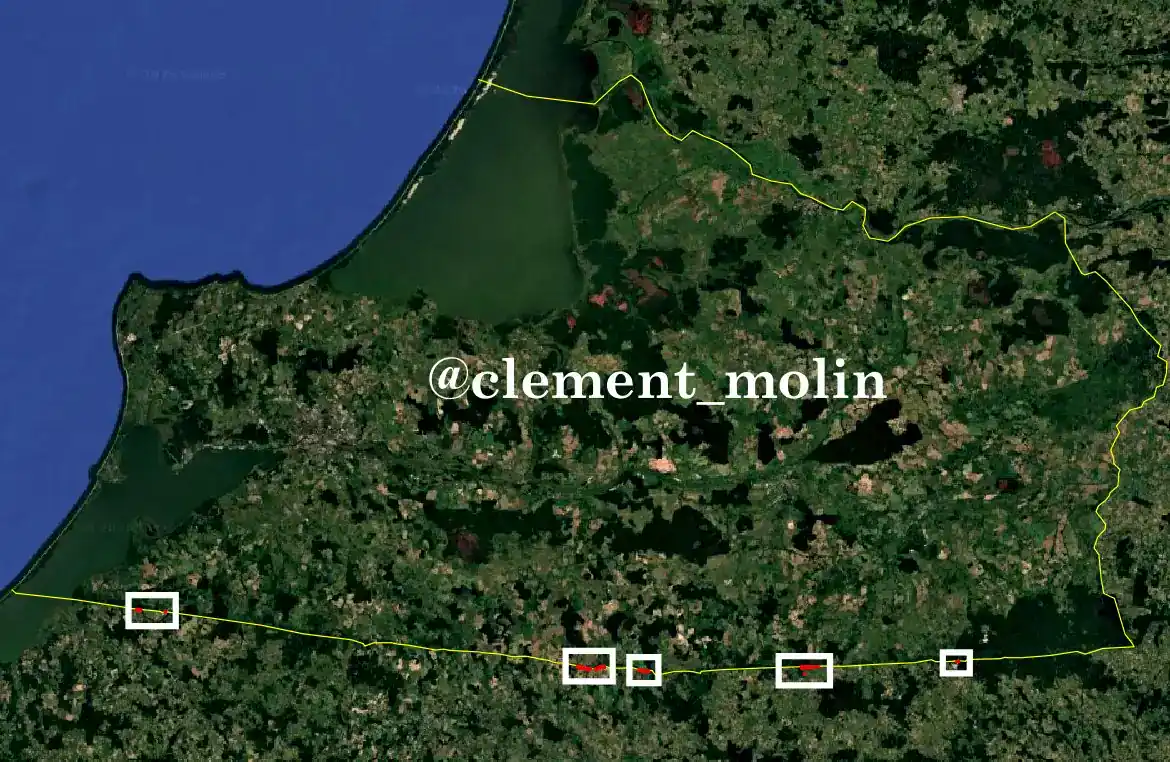
Poland and the Baltic states have failed to build a unified fortification system along their borders with Russia and Belarus. The existing defenses remain scattered and lack the depth needed to stop a potential Russian attack.
OSINT analyst Clément Molin and researchers from the Polish outlet Służby i Obywatel reached this assessment independently, examining satellite images and fortifications visible on Google Maps.
The satellite images show defensive structures along Poland’s border with Russia’s Kaliningrad region in only four locations. The longest section is about 2 km, despite the border stretching for 210 km in total. These defenses consist mainly of interrupted anti-tank ditches and one or two rows of dragon’s teeth obstacles, which do not create a continuous defensive barrier.
Analysts note that these structures are positioned directly along the border and lack layered defenses extending into the depth of the territory. Anti-tank ditches are interrupted near forested areas, most key roads are not prepared for closure, and bunkers and trenches are located in open terrain.

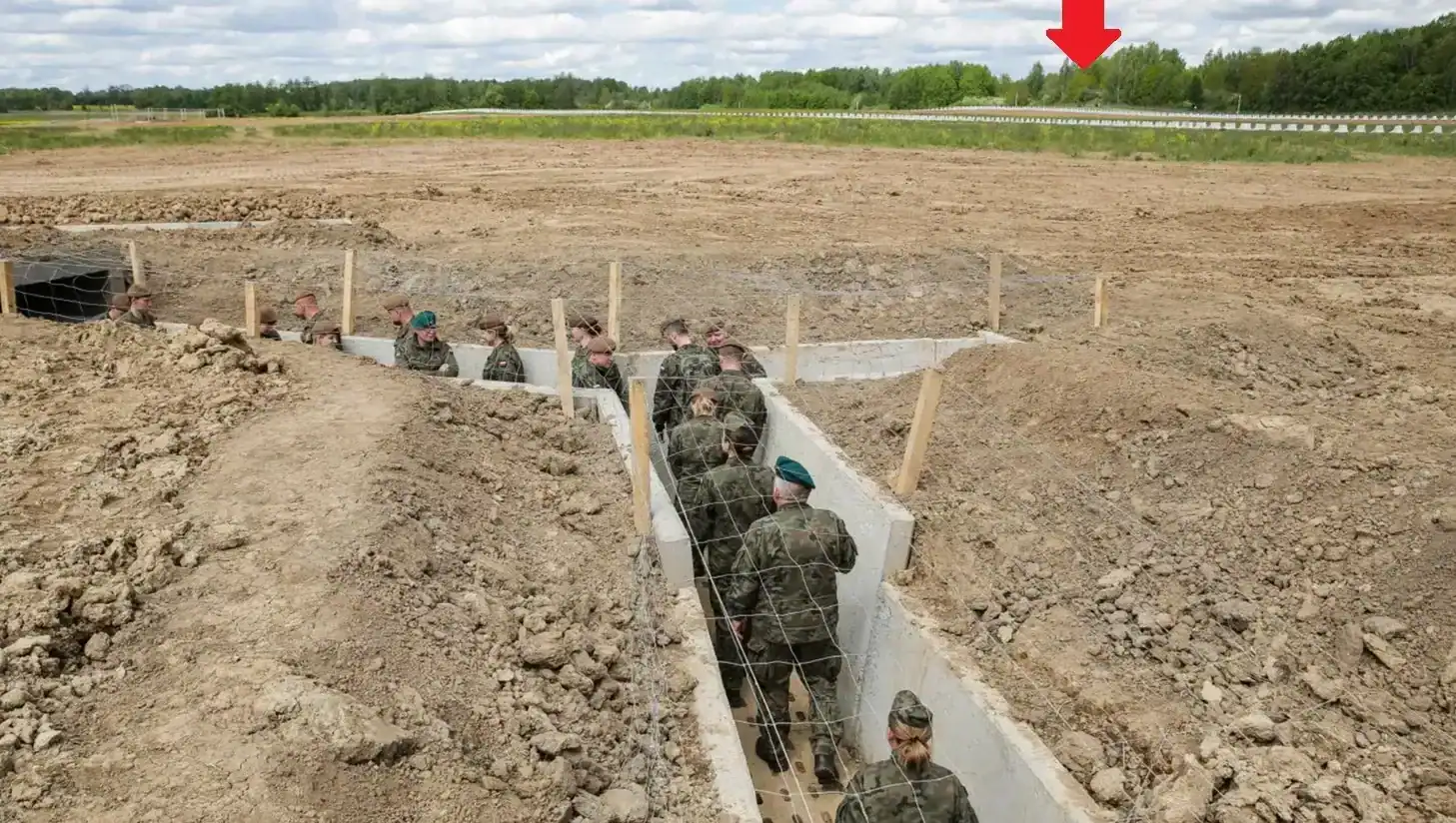
For example, near the village of Rutka, trenches have been built just 300 meters from the border fence. According to analysts, such positions would remain under constant surveillance and drone control, and in the event of hostilities, an enemy could immediately concentrate fire on them.
Polish observers compared these fortifications with the historic Mława position, which was built 5–15 km from the border, giving troops time to take up defensive positions after the start of an invasion. They also noted that border obstacles can be bypassed or outflanked, and their placement does not always serve the purpose of channeling an enemy’s movement.
Analysts found that Lithuania, despite facing the greatest threat due to its proximity to Russia’s Kaliningrad region, the Suwałki Gap, and its long border with Belarus, has made the least progress in building fortifications. Despite having an official roadmap, satellite images did not reveal prepared defensive structures or engineering protection for key roads.
Meanwhile, Lithuania is developing road infrastructure intended to improve access to remote areas along the eastern border.
Analysts also described Estonia’s level of border engineering preparation as very low, despite the ongoing threat, particularly in the Narva region. Based on available observations, actual construction work on fortifications has not yet begun in the country.
Latvia has made more progress in engineering its border defenses than Lithuania and Estonia. The country has already begun installing dragon’s teeth anti-tank obstacles and clearing the border strip to create a defensive line. In addition, much of Latvia’s border area is covered by forests, and the country has greater strategic depth. However, the existing fortifications remain fragmented.
Poland started construction of the Eastern Shield fortification system along its borders with Russia and Belarus in October 2024. The system is planned to cover nearly 700 km of border, with 400–500 km to be protected by various types of fortifications, while natural barriers will cover the remaining sections.

The program includes the construction of a comprehensive system of engineering obstacles and fortifications, as well as storage facilities on designated plots of land, with the relevant procedures currently underway.
According to the plan, the government will invest a total of around €2.3 billion in implementing the program. The completion of the network of fortifications, barriers, and obstacles is scheduled for 2028.
Between October 2024 and mid-July 2026, Poland built 61 km of defensive lines under the Eastern Shield program along its borders with Russia and Belarus. Of this, continuous linear fortifications account for only about 10 km.
Підтримати нас можна через:
Приват: 5169 3351 0164 7408 PayPal - [email protected] Стати нашим патроном за лінком ⬇
Subscribe to our newsletter
or on ours Telegram
Thank you!!
You are subscribed to our newsletter