




Popular
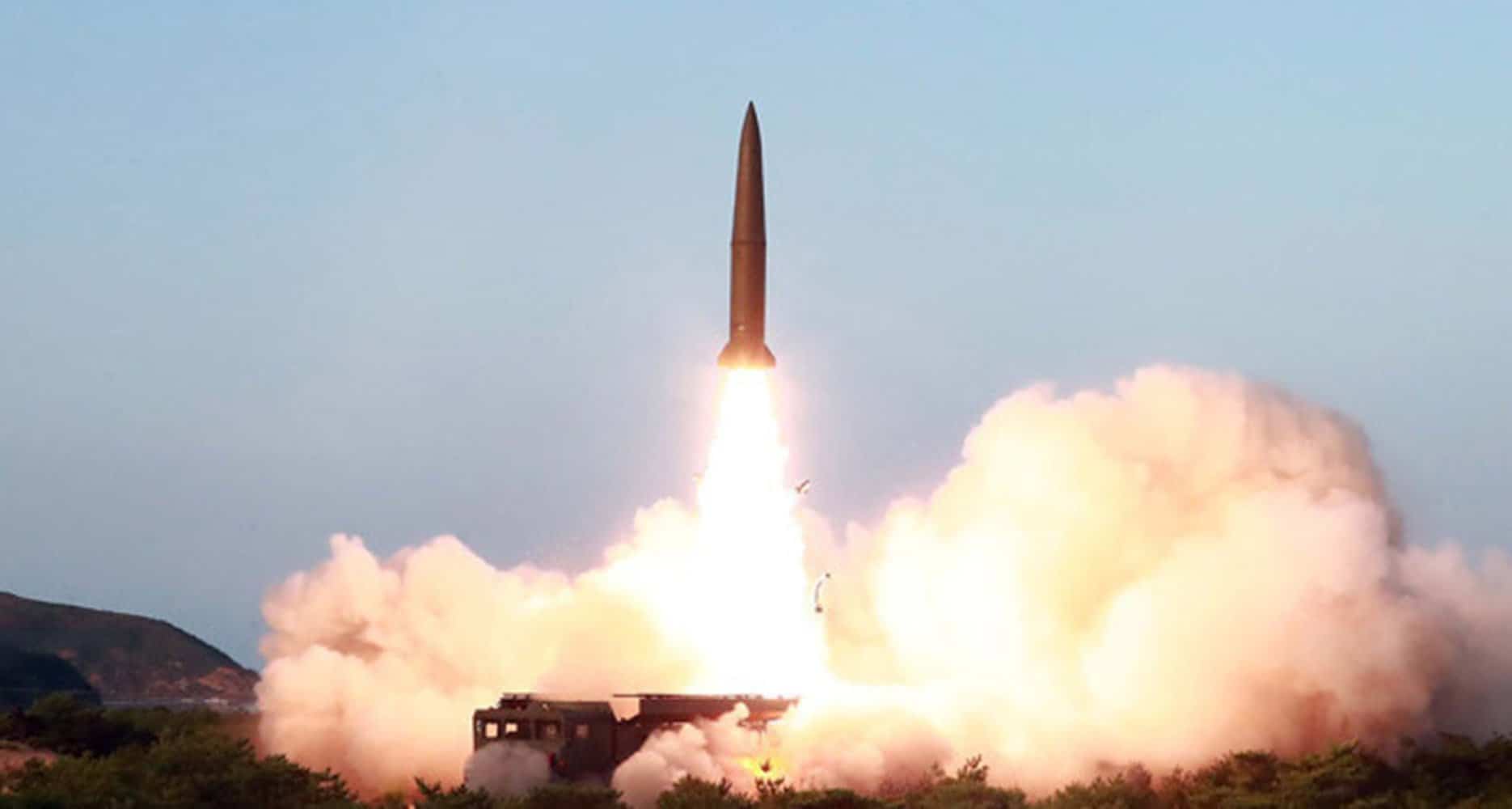
North Korea launched a missile toward the Sea of Japan that Pyongyang described as a “strategic intermediate-range missile.”
Details of the launch were reported by the Japanese Ministry of Defense.
According to Japan’s Defense Ministry, at around 6:36 a.m. local time, North Korea launched at least one ballistic missile from the country’s east coast in a northeastern direction.
The missile reached a maximum altitude of about 90 kilometers, traveled approximately 680 kilometers and fell into the Sea of Japan outside Japan’s exclusive economic zone. There were no reports of damage to aircraft or vessels in the area where the missile fell.
South Korea’s Joint Chiefs of Staff (JCS) reported that the launch was detected at around 6:30 a.m. from the area of Wonsan and that the missile traveled more than 700 kilometers. South Korean and U.S. intelligence agencies tracked the launch from an early stage and exchanged the data they collected.

Japan’s Ministry of Defense said Tokyo continues to analyze the missile’s characteristics jointly with the United States and South Korea.
After the missile launch was detected, Japanese Prime Minister Sanae Takaichi instructed government agencies to promptly collect and analyze information, check the safety of aircraft and vessels, and prepare for possible contingencies.
The state-run KCNA published a statement by Kim Yo Jong, sister of North Korean leader Kim Jong Un, in which she confirmed that missile-firing exercises had been conducted.
According to her, a “strategic intermediate-range missile” was used during the exercises, while Kim Jong Un personally observed the launch by a special fire unit.
According to the North Korean side, the missile can alter its trajectory at low altitude and has at least four flight profiles that can be selected depending on the target and mission.

Kim Yo Jong also claimed that AI elements were used in the system, although there is currently no independent confirmation of these characteristics.
The North Korean side also cited the difference between the flight-range estimates released by South Korea and Japan as evidence supporting its claim that the missile is difficult to track.
This may have involved a quasi-ballistic missile capable of performing maneuvers during different stages of flight and deviating from a conventional ballistic trajectory.
Such missiles can combine a ballistic flight phase with gliding and active maneuvering in the atmosphere. This makes their trajectory less predictable and complicates the operation of missile defense systems, which must continuously track the target and predict the point at which it will meet the interceptor missile.
In addition, flying at a relatively low altitude can reduce radar detection range and the time available for air defense systems to respond. Combined with maneuvering, this makes it more difficult to maintain stable tracking of the missile and establish a predictable trajectory for interception.

The Russian 9M723 ballistic missile of the Iskander-M system is one example of this class of weapons.
At the same time, the development of similar capabilities in North Korea could be linked both to its own development of the Hwasong-11 family and to military-technical cooperation with Russia.
Ukrainian military engineers, after examining North Korean KN-23 missiles, determined that the missiles are not direct copies of the Iskander missile, but could be a modified version of one of the earlier designs associated with the Russian system.
In addition, amid deepening military cooperation between Moscow and Pyongyang, there have been reports that Russia has transferred missile technologies to North Korea. In particular, Kyrylo Budanov, who was then Chief of Defense Intelligence of Ukraine, said that Russia had helped North Korea improve the KN-23 and significantly increase its accuracy.
At the same time, there is currently no confirmed data that would directly link the missile’s claimed four flight profiles to the transfer of specific Russian technologies.
On September 20, North Korea launched a ballistic missile from the country’s east coast toward the Sea of Japan.
According to the Japanese side, during that launch the missile reached an altitude of about 60 kilometers and traveled approximately 440 kilometers. South Korean military officials also identified the Wonsan area as the launch site.
North Korea later released photographs of a test of a new missile that was identified as the Hwasong-11Ma-1. During the September 20 tests, South Korean military officials detected two launches from the Wonsan area at an interval of approximately three hours.
The latest launch took place amid renewed tensions between the countries following a mine explosion in the demilitarized zone on September 21 that injured three South Korean servicemen.
Підтримати нас можна через:
Приват: 5169 3351 0164 7408 PayPal - [email protected] Стати нашим патроном за лінком ⬇
Subscribe to our newsletter
or on ours Telegram
Thank you!!
You are subscribed to our newsletter