





Popular
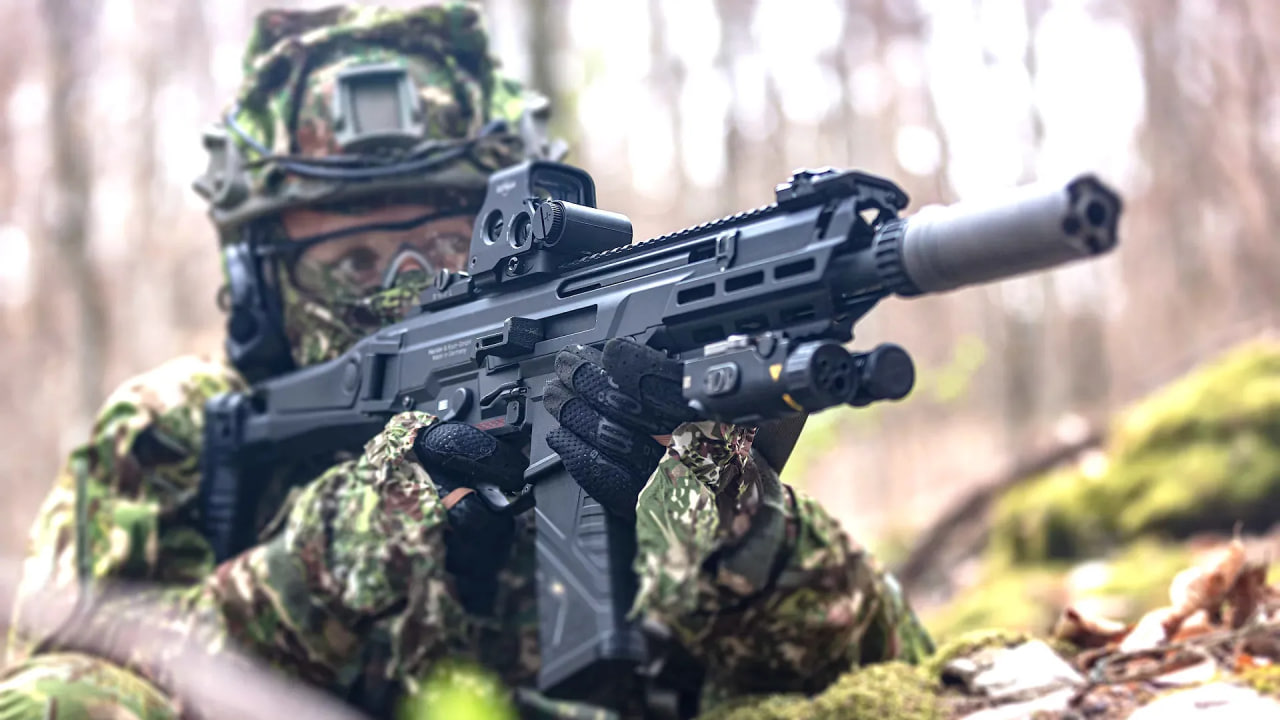
The Bundeswehr is rearming its special operations forces with new compact .300 Blackout-caliber G39 rifles, which are set to replace the MP5SD submachine guns with integrated silencers.
Heckler & Koch unveiled the final configuration of the new weapon during the 10th Weapons Symposium of the KSK Special Forces Command, according to the German publication Hartpunkt.
The G39 was developed as part of the Sonderwaffe schallgedämpft Spezialkräfte program—“special weapons with silencers for special forces.” It is intended to replace the MP5SD, which has been used for decades by German special forces and long-range reconnaissance units.
The G39 is based on the Heckler & Koch HK437 chambered in .300 Blackout (7.62×35 mm)—a variant of the HK433 modular platform. The weapon uses a similar receiver, but the gas operating system has been moved backward, and the bolt has been adapted to the new caliber. A separate magazine for the .300 Blackout was also developed for the HK437.
The rifle operates on a short-stroke gas-operated system. The base 9-inch HK437 weighs about 3.14 kg without ammunition.
The final configuration of the G39 is equipped with a 9-inch barrel measuring 229 mm in length and a suppressor from the Norwegian company A-TEC. It is fitted with a composite heat shield from the American company MODTAC.
This device reduces the sound of the shot and the muzzle flash, making it harder to detect the shooter and facilitating communication among soldiers during firefights.
The Bundeswehr variant also differs from the standard HK437 in that it features a forend with M-LOK interfaces, a pistol grip from the G95K, and a collapsible telescoping stock.
The model on display was equipped with an Aimpoint CompM5b red dot sight, backup mechanical sights offset by 45 degrees, and a UNITY Tactical mount to raise the optics and laser modules above the receiver. At the same time, units may receive different variants of sighting equipment for the G39.
The transition from the MP5SD chambered for the 9×19 mm pistol cartridge to the G39 chambered for the .300 Blackout significantly changes the capabilities of the German special forces’ compact, low-noise weapons.
The .300 Blackout cartridge is specifically designed for effective use in short-barreled weapons with suppressors. It allows for the use of both supersonic and heavy subsonic ammunition.

Supersonic rounds provide higher energy and greater effective range, while subsonic rounds significantly reduce the acoustic signature when used with a suppressor.
During the procurement process, the Bundeswehr required a self-loading weapon capable of using supersonic and subsonic ammunition to engage unprotected and protected targets at ranges of up to 200 meters.
Thus, the G39 is intended to fill the niche previously occupied by the MP5SD, but provide special operations forces with more powerful ammunition and a greater effective range.
Heckler & Koch received its first order for 176 basic G39 kits, necessary to achieve initial operational capability.
According to the Federal Office of Bundeswehr Equipment, Information Technology and In-Service Support (BAAINBw), 988 sets are required for full deployment. The contract for the first batch was signed back in February 2024.
However, the G39 will not become the KSK’s primary assault rifle; rather, it will supplement the unit’s existing arsenal for specialized missions.
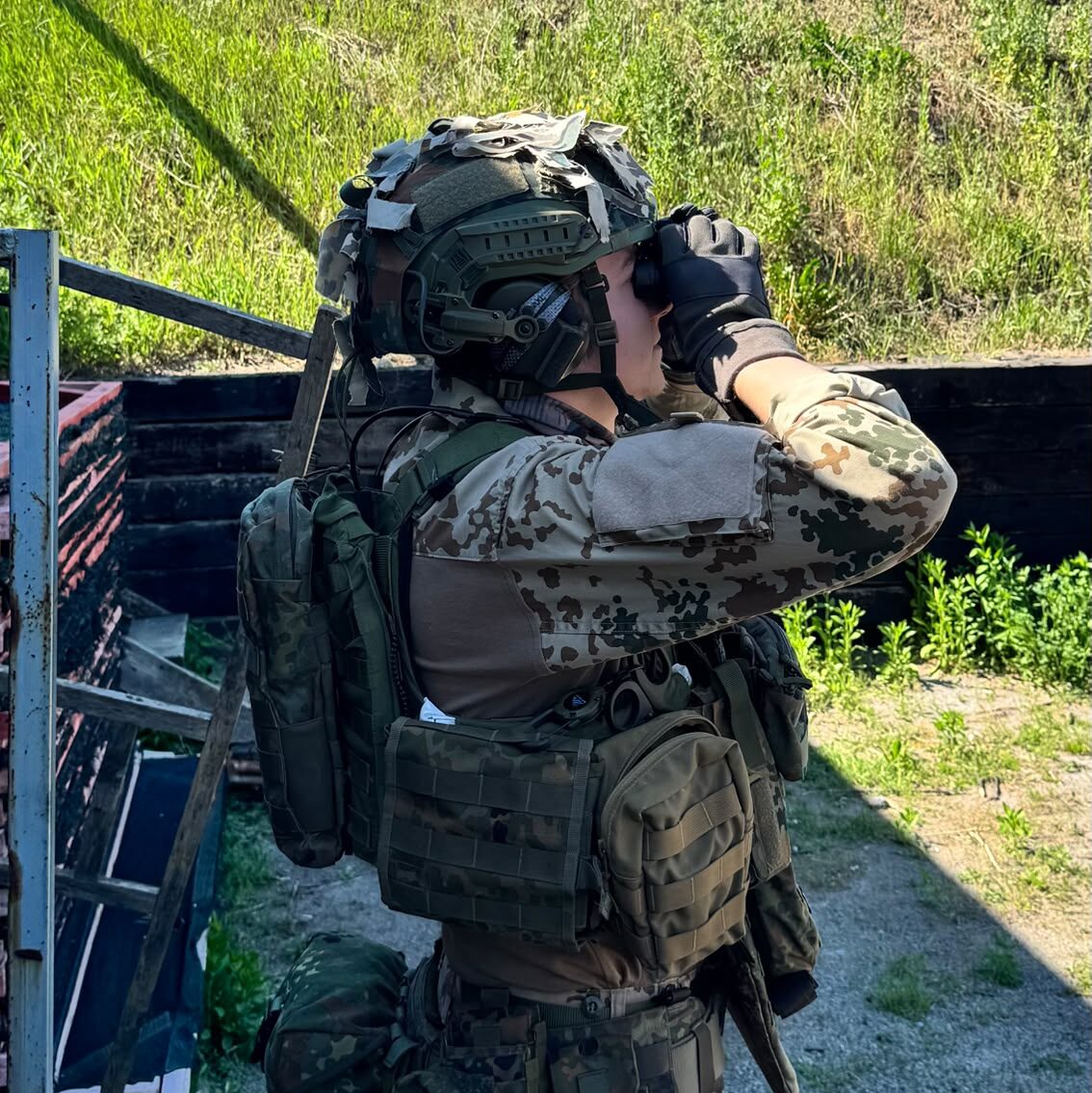
For a long time, the G36 KA in various configurations remained the primary assault rifle of German special forces. Eventually, this role was handed over to the new G95K.
Currently, the KSK’s standard-issue assault rifle is the 5.56×45 mm G95K, based on the Heckler & Koch HK416 and adapted to the needs of special forces.

The G95K should not be confused with the new G95A1 and G95KA1, which the Bundeswehr is currently rolling out en masse to replace the G36 in regular units. Although all these rifles belong to the HK416 family, the KSK variant has its own configuration and was introduced to special forces earlier.
As a result, the KSK has developed a system of weapons tailored to different missions: the G95K remains the primary assault rifle, while the new G39 chambered in .300 Blackout takes on the role of a compact, low-noise weapon, a role previously filled by the MP5SD with an integrated suppressor.

In addition, the KSK’s arsenal includes the G29 sniper rifle chambered in 8.6×70 mm (.338 Lapua Magnum). The Bundeswehr specifies a 10-round magazine for it and a maximum effective range of up to 1,500 meters. The P30 pistol is also part of the special forces’ standard issue.
The transition to the G39 continues the modernization of German special forces’ small arms: following the replacement of special variants of the G36 with the G95K, the modernization has now extended to the niche of low-noise weapons, where the MP5SD is being phased out in favor of a system chambered in .300 Blackout.
Підтримати нас можна через:
Приват: 5169 3351 0164 7408 PayPal - [email protected] Стати нашим патроном за лінком ⬇
Subscribe to our newsletter
or on ours Telegram
Thank you!!
You are subscribed to our newsletter