





Popular
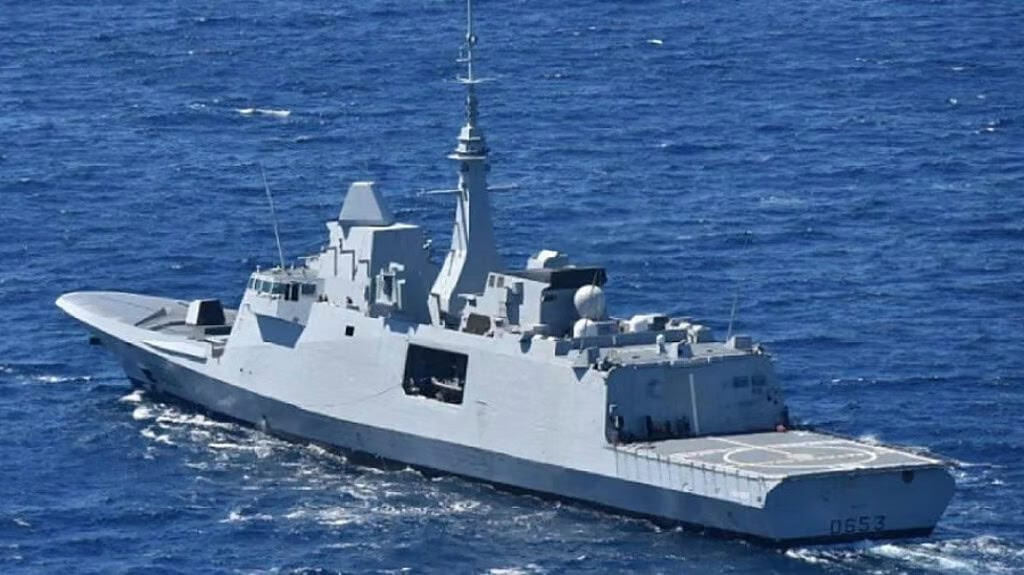
A French Navy frigate intercepted a ballistic missile near the Belgian minehunter Primula while escorting the vessel in the Bab el-Mandeb Strait area.
Baird Maritime reported the incident, citing confirmation from the French Armed Forces General Staff on October 27.
According to the French military command, the incident occurred on October 13, 2026, while the French frigate was escorting a Belgian Tripartite-class minehunter.
The French General Staff emphasized that the crew’s actions were purely defensive. No one was injured, and neither vessel sustained damage.
Belgian newspaper De Morgen first reported the interception on October 26. Belgium’s Ministry of Defense subsequently confirmed the information to VRT NWS journalists.

Initial assessments suggest that the missile may have been launched by Yemen’s Houthi rebels, who have attacked vessels in the Red Sea. However, their involvement has not been officially confirmed.
The French military command has not disclosed the name of the frigate that carried out the interception or the type of surface-to-air missile used.
A French Ministry of the Armed Forces operational update for October 8-15 reported that a FREMM-class multipurpose frigate was operating in the Red Sea, the Bab el-Mandeb Strait and the Gulf of Aden as part of the European Union’s EUNAVFOR ASPIDES operation.
One of the French ships operating in the area was the frigate Languedoc. In early October, it shot down a drone while escorting the CMA CGM Champs Elysées container ship through the Bab el-Mandeb Strait.
However, no confirmation currently indicates that Languedoc intercepted the ballistic missile on October 13.

The Belgian Primula (M924) belongs to the Tripartite class of mine countermeasures vessels, jointly developed by Belgium, the Netherlands, and France.
The ship is designed to search for, identify, and neutralize naval mines. However, it lacks the missile-defense systems needed to independently counter ballistic threats.
According to Belgium’s Ministry of Defense, on May 28, Primula and the Dutch minehunter Willemstad departed Zeebrugge for the Mediterranean to join NATO’s Standing NATO Mine Countermeasures Group 2 (SNMCMG2).
The deployment was also intended to enable the Belgian vessel to participate in potential mine-clearing operations in the Strait of Hormuz, should the relevant political decision be made.
Підтримати нас можна через:
Приват: 5169 3351 0164 7408 PayPal - [email protected] Стати нашим патроном за лінком ⬇
Subscribe to our newsletter
or on ours Telegram
Thank you!!
You are subscribed to our newsletter