






Popular
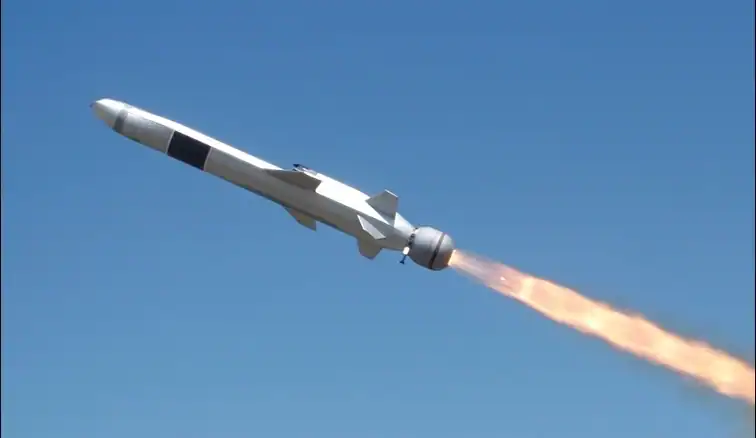
Denmark is purchasing an additional batch of Naval Strike Missile (NSM) anti-ship missiles to strengthen the country’s coastal defense.
The Norwegian company Kongsberg announced the deal.
The contract, worth approximately €34.5 million, covers the delivery of an undisclosed number of missiles.
Denmark first acquired NSM-equipped coastal defense systems in 2025, becoming the fifth NATO country to field them, alongside Poland, the United States, Romania, and Latvia. Meanwhile, the Danish Ministry of Defense also ordered these missiles to arm its frigates.
The ordered coastal defense system includes a Kongsberg-developed fire control system, NSM missiles, and launchers.

The Norwegian company Kongsberg Defence & Aerospace began developing the Naval Strike Missile in the 1990s to replace the aging Penguin anti-ship missile. In 2012, the Royal Norwegian Navy officially took the NSM into service.
Over time, NSM missiles have been integrated into the arsenals of the US Navy and Marine Corps, the Polish, Romanian, Latvian and Ukrainian navies, as well as the Royal Navies of the United Kingdom, Canada and Australia.
The NSM is a precision-guided, subsonic, low-observable anti-ship cruise missile by design. It is designed to engage surface vessels with advanced air defense capabilities, as well as land-based targets.
The missile weighs 410 kg and measures 3.9 meters, with about 120 kg in its penetrating blast-fragmentation warhead. The missile’s airframe incorporates radar-absorbing materials to minimize its radar cross-section.

The missile’s propulsion system consists of a solid-fuel booster and a Microturbo TRI 40 turbojet sustainer engine. Its operational engagement range exceeds 500 km.
The NSM’s key feature is its multi-mode guidance system. During the midcourse phase, it uses an inertial navigation system, GPS satellite navigation, and terrain-referenced navigation. In the terminal phase, a passive infrared imaging seeker provides guidance.
Because of its passive infrared seeker, the missile does not emit radio-frequency signals, making it highly resistant to electronic-warfare countermeasures. Its target-recognition algorithms enable the missile to autonomously identify specific vessels, fly at extremely low altitudes, and perform evasive maneuvers during the terminal phase of its flight.
Підтримати нас можна через:
Приват: 5169 3351 0164 7408 PayPal - [email protected] Стати нашим патроном за лінком ⬇
Subscribe to our newsletter
or on ours Telegram
Thank you!!
You are subscribed to our newsletter