








Popular

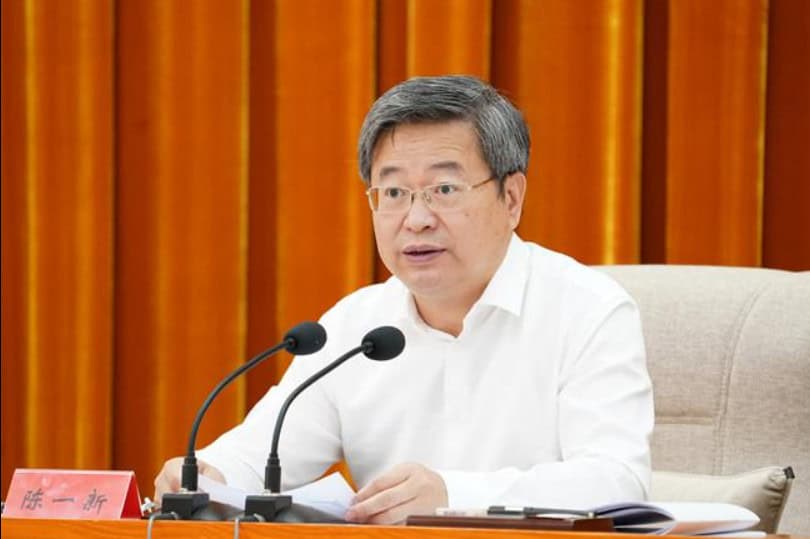
Chen Yixin, China’s Minister of State Security, has warned of growing threats to national security linked to the development of AI, particularly regarding critical information infrastructure, data protection, and modern warfare.
He discussed this in an article titled “Comprehensively Strengthening the Security Barrier for Artificial Intelligence and Promoting Its Healthy and Orderly Development,” published on September 13 in the journal China Cyberspace.
According to Chen Yixin, artificial intelligence has already become one of the main areas of global technological competition and “a new arena for strategic rivalry among major powers.”
The head of China’s Ministry of State Security identified six major risk categories related to AI: threats to political and information security, cyberattacks on critical infrastructure, large-scale data breaches, technological monopolization, impacts on the social governance system, and changes in the nature of warfare.
He paid particular attention to the use of generative AI for information operations. According to him, other states may employ deepfakes, automated accounts, and content generation to mass-distribute disinformation and conduct cognitive warfare operations.
Chen identified another concern: the sharp increase in capabilities for conducting cyberattacks. He cited specialized models developed by U.S. companies—Claude Mythos from Anthropic and GPT-5.5-Cyber from OpenAI—as examples.
He identified Chinese users’ use of foreign AI services to handle confidential materials as a separate issue that, according to the head of the Ministry of State Security, poses a risk of large-scale information leaks outside the country.
In this context, Chen also mentioned open-source agent-based AI systems. In particular, Chinese government agencies previously warned about vulnerabilities in OpenClaw that, under certain conditions, could allow remote control of systems and access to local data.
According to the official, AI is evolving from a supporting technology into a key element of intelligence support, decision-making, target identification, combat operations, and cognitive warfare.
The head of the Chinese intelligence service made the remarks amid intensifying technological rivalry between Beijing and Washington. China accuses technologically advanced nations of using export restrictions, sanctions lists, control over standards, and closed technological ecosystems to curb competitors and fragment global AI supply chains.
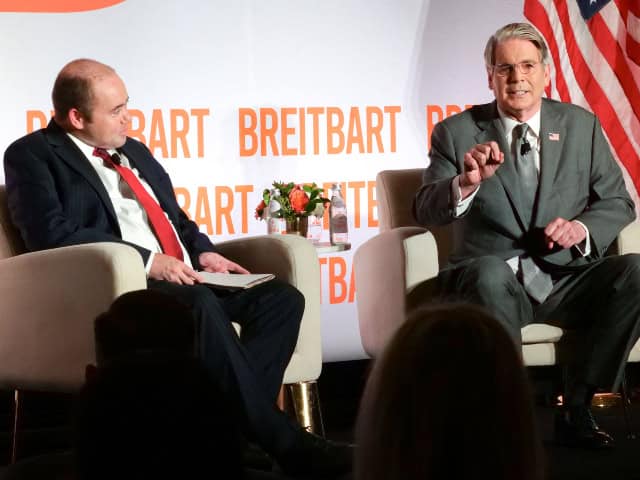
At the same time, in the U.S., the development of artificial intelligence is increasingly viewed as a strategic competition with China. On September 8, U.S. Treasury Secretary Scott Bessent said in a discussion with Breitbart News that Washington cannot allow China to gain an advantage in AI.
At the same time, Beijing is trying to consolidate its role in shaping international rules for the use of artificial intelligence. At the BRICS summit in New Delhi, Xi Jinping called for stronger cooperation among the bloc’s member states on AI and proposed a BRICS initiative to use AI for industrialization.
This discussion comes amid a large-scale reorganization of the U.S. National Security Agency, which will include new organizational divisions, particularly related to artificial intelligence and China.
Підтримати нас можна через:
Приват: 5169 3351 0164 7408 PayPal - [email protected] Стати нашим патроном за лінком ⬇
Subscribe to our newsletter
or on ours Telegram
Thank you!!
You are subscribed to our newsletter