







Popular

German law enforcement authorities have discovered a third drone and new evidence in the case involving an attempted terrorist attack at Leipzig Airport.
The German Süddeutsche Zeitung reports that investigators from Germany’s Federal Public Prosecutor General’s Office and the Federal Criminal Police Office suspect that the perpetrators used more drones to carry out the attack than previously thought.
The third drone was found on August 14 in a field in the municipality of Kabelsketal, which borders the western part of the airport.
At the crash site, forensic investigators recovered around 50 grams of explosive material, which preliminary assessments indicate was RDX (hexogen).
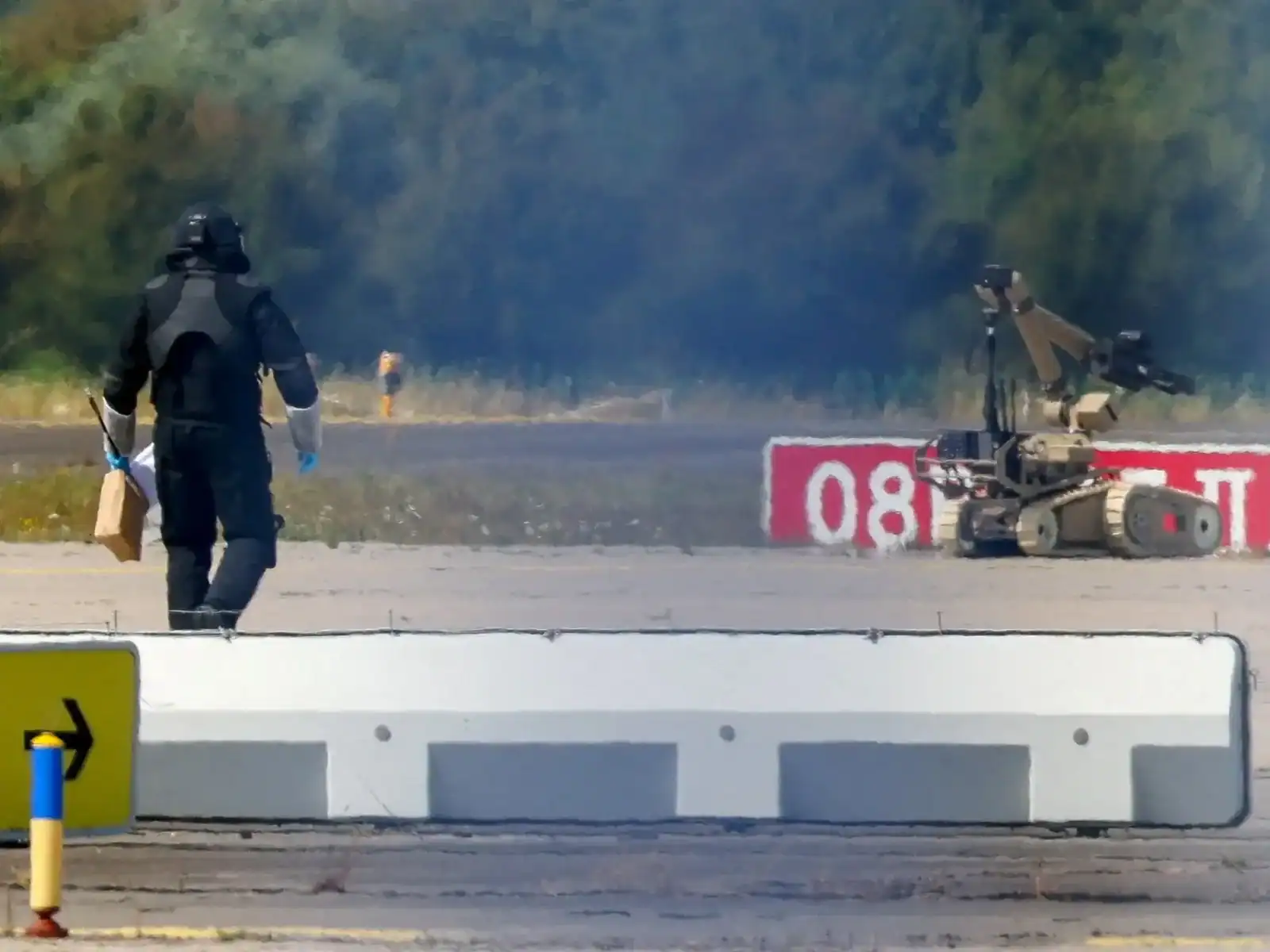
Experts are investigating why the detonator failed to activate and what exact role the device was intended to play in the attempted strike on the infrastructure.
The first incident took place on the night of August 5, when one of the drones crashed into the wing of a Ukrainian Antonov An-124 “Ruslan” cargo aircraft.
The device was loaded with explosives and was intended to cause the aircraft’s fuel tanks to explode, but a catastrophe was avoided because the detonator failed to activate.
The second drone collided in midair with a cargo aircraft operated by DHL, which was forced to make a second approach after the airspace was closed.

In the village of Kursdorf near the airport, investigators found an antenna mounted on a tree, along with electronic units used to control the drones.
Traces of an explosion and charred metal components were found near the antenna, suggesting either an attempt by the perpetrators to destroy the equipment or a premature detonation.
Law enforcement authorities are also investigating whether a fourth drone was involved, as a separate electric motor and propeller were found during a search of the surrounding area on August 11.
Підтримати нас можна через:
Приват: 5169 3351 0164 7408 PayPal - [email protected] Стати нашим патроном за лінком ⬇
Subscribe to our newsletter
or on ours Telegram
Thank you!!
You are subscribed to our newsletter