


Popular
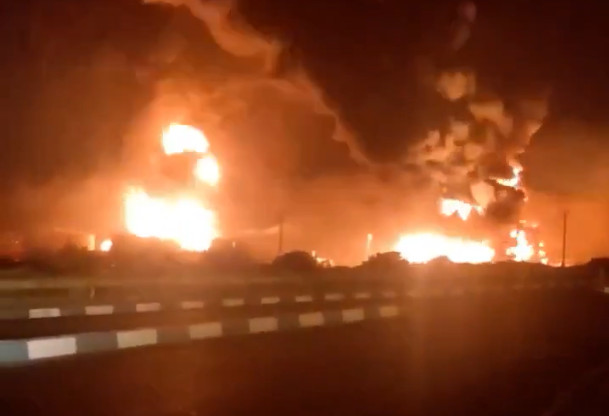
Two days after Saudi Arabia, Turkey and Pakistan signed a mutual defense pact, the Houthis claimed to have carried out a drone strike on a Saudi Aramco oil refinery in Jizan. The allies have yet to respond.
Reuters reported the attack.
Yemeni Houthi rebels said the attack was in response to an incursion by the “Saudi enemy” into the airspace over the provinces of Saada and Hajjah. Saudi Arabia’s Ministry of Energy confirmed that a fire broke out at the facility and was later extinguished but did not specify its cause.
The facility in southwestern Saudi Arabia processes 400,000 barrels of crude oil per day. According to the ministry, no one was injured in the incident.
On July 27, Aramco shut down the Jizan refinery near the border with Yemen after a Houthi attack damaged the integrated gasification combined-cycle complex and tank farm.
Aramco CEO Amin Nasser said recent strikes on facilities belonging to the world’s largest oil exporter had caused some disruptions to production. At the same time, he expressed confidence that the company would quickly restore operations.
According to Nasser, the attacks had no significant operational impact.

Two days before the latest attack, Saudi Arabia, Turkey and Pakistan signed the Mecca mutual defense pact. In a joint statement, the allies said the agreement would strengthen collective deterrence against any acts of aggression and provide that an armed attack against any of the three states would be considered an attack against all three.
“The Mecca Joint Defense Agreement is technically similar to Article 5 of the North Atlantic Treaty on collective defense,” Turkish Foreign Minister Hakan Fidan said.
According to the minister, in the event of an attack, the allies will determine the scope, form and format of the necessary support through consultations.
The alliance will establish a ministerial committee similar to the corresponding NATO body, as well as a secretariat headquartered in Saudi Arabia. Operational details will be determined at the committee’s first meeting.

According to intelligence from Saudi security services, Iran-backed groups from Iraq were also expected to take part in the attack. However, shortly before the attack, Iraq’s Counter Terrorism Service and Intelligence Service dismantled a cell belonging to an Iran-backed militia that was preparing a strike using Shahed-107 attack drones.
At least 12 Shahed-107 strike drones were seized from the Iran-backed militants. The drones were equipped with 15-kilogram warheads and had a range of more than 300 kilometers.
Підтримати нас можна через:
Приват: 5169 3351 0164 7408 PayPal - [email protected] Стати нашим патроном за лінком ⬇
Subscribe to our newsletter
or on ours Telegram
Thank you!!
You are subscribed to our newsletter