
Popular

The prospective model of the Armed Forces of Ukraine, developed in late summer 2022, envisioned a corps–division–brigade structure within the Ground Forces.
Valerii Zaluzhnyi, Ambassador of Ukraine to the United Kingdom, Commander-in-Chief of the Armed Forces of Ukraine (2021–2024), shared this in his article “On the Organisation of Command and Control in the Armed Forces of Ukraine” published on Militarnyi.
The need for such a model arose because, at the initial stage of the full-scale invasion, problems became evident in the command system of the Armed Forces of Ukraine, both at the functional and hierarchical levels.
According to Valerii Zaluzhnyi, the idea of a corps–division–brigade structure was supported at the time by both American and British partners.
“Ultimately, we succeeded in establishing the 9th and 10th Corps and launched their accelerated training. Unfortunately, the initiative was later blocked,” he noted.
In addition to changes in the Ground Forces, the Armed Forces of Ukraine also planned to establish an Air Assault Forces Corps, which was to be trained abroad:
“The Air Assault Corps, which was about to begin training abroad, remained only on paper,” the former Commander-in-Chief of the Armed Forces of Ukraine stated.
As previously mentioned in the material on NATO doctrine, by the summer of 2022, the command system at the operational and operational-tactical levels had become overloaded. That is why the General Staff of the Armed Forces of Ukraine initiated a transition to army corps structures in the summer of 2022.
“’Initiated’ is not quite the right word — an enormous collective effort went into preparing a model that would meet the demands not only of today, but of the future. It was not just about designing a command structure, but also supporting bodies, communications, logistics, and permanent basing locations,” Valerii Zaluzhnyi wrote.
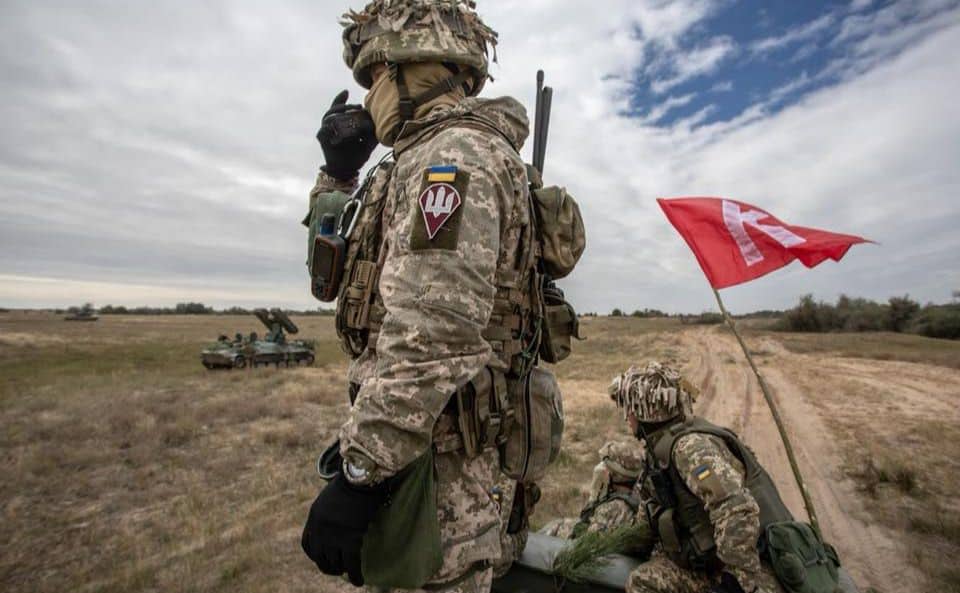
“A key reason was that a commander might simultaneously oversee 15–20 brigades, while individual brigade commanders might have more than 12 battalions under their control across a broad frontline,” wrote the 2021-2024 Commander-in-Chief of the Armed Forces of Ukraine.
The large number of subordinate units and formations made it impossible to conduct a quality analysis and plan the commander’s future actions. All attention and resources were focused solely on responding to the immediate situation. Implementing the new hierarchy would have reduced the burden on commanders and improved the command and control of the forces.
“By 2022, as the war accelerated at breakneck speed and we sought to urgently rebuild our command system by reintroducing army corps, one government official told me: ‘That’s a Soviet relic,'” Valerii Zaluzhnyi argued about the reasons for not implementing this model.
Підтримати нас можна через:
Приват: 5169 3351 0164 7408 PayPal - [email protected] Стати нашим патроном за лінком ⬇
Subscribe to our newsletter
or on ours Telegram
Thank you!!
You are subscribed to our newsletter