



Popular
The U.S. military will ban Chinese BYD vehicles from entering Kadena Air Base in Japan over concerns about potential leaks of military secrets.
The Japanese publication Kangnam Times reported the decision.
The restrictions will apply not only to privately owned vehicles but also to contractors’ vehicles, taxis, delivery vehicles, and commercial transport. If such a vehicle arrives at the base’s gate, the driver will be ordered to turn around immediately.
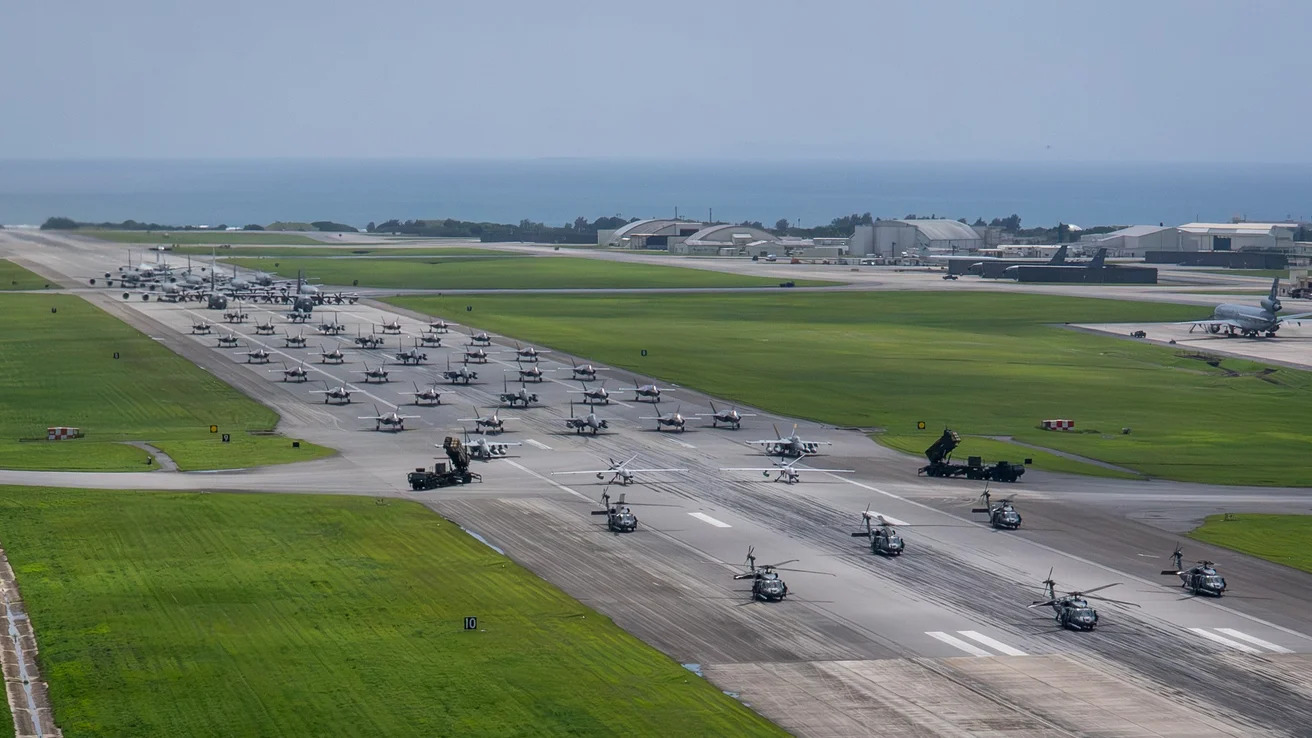
Kadena Air Base is one of the U.S. Air Force’s major overseas installations and plays a key role in Japan’s defense andAmerica’s security strategy in the Indo-Pacific region.

Kadena Air Base is home to the U.S. Air Force’s 18th Wing of the Fifth Air Force, which includes KC-135 aerial refueling tankers, E-3 Sentry airborne early warning and control aircraft, and HH-60W search-and-rescue helicopters. F-35A, F-22A, and F-16C fighter jets are also deployed to the base on a rotational basis.
The base also hosts the Typhon missile system, which can launch Tomahawk cruise missiles for strikes against ground targets or long-range SM-6 missiles capable of intercepting both aerodynamic targets and ballistic missiles.
The aim of the new restrictions is to prevent the collection of military intelligence using vehicles. Modern electric vehicles are equipped with cameras and various sensors that gather information about their surroundings, and their functions increasingly rely on software. This creates risks of data leaks involving the locations of military facilities and details of their operations.
According to the publication, officials are also discussing the possibility of extending the ban to other U.S. military bases. Similar measures could be introduced not only at other U.S. facilities in Japan, including Marine Corps Air Station Futenma on Okinawa, but also at U.S. military bases in South Korea.
The U.S. has previously imposed restrictions on Chinese equipment. In 2018, the Pentagon banned the sale of Huawei and ZTE smartphones, modems, and other equipment at stores on U.S. military bases worldwide due to information security risks.
In January 2025, the U.S. Department of Commerce approved restrictions on importing and selling vehicles equipped with certain software and hardware originating from China or Russia. The software restrictions will take effect for model year 2027 vehicles, while the hardware restrictions will apply to model year 2030 vehicles.

In early October, Norwegian military personnel discovered that rented Chinese vehicles were automatically recording and storing video footage during military exercises.
The Norwegian Armed Forces use rental vehicles from First Rent A Car Norway AS, which operates under the Hertz brand, for day-to-day activities, training exercises, and operational tasks. The company is part of the Volvo Cars corporate structure, whose majority owner is China’s Zhejiang Geely Holding Group.
Підтримати нас можна через:
Приват: 5169 3351 0164 7408 PayPal - [email protected] Стати нашим патроном за лінком ⬇
Subscribe to our newsletter
or on ours Telegram
Thank you!!
You are subscribed to our newsletter