




Popular
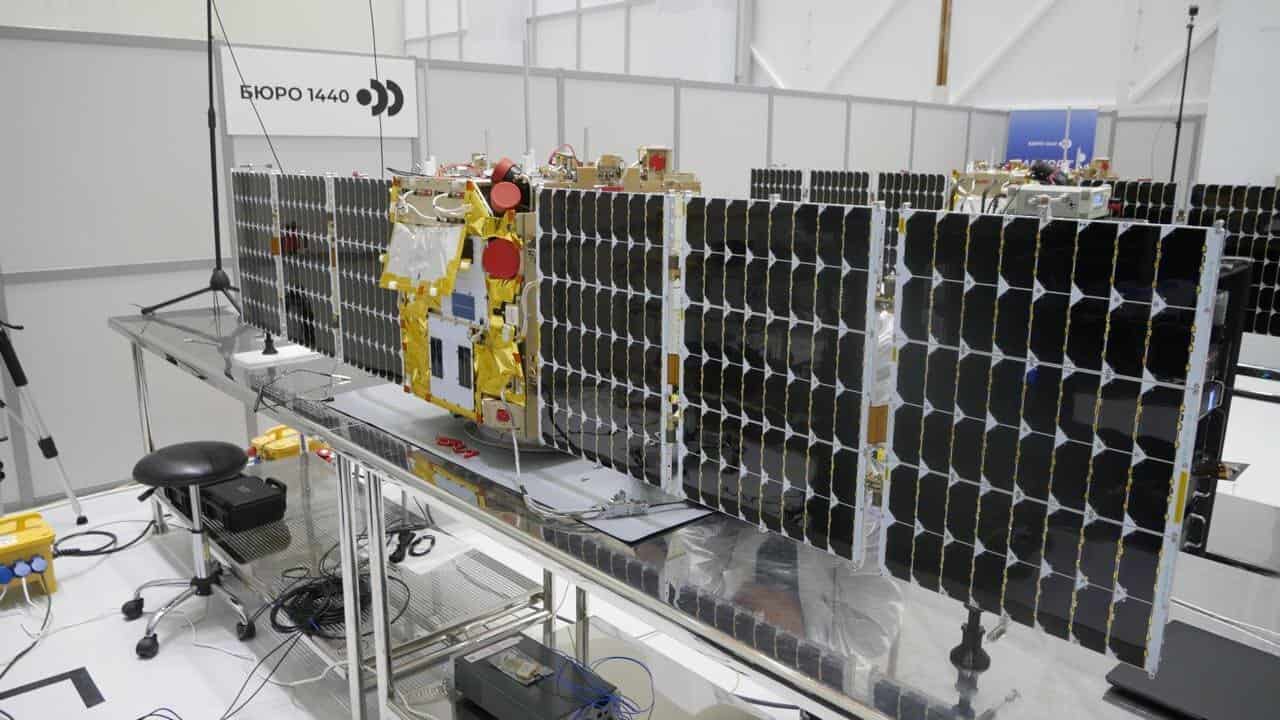
Although Russia’s Rassvet satellite constellation did not reach its planned orbit at an altitude of 800 km, tests of the satellite communications system involving real users in the Arctic confirmed that the system is operational.
Militarnyi reported this based on monitoring the orbits of Rassvet satellites.
During the experiment on September 19, residents of a settlement in the Nenets Autonomous Okrug accessed the remote electronic voting system through a satellite channel.
The system used Bureau 1440’s low-Earth orbit satellites to transmit data to a subscriber terminal on the ground. The signal was then transmitted via Wi-Fi to the user’s tablet, allowing the user to connect to the electronic voting system.

In late July, Militarnyi reported that the first batch of Rassvet satellites, launched in late March 2026, had effectively completed deployment into operational orbits.
Thirteen of the 16 launched satellites had already reached an operational altitude of 506 km, while two remained at altitudes of 350-370 km, and one satellite burned up, presumably due to a manufacturing defect.
In its official publications and registration documents, Bureau 1440 lists about 800 km as the target orbit. The stabilization of the first batch at about 500 km could indicate a last-minute change of plans or deliberate disinformation about the constellation’s future configuration.
At the same time, an altitude of about 500 km should not, by itself, prevent the system from operating. It falls within the approximate altitude range used by Starlink: during 2026, SpaceX plans to move satellites from orbits at about 550 km to an altitude of 480 km.
Therefore, the discrepancy from the initially stated plans will not create technical problems for Rassvet’s operation, as demonstrated by tests in the Nenets Autonomous Okrug. In addition, it cannot be ruled out that the current altitude is only an intermediate stage and that the satellites will subsequently resume raising their orbits.
Bureau 1440 is deploying Russia’s low-Earth orbit Rassvet satellite communications system. In March 2026, the company launched the first 16 satellites of the target constellation, followed in July by another 16 spacecraft.

The company says the system uses 5G NTN technology for communications between satellites and ground terminals. Laser communications transmit data between the satellites themselves.
During previous tests, the company reported transmitting data between spacecraft over distances of up to 1,000 km at speeds of up to 10 Gbps.
The officially stated schedule calls for commercial operation to begin in 2027. Russian sources have previously cited plans to increase the number of spacecraft to 250 by 2027, 730 by 2030, and more than 900 by 2035. At the same time, this schedule would require regular launches of new batches of satellites at a rate of about 16 spacecraft per month, whereas launches currently take place about once every four months.
However, even with temporary setbacks and a significant share of defective satellites, it would be dangerously naive to assume Russia will abandon a program of such strategic importance because of higher costs or delays behind the planned schedule.
Read more about the strategic importance of the project in our special article, “Russia’s Rassvet Sattelite System: Strategic Threat to Ukraine and the Democratic World.”
Підтримати нас можна через:
Приват: 5169 3351 0164 7408 PayPal - [email protected] Стати нашим патроном за лінком ⬇
Subscribe to our newsletter
or on ours Telegram
Thank you!!
You are subscribed to our newsletter