Popular
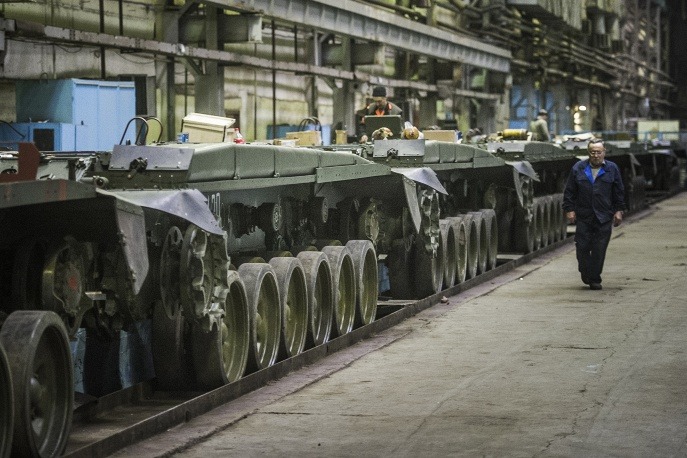
The Royal United Services Institute (RUSI) in London published a study on the development of the defense industry complexes of Russia, Ukraine, and Europe from 2022 to 2024. According to the study, by the beginning of 2024, approximately 4.5 million people were working in Russia’s defense industry complex.
The full version of the study is available on the institute’s website.
According to the institute, the decision to “mobilize industry” was made on July 6, 2022. The Russian parliament passed pre-prepared amendments to several strategic laws. This created the legal framework for introducing certain elements of a wartime economy.
Among other provisions, the changes to the legislation allowed the Russian government to:
– Activate all available mobilization resources and facilities, especially industrial ones, to produce goods and materials essential for the war effort (including those held in reserve);
– Access material reserves from the State Reserve, focusing on strategic materials vital for the production of weapons and military equipment (including those set aside for emergencies);
– Introduce temporary adjustments to labor regulations in organizations and enterprises supporting military needs, such as requiring workers to extend their working hours to 12 hours a day, including nights, weekends, and public holidays, six days a week.
– Prohibit organizations from refusing to enter into contracts with the government for the supply of goods and services intended to meet military needs;
– Discontinue tender procedures and conduct procurement from a single supplier for goods and services necessary for fulfilling state defense orders, as well as to form stockpiles of products, raw materials, materials, and components required for the production of weapons and military equipment;
– Expand state price regulation within the scope of state defense orders.

As of the beginning of 2024, the overall register of defense industry enterprises in Russia included about 1,400 companies of all forms of ownership. The majority of these were state-owned. Over 977 of these companies (including those of Rostec) were subordinated to the Ministry of Industry and Trade of Russia, 166 to the Ministry of Defense, 80 to the State Corporation for Space Activities Roscosmos, and 43 to the State Atomic Energy Corporation Rosatom.
These changes affected the portfolio of several critically important companies. The state corporation Rostec, which includes more than 800 industrial and scientific enterprises, was responsible for fulfilling about 40% of the state defense order in 2022.
Analyzing its financial performance provides insight into the overall characteristics of state policy in this sector. According to the results for 2023, “Rostec’s” revenues grew to nearly RUB 3 trillion (about $34 billion), despite a significant reduction in arms exports. This is a third higher than in 2022, and the majority of these funds were allocated to the state defense order.
According to the CEO of Rostec, Sergey Chemezov, the structure of these funds primarily reflects spending on weapons and military equipment, as the profitability of Rostec’s production for the Russian military is only 2.28%. Chemezov stated that up to 80% of the equipment used by Russian forces in Ukraine was produced by Rostec.
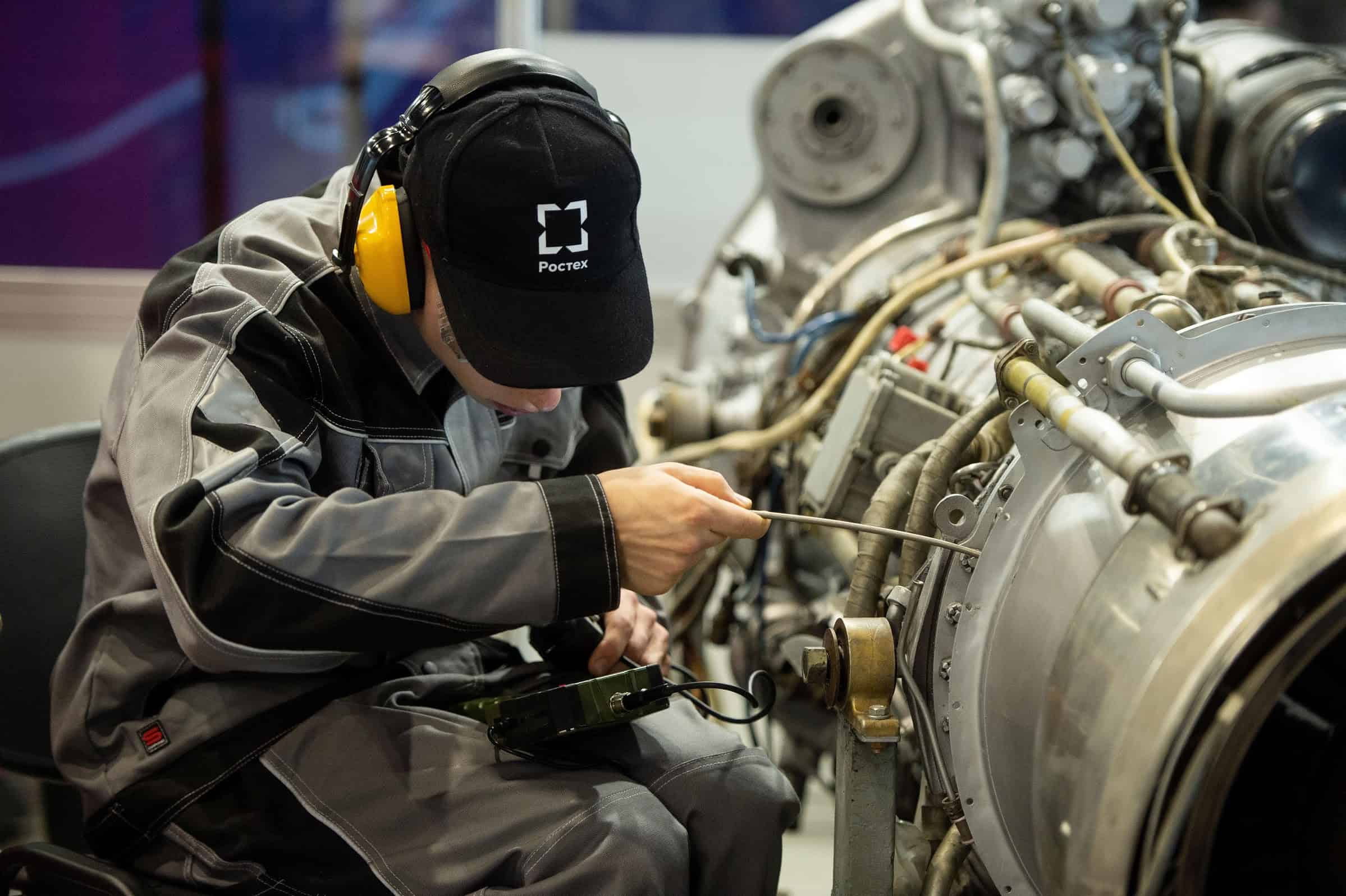
As researchers note, the expansion of military production was also achieved through the ability to take existing civilian enterprises and forcibly reorient them to military production. This became possible primarily due to strict state control.
Another important aspect of the changes in Russian legislation was the opportunity to expand the workforce available to the defense industry. Specifically, last-year university students, technical school students, and even prisoners convicted of criminal offenses were engaged in work. The involvement of these labor sources significantly reduces labor costs, as these workers are paid lower wages or are not paid at all. As of May 2024, about 34,000 prisoners in Russia were engaged in forced labor, both in the defense industry and in other sectors supporting the defense industry. It is planned to increase this number to 80,000 people in 2025.
Additionally, Russia is recruiting immigrants from Africa and other regions to work in the defense industry, although this is unlikely to become a widespread phenomenon. Specifically, they are involved in the production of Shahed drones in the Alabuga economic zone.

Overall, as of the beginning of 2024, more than 4.5 million people were employed in Russia at enterprises related to the execution of state defense orders, either as direct employees or contractors. Of these, 25% worked in scientific organizations, and 75% in manufacturing enterprises.
The data on the number of workers was taken by RUSI researchers from the article “The Current State of Russia’s Defense Industry Complex,” which was published in early March 2024.
“More than 4.5 million people are employed at defense industry enterprises and organizations, with 25% of the workforce in scientific organizations and 75% in industrial enterprises. According to statistics, taking into account the family members of defense industry workers, one in ten residents of Russia is connected to the defense industry,” the article states.
However, these figures are based on the so-called list of defense industry organizations, which may include “organizations that are the main contractors for state defense orders, all organizations involved in the cooperation for fulfilling state defense orders or providing support (including scientific, technical, financial, etc.), organizations fulfilling state defense orders, as well as organizations that are part of critical infrastructure.”
Although the procedure for being included in the list is quite bureaucratic, it provides companies with a range of benefits. For example, the possibility of receiving subsidies or preferential loans, access to government tenders, and exemption from mobilization for employees. Therefore, as the researchers themselves note, the 4.5 million figure refers to people working at enterprises related to the execution of state defense orders, either as direct employees or contractors. And these connections are understood in a very broad sense — after all, a quarter of this number consists of employees of research institutions.
Підтримати нас можна через:
Приват: 5169 3351 0164 7408 PayPal - [email protected] Стати нашим патроном за лінком ⬇
Subscribe to our newsletter
or on ours Telegram
Thank you!!
You are subscribed to our newsletter