


Counter-battery radars are a type of equipment used by the military for artillery reconnaissance.
These radars detect shells fired by one or more guns, howitzers, mortars, or rocket launchers, and use their flight paths to determine the coordinates of the point from which the shot was fired.
Such systems allow Russian invaders to detect the positions of Ukrainian tubed and rocket artillery and conduct counter-battery warfare against them.
Therefore, destroying the enemy’s air defense systems is one of the key tasks for Ukrainian forces across different parts of the front.
As evidenced by footage of destruction and damage many times published by Ukrainian defenders, the Russians are using mobile counter-battery radars on tracked and wheeled chassis in the war against Ukraine: 1L219 Zoopark-1, 1L260 Zoopark-1M, ARK-1 Rys (1RL239) and 1K148 Yastreb-AV.
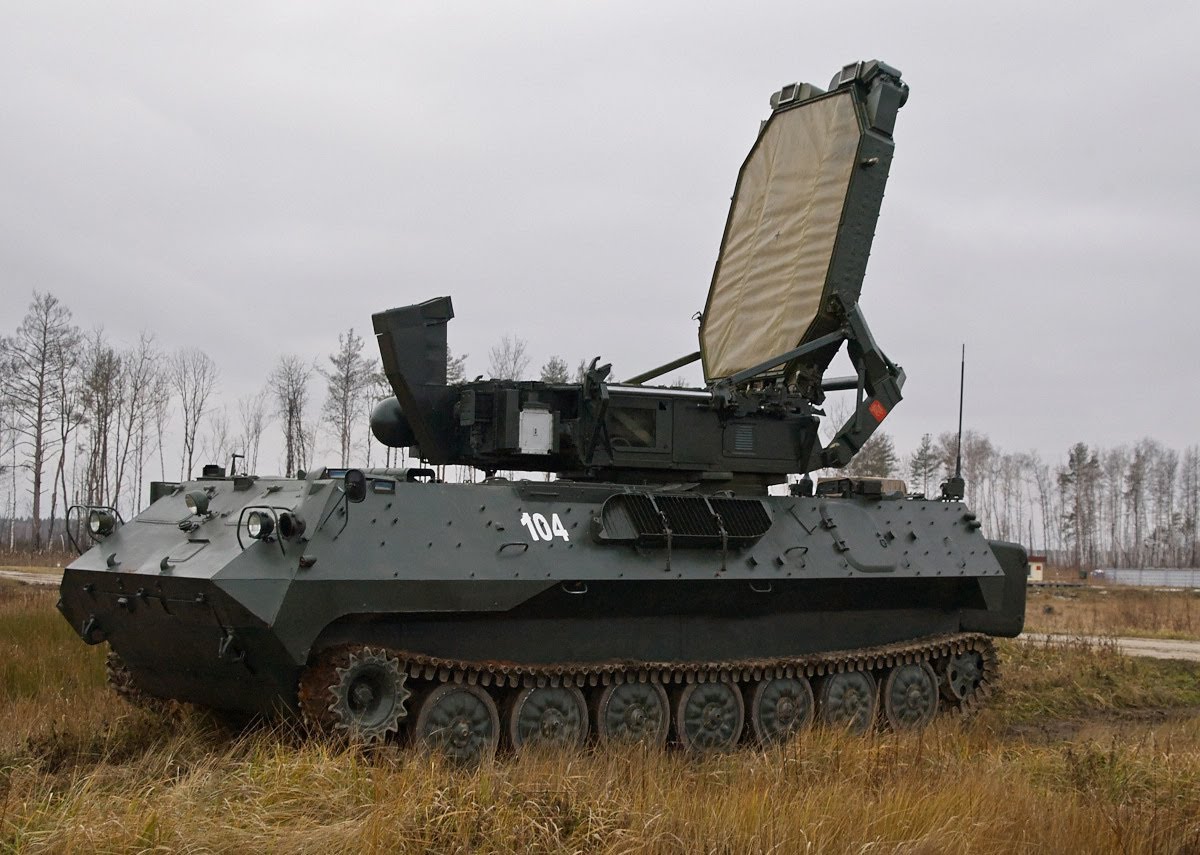
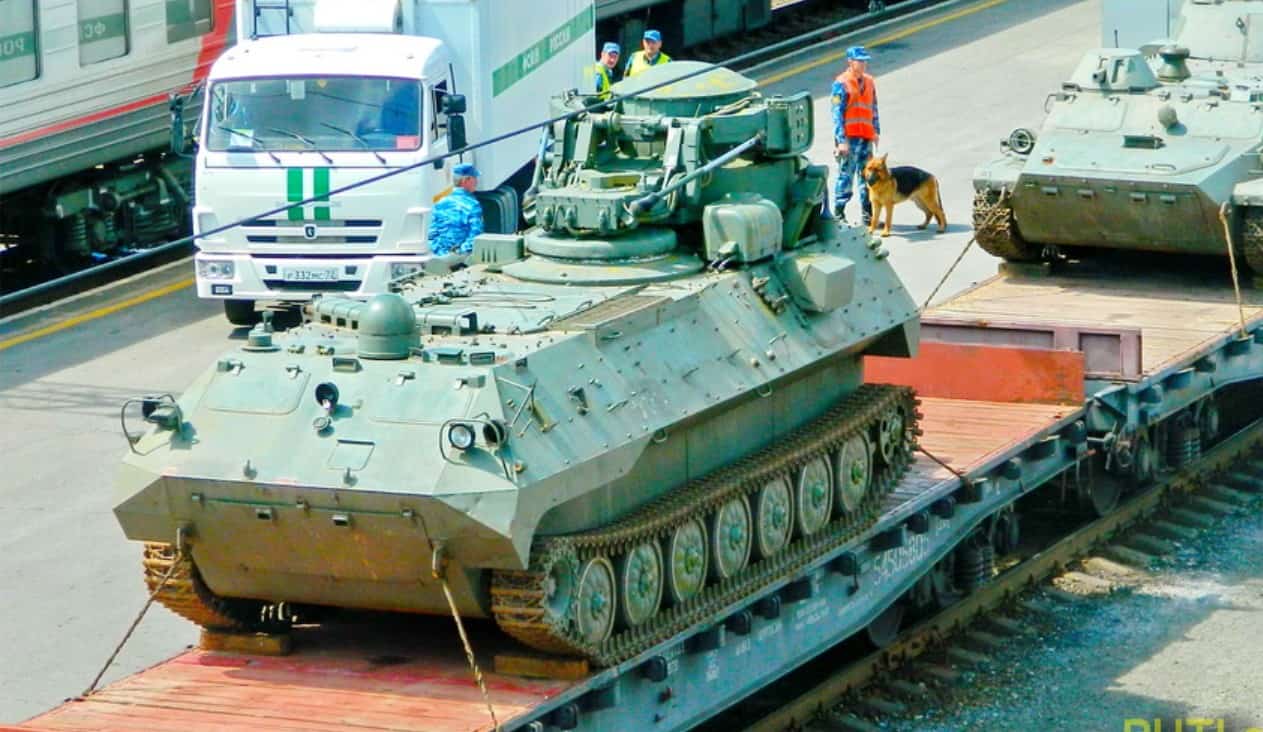
Zoopark-1 is a Russian radar system for reconnaissance and fire control. It is designed to detect and identify ground-based artillery systems, including artillery and MRL. The system can also be used to adjust the fire of its own artillery during counter-battery warfare.
This version of the radar was introduced in 2002. The main developer of the system is NPO Strela, and the manufacturer is JSC Ural Production Enterprise Vector.
The radar is mounted on the chassis of a MT-LB multi-purpose tracked platform. The radar itself has a phased array antenna capable of detecting up to 70 positions per minute and simultaneously tracking up to four targets.
The manufacturer claims that the counter-battery radar is capable of detecting the positions of 120mm mortars at a distance of up to 17 kilometers, 105mm and 155mm howitzers at a distance of up to 12 kilometers, and BM-21 Grad and BM-27 Uragan multiple launch rocket systems at a distance of up to 40–45 kilometers. It is also claimed that the system can track aircraft and detect the positions of anti-aircraft missile systems after they launch missiles.
For example, such a Russian radar was destroyed by the Armed Forces of Ukraine in the Donetsk region using a high-precision GMLRS projectile from the American HIMARS system.
The position of the enemy radar was detected by a Shark reconnaissance drone southwest of the village of Vidrodzhennia. The drone was purchased by the Come Back Alive Foundation.
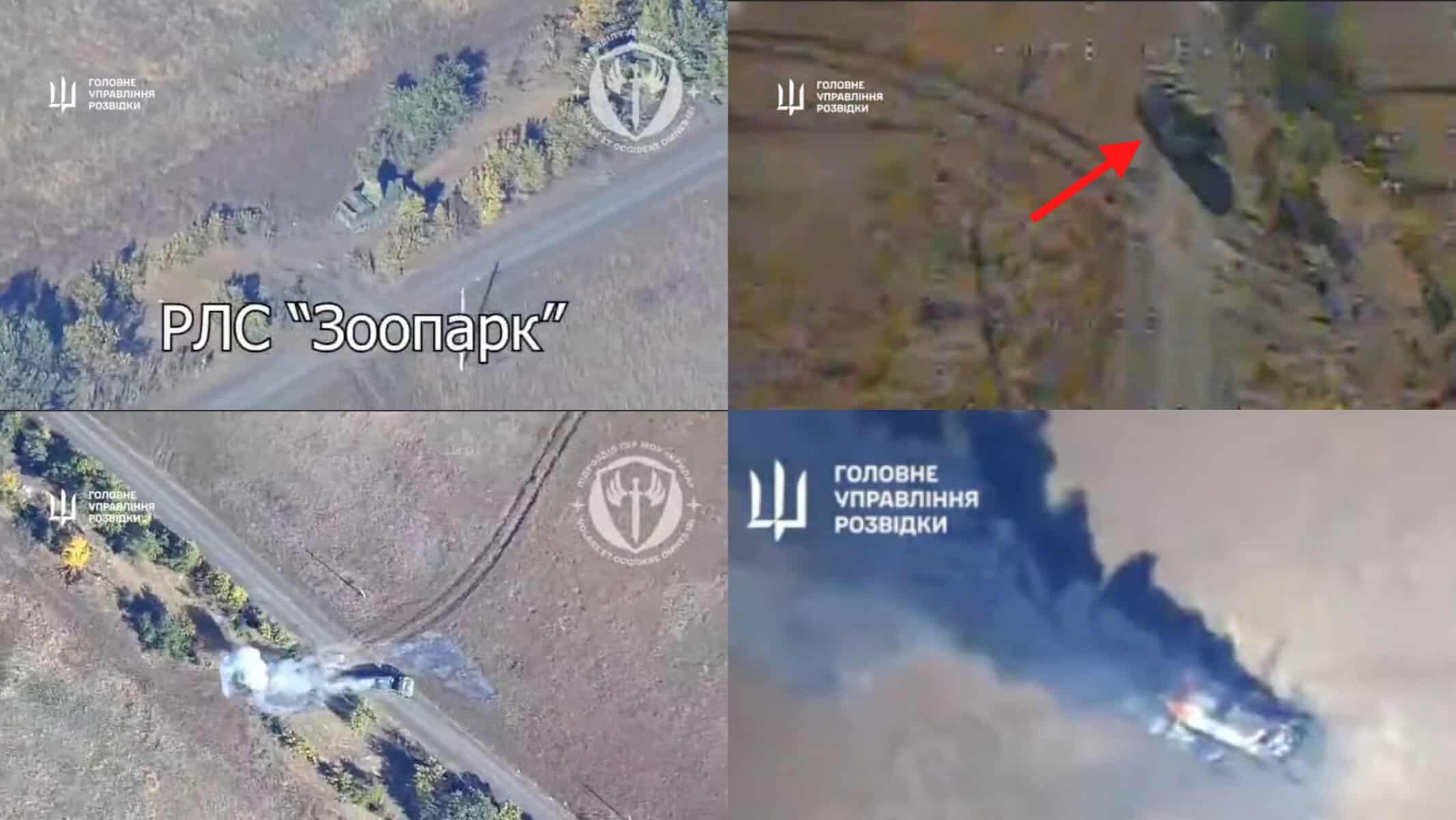
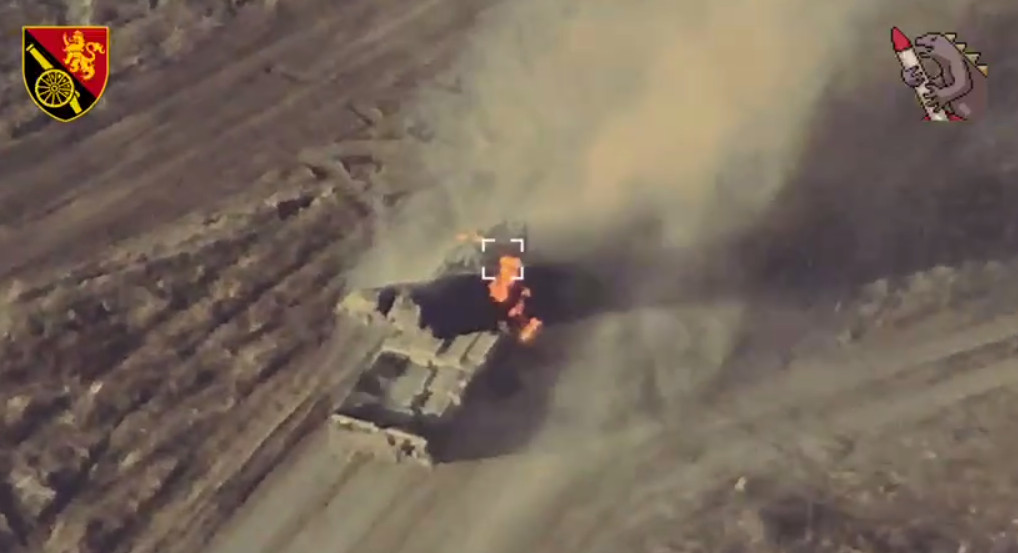
In November 2024, the Defence Intelligence of Ukraine (DIU) showed how drone operators from the Kryla unit burned down the Russian Zoopark-1 counter-battery radar.
The movement and deployment of the Russian radar was tracked by a Ukrainian military drone.
The DIU reported that four long-range FPV drones were used to destroy the enemy radar system.
After the first hits, the Russians tried to escape, but they failed, and the radar system burned down in the middle of a field. The intelligence agency did not specify where on the front line this happened.
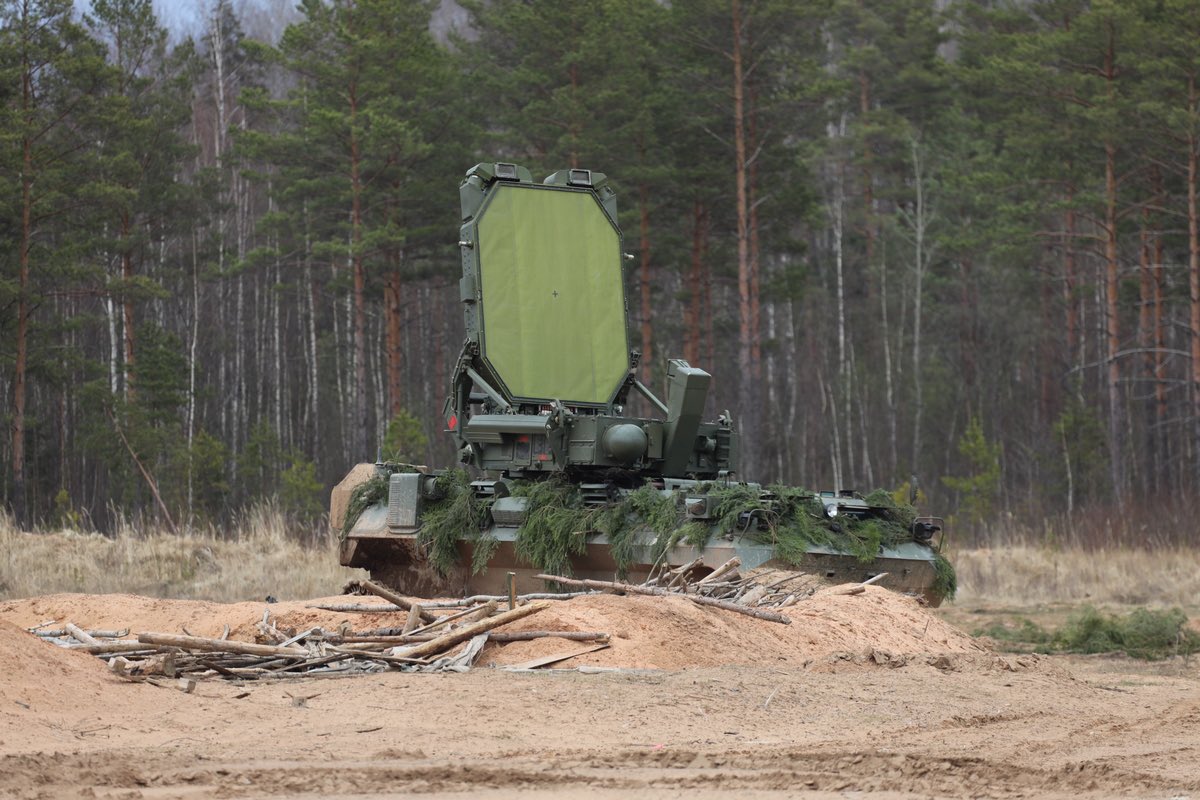
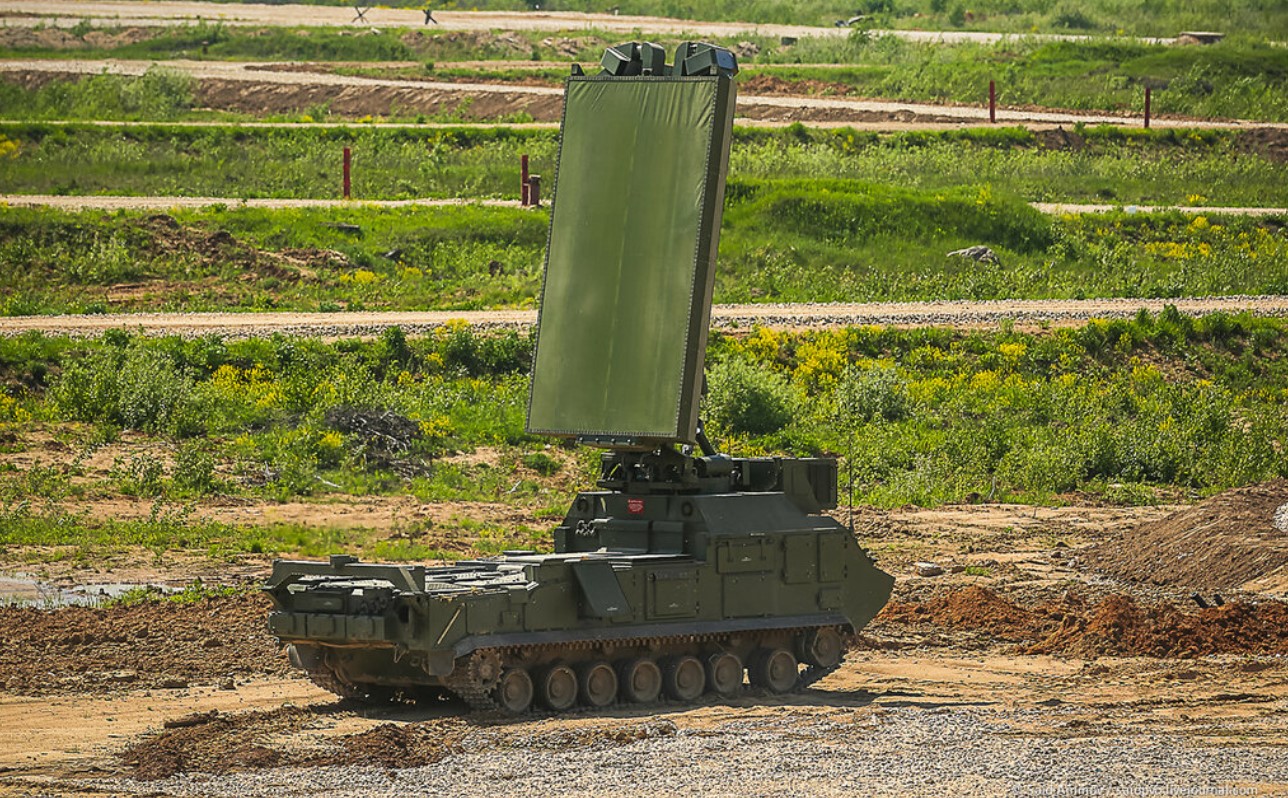
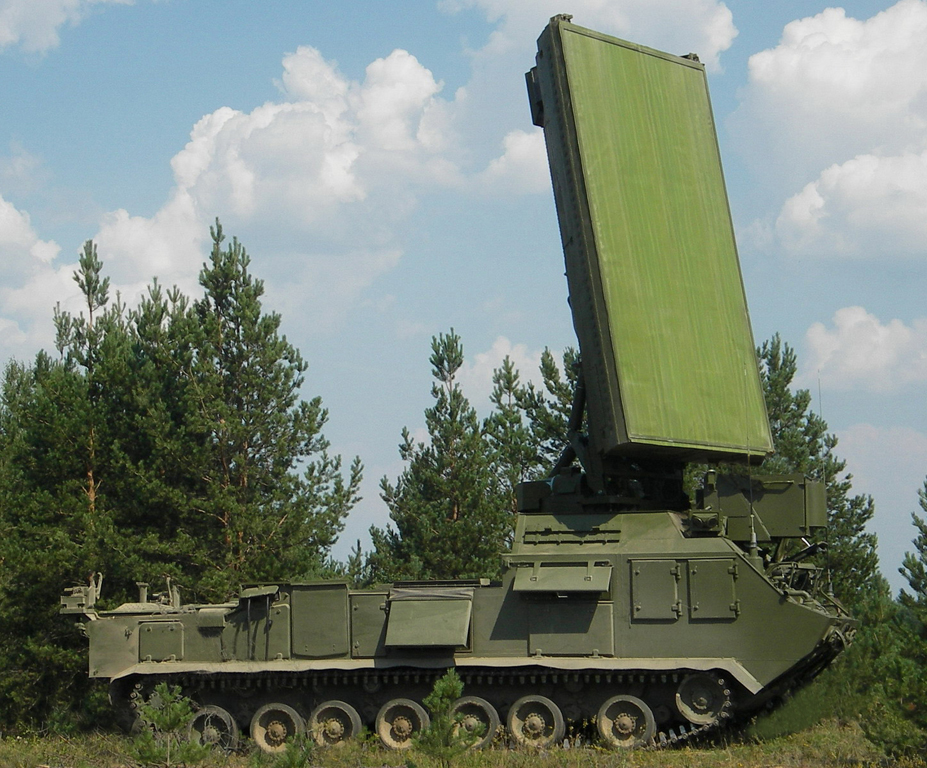
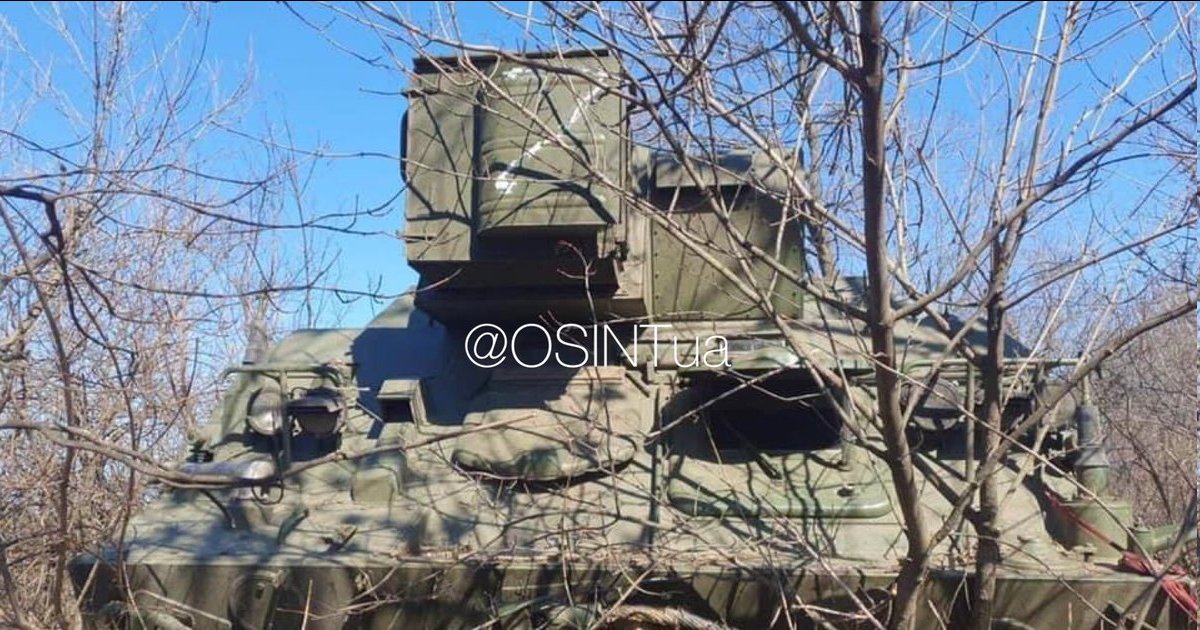
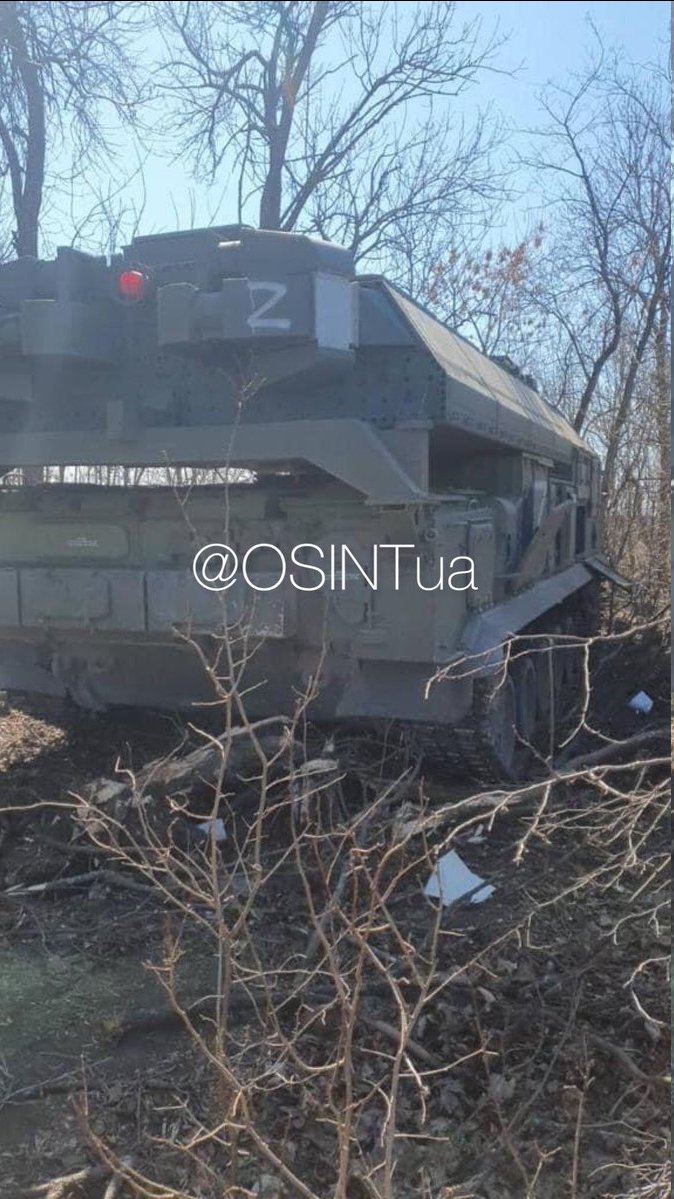
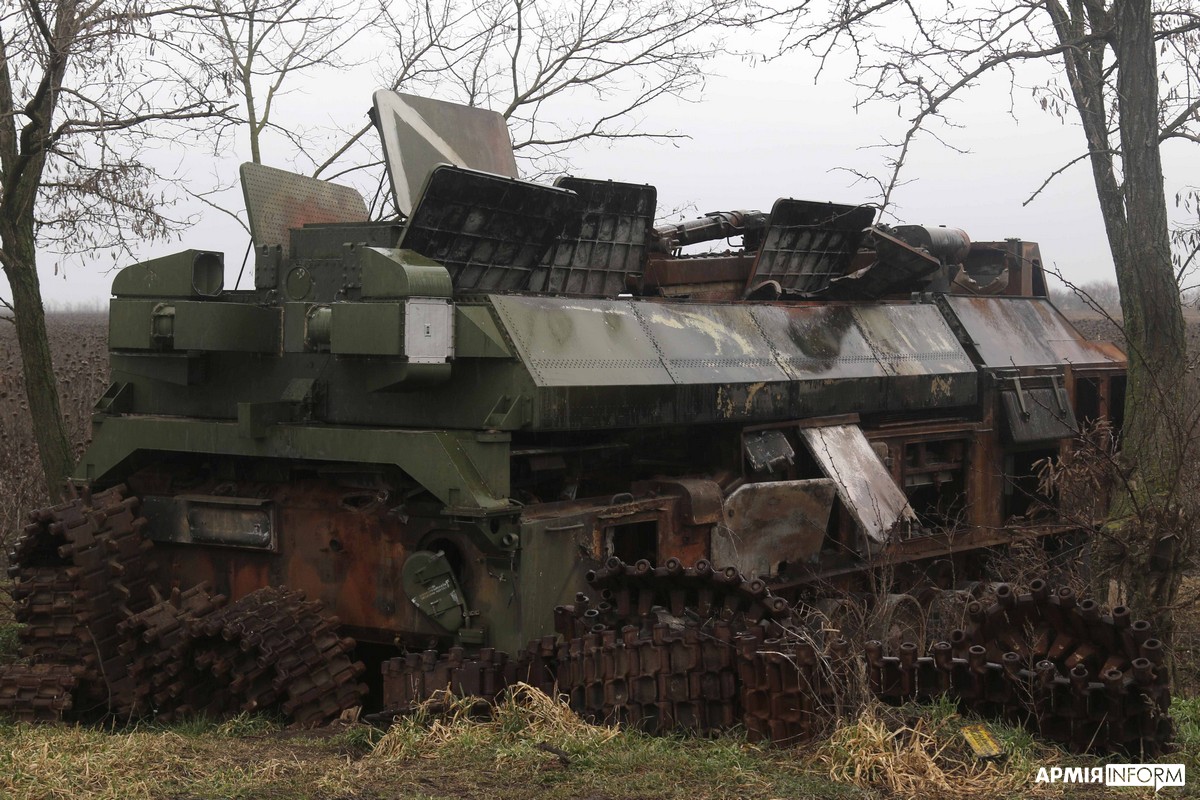
There are also videos and photos showing the destruction of more modern Russian Zoopark-1M counter-battery radar systems in various areas of the front line. This system was also developed by the Tula-based NPO Strela. It was first presented to the public in 2013.
The self-propelled system is mounted on a universal armored tracked chassis GM-5955 manufactured by the Mytishchi Machine-Building Plant and is equipped with a phased array antenna. It is also designed to detect enemy artillery positions and adjust the fire of friendly artillery.
The system includes the 1L261 artillery and missile position detection radar, the 1I38 maintenance vehicle, and the ED60 backup power station.
According to the manufacturer, the Zoopark-1M is capable of detecting the location of 152/155 mm howitzers at a distance of up to 23 km with an accuracy of up to 40 m, and multiple launch rocket systems at a distance of up to 45 km with an accuracy of up to 50 m.
The system is operated by three people: a driver, a radar operator, and a commander. It is claimed that the system can be deployed from a march in less than five minutes.
In June 2025, the UA_REG TEAM unit published footage of the detection and destruction of the enemy Zoopark-1M counter-battery radar.
The strike occurred as the radar was being deployed at its position. A Ukrainian FPV drone struck the radar antenna array directly. Usually, after such strike, the system requires major repairs, including complete replacement of the radar component.
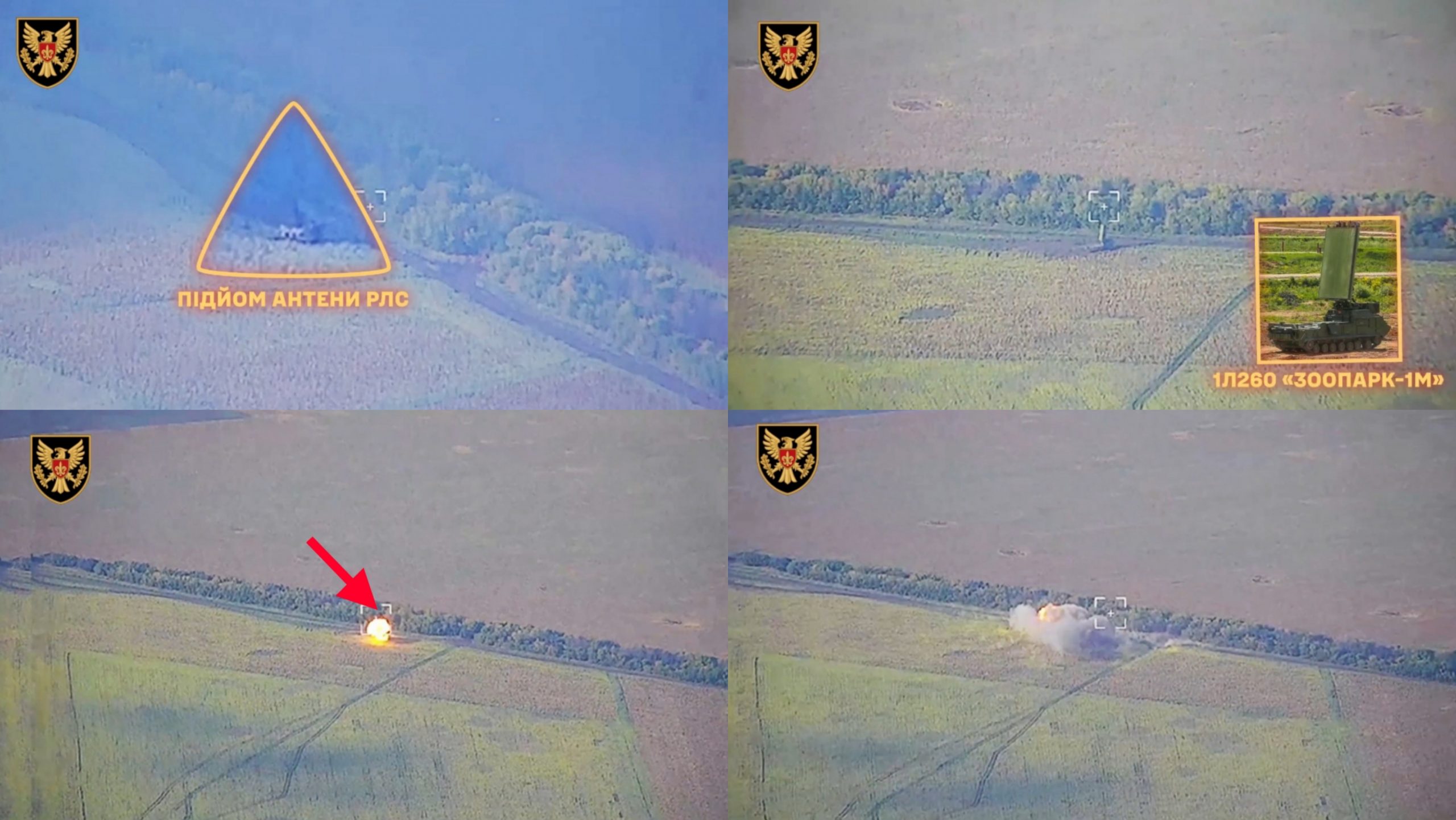
Another example: operators of a reconnaissance drone from the 15th Black Forest Artillery Reconnaissance Brigade detected and adjusted a strike on a Russian Zoopark-1M radar in one of the front line sectors.
The Russian counter-battery radar was spotted near a dirt road along a forest strip, where the crew likely concealed it when it was not operating to avoid Ukrainian reconnaissance.
The enemy Zoopark-1M was spotted as it emerged from cover and deployed into position to assist Russian artillery in striking Ukrainian defenders and conducting counter-battery fire.
Judging by the video footage, this radar was most likely hit by two high-precision GMLRS rockets fired from HIMARS or M270 launchers, supplied to Ukraine by its Western partners.
One more Russian Zoopark-1M was destroyed by a GMLRS precision strike in the Zaporizhzhia region.
In March 2022, the Ukrainian Defense Forces captured a radar station belonging to the Zoopark-1M system on one of the front line sectors.
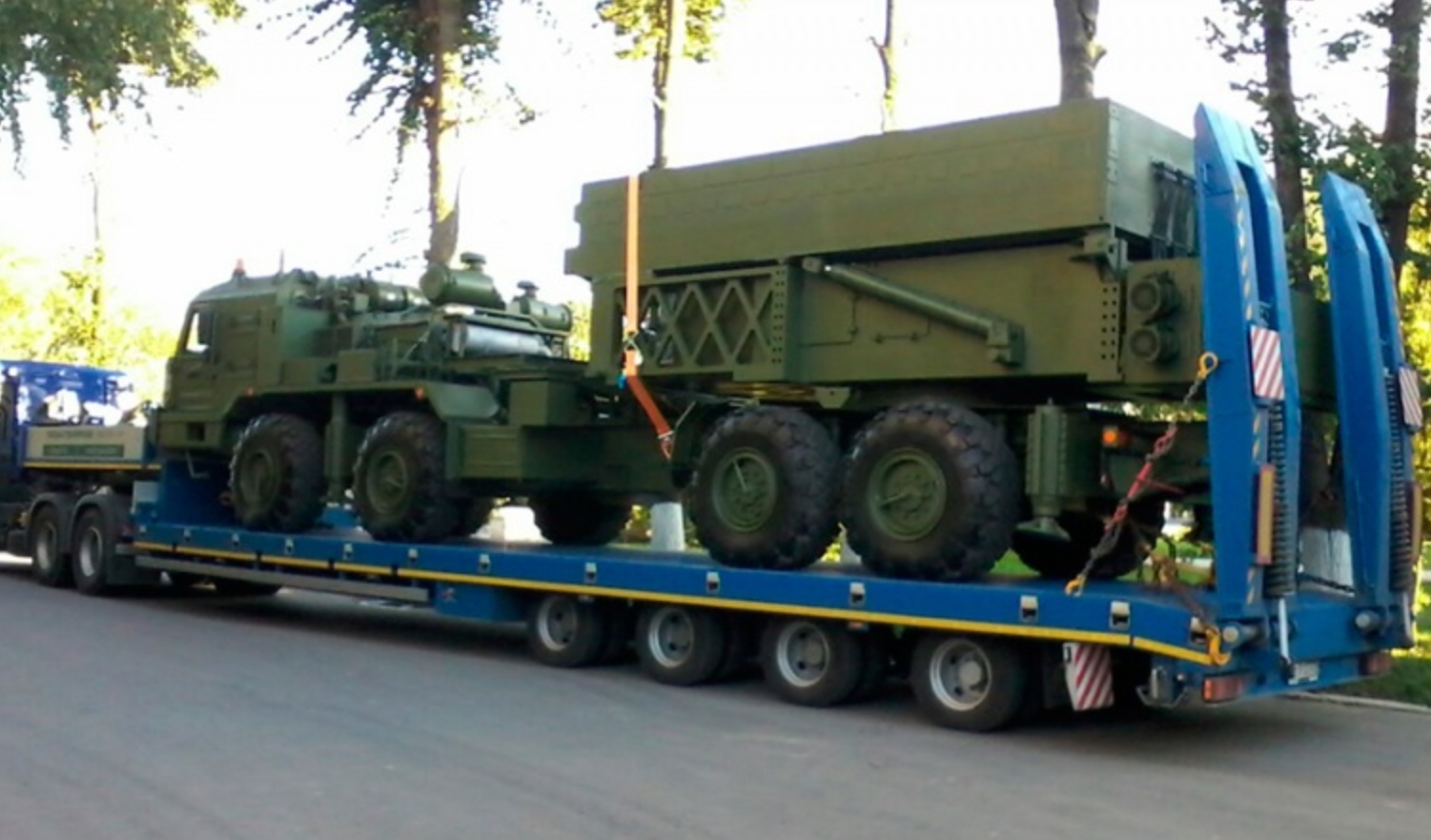
The most modern radar system for artillery reconnaissance used by Russia in the war against Ukraine is the 1K148 Yastreb-AV. In January 2024, the invaders officially announced its use on the front lines.
The characteristics and capabilities of the system have not been disclosed. Testing of the radar system was only completed in late 2021 or early 2022.
The Yastreb-AV equipment is mounted on a BAZ-6910-025 four-axle all-wheel drive chassis manufactured by the Bryansk Automobile Plant. The rear part of the chassis is reserved for a rotating antenna post with a large antenna array.
At the beginning of last year, Ukrainian military personnel demonstrated the destruction of such a system in the Donetsk Region using HIMARS.
The Russian Yastreb-AV was also hit in the Kherson Region and near the city of Yenakiieve.
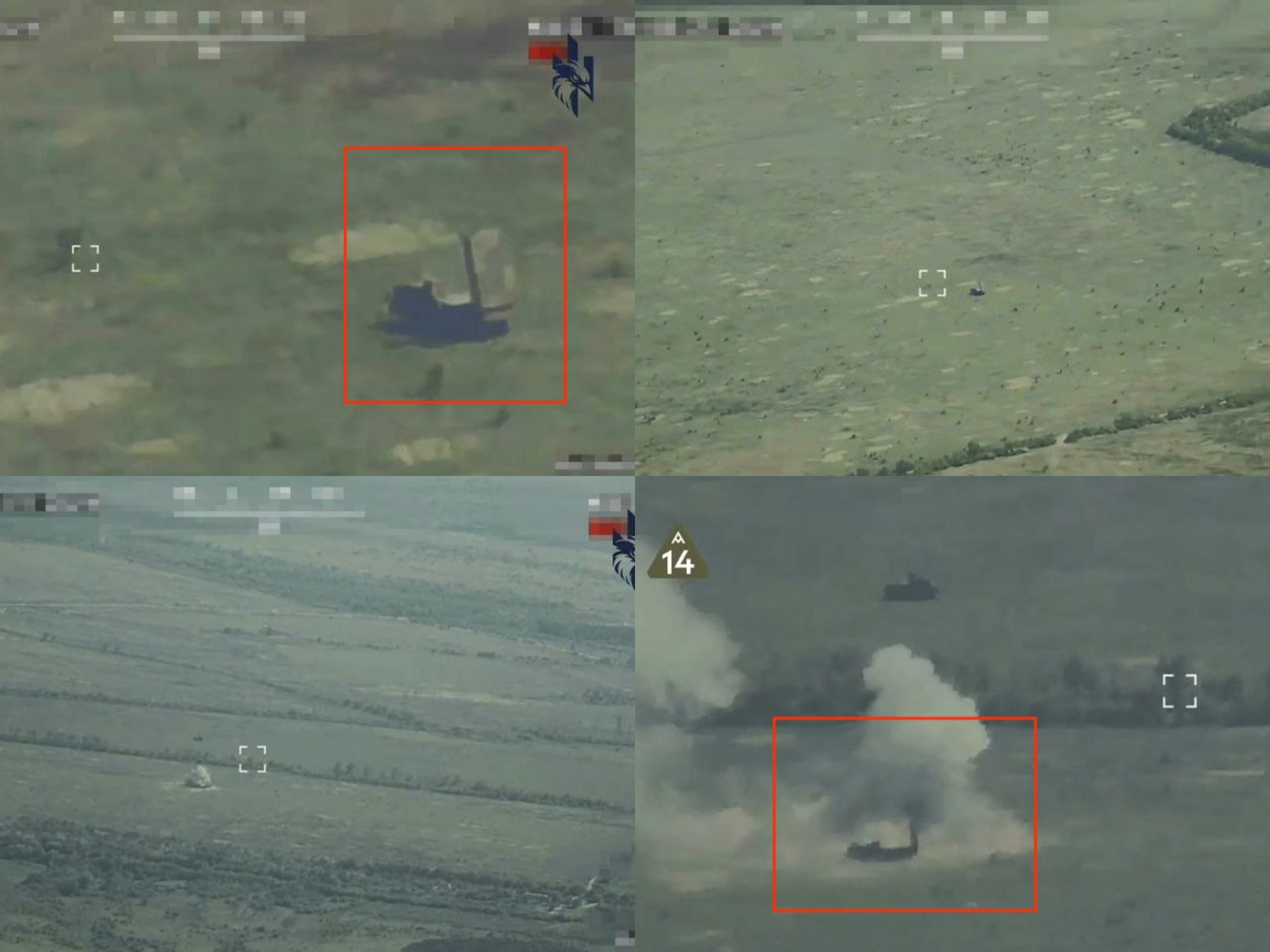
In June 2025, the 413th Raid Battalion of the Unmanned Systems Forces showed a video of its operators hitting such a Russian counter-battery radar.
The footage shows two strikes on this rare enemy radar at different locations.
In the first case, an aircraft-type strike drone flew into a deployed station in an open area between fields.
During the second strike, the Yastreb-AV was positioned near a forest belt. As in the first instance, the attack was monitored by a Ukrainian reconnaissance drone.
The video does not show the extent of damage to the enemy’s artillery reconnaissance radar system or whether it was completely disabled.
These radars are very expensive, so even damage to the 1K148 is a serious challenge for the Russian invaders, who are forced to spend money on at least repairing it.
Of course, these are not all the known cases of damage or destruction of Russian artillery reconnaissance radars. More details and footage can be found on Militarnyi, which tracks such losses.
Analysts from the OSINT project Oryx, who have been keeping track of destroyed equipment in the Russian-Ukrainian war since February 2022, have documented at least 23 cases of destruction and damage to Zoopark-1 and Zoopark-1M artillery reconnaissance radar stations.
At least two Zoopark-1M radars were captured by Ukrainian defenders as trophies.
At least four radars of the 1K148 Yastreb-AV radar were also destroyed, and one was damaged.
In addition, one ARK-1 Rys was destroyed — a radar system for reconnaissance and firing of ground artillery, which was developed in Soviet times and adopted in 1977.
The system is completely autonomous, having its own navigation, orientation, topographic referencing, and communication equipment. All ARK-1 equipment, components, and mechanisms, except for two emitters and an antenna for receiving signals, are located inside the housing.
Range of detection of firing positions:
The MT-LB armored tractor chassis protects the Rys crew and equipment from small arms fire and shrapnel.
Ukrainian defenders use high-precision rockets, drones, and other weapons to destroy Russian counter-battery radar systems.
The destruction of counter-battery radars is very important in modern combat operations, as they help the enemy detect the location of Ukrainian artillery firing positions and significantly increase the effectiveness of their own artillery fire.
Therefore, the destruction of such radars as Zoopark or the most modern enemy Yastreb-AV complicates or makes it impossible for the Russians to conduct counter-battery warfare in a specific area of the front, leaving enemy artillery in a disadvantageous position. This, in turn, reduces the risk to our artillerymen and their weapons.
In addition, radar stations of this class are a valuable and limited resource in the invaders’ armed forces. Regular losses of such expensive and complex systems force the invaders to spend more financial resources on the production of new ones or the restoration of damaged ones.
Підтримати нас можна через:
Приват: 5169 3351 0164 7408 PayPal - [email protected] Стати нашим патроном за лінком ⬇
Subscribe to our newsletter
or on ours Telegram
Thank you!!
You are subscribed to our newsletter