




Popular


On the first day of her Middle East tour, which began on April 3, 2026, Italian Prime Minister Giorgia Meloni stated that Rome disagrees with Washington regarding the operation against Iran.
Prior to this, Italy had denied the United States access to the Sigonella Air Base in Sicily for operations targeting Iran.
By the thirteenth day of Operation “Epic Fury”, on March 13, 2026, France and Italy had already opened direct negotiations with Tehran to secure guarantees for their commercial shipping in the Strait of Hormuz. Italian Defense Minister Guido Crosetto publicly confirmed these contacts.
The divergence from Washington is not limited to EU member states. The United Kingdom authorized the use of its bases exclusively for defensive operations, denied U.S. requests for offensive basing, and assembled a coalition of 41 countries to restore maritime navigation after the active phase of the conflict.
These initiatives directly contradict the U.S. strategy of escalating pressure on Iran—they signal to Tehran the existence of an off-ramp and indicate the possibility of restoring the regime’s resource capacity.
The disagreement between President Trump and European allies reflects fundamentally different threat perceptions. Washington sets two equal goals: neutralizing Iran’s military, nuclear program, and proxy networks as a prerequisite for containing China in the Indo-Pacific, and ensuring Israel’s security as a separate priority.
For London and Brussels, the same operation directly intervenes in processes that will shape the configuration of Islamic dynamics within European societies for several political cycles ahead.
The ability to manage these dynamics constitutes a higher-order priority for both than participation in a military campaign with unpredictable domestic consequences.
The 2025 agreement between Tehran and Beijing transformed Iran into a key channel for China’s authoritarian influence across multiple regions. Iranian proxy networks operate in the Middle East through Hezbollah, the Houthis in Yemen, and Iraq’s Popular Mobilization Forces.
They also support Myanmar’s junta in line with Beijing’s interests, maintain a presence in parts of Africa, and have supplied unmanned technologies in the context of the Russia–Ukraine war.
For both Washington and Brussels, Iran has effectively become infrastructure for a globally active authoritarian bloc.
The White House began implementing a strategy of preempting Chinese pressure on the United States—particularly in the context of a potential escalation around Taiwan—as early as mid-2025. Operation “Epic Fury” represents the practical application of this approach under the doctrine of “peace through strength.”
Washington’s operational calculus assumed that strikes on the infrastructure of the Islamic Revolutionary Guard Corps (IRGC) and the Basij would create conditions for internal fragmentation within Iran’s leadership and the degradation of its repressive apparatus.
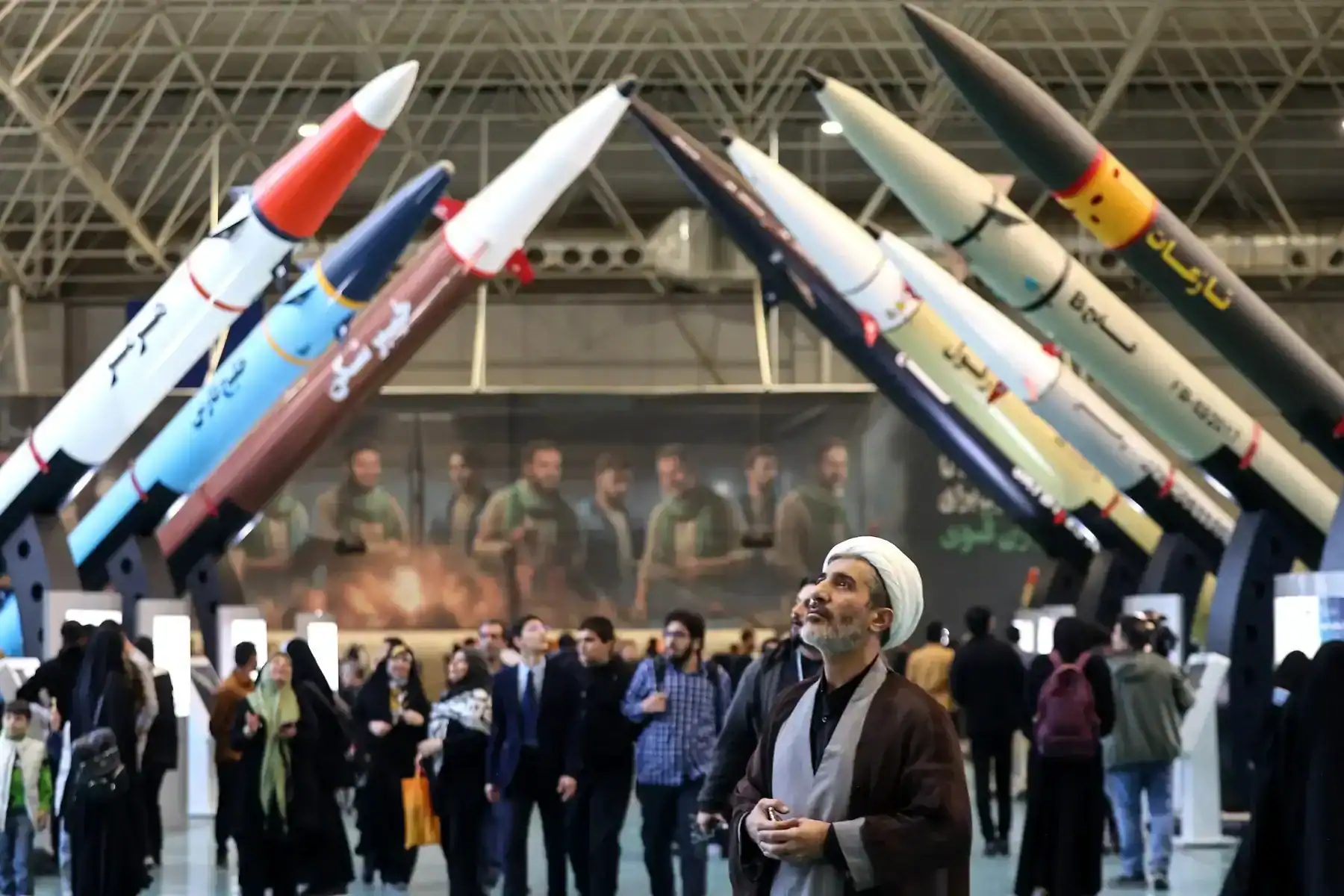
During the first phase of the operation, priority targets included command structures, air defense systems, missile capabilities, uranium enrichment infrastructure, and Iran’s naval forces—directly reducing the country’s military capacity. At this stage, regime erosion was expected to proceed without the risk of entanglement in a protracted conflict.
Over the course of the operation, pro-Israeli influence groups coordinated by Trump adviser Steven Witkoff succeeded in persuading President Trump to adjust the campaign’s operational objectives toward the Israeli concept of total destruction of Iran’s infrastructure and economic capacity.
This shift was reflected in Trump’s rhetoric, including calls to “drive Iran back into the caves where it belongs.” The language targeted not only Iran’s leadership but society as a whole. This turn toward a total campaign has produced what can be described as a negative design of Islamic dynamics.
An operation that began as a targeted strike on the regime’s military and nuclear capabilities has evolved into a broader campaign. It now fuels the global radicalization of Islamic movements, strengthens their fundamentalist elements, and turns the Iranian issue into an information weapon used by Tehran, Moscow, and Beijing.
The first phase of the operation created conditions under which internal political pressure on the regime could intensify. Prior to the campaign, Iran showed signs of rising protest sentiment and a narrowing social base of support for the theocratic system.
The transition to a total campaign fully reversed these conditions. Strikes on civilian infrastructure eliminated space for legitimate internal opposition; under conditions of external aggression, any criticism of the regime is reframed as a crime against the state.
The regime mobilized an Iranian nationalist narrative as a consolidating tool, enabling it to rally both the military and a significant portion of the civilian population around the logic of national defense.
On March 31, the Islamic Propaganda Council launched the “Defenders of the Homeland” campaign, initiating mass recruitment of civilians, including children as young as 12. The operation has thus produced results directly opposite to those envisioned in the initial operational plan.
The consolidation of Iranian society around the regime is a direct consequence of the dominance of the Israeli campaign concept, which structurally ignored the distinction between the regime and domestic political opposition. The adaptation of this concept by U.S. command structures was not without internal conflict.
On April 2, 2026, Defense Secretary Pete Hegseth dismissed Army Chief of Staff Randy George and two other officers. George was among more than ten generals and admirals removed during deliberations over a possible ground phase of Operation “Epic Fury”, including Joint Chiefs Chairman Charles Brown.
The shift toward a total campaign imposes a resource constraint that the Trump administration has not publicly acknowledged. The campaign is depleting U.S. precision-guided munitions at a rate exceeding domestic industrial production capacity.
The Pentagon has already drawn down stockpiles from Pacific arsenals to replenish reserves in the Middle East, directly weakening U.S. positioning in a potential Taiwan contingency. Replenishing pre-war stock levels under current production plans will take several years.
At the same time, China imposed export controls on critical rare earths starting in April 2025 and expanded them in October—materials vital for munitions, including those for hardened underground targets. A prolonged operation under these constraints further tightens Washington’s resource limits.
A total campaign that exhausts U.S. high-precision capabilities aligns closely with the scenario Chinese leadership has identified as advantageous in the event of its own operation against Taiwan.
For London and Brussels, the operation against Iran generates a distinct risk matrix, as escalation correlates with increasing radicalization within European societies—trends already reflected in operational data from security services.
Over the past two decades, Europe has become a key arena for the reconfiguration of Islamic identity, where governments possess limited tools to influence these processes. As of 2025, Muslims constitute approximately 9% of France’s population, 7% in Germany, and 6.5% in the United Kingdom.
These communities are not monolithic; they are shaped by competing dynamics of integration, value-based detachment, and radicalization. The capacity of states to manage this balance defines the continent’s real internal vulnerability.
Projections by Pew Research Center indicate that, depending on migration trends from Africa and the Middle East, the Muslim share of Europe’s population could rise to between 7.4% and 14% by 2050.
The depth of societal fragmentation is also determined by the extent to which religious practice displaces state-legal norms in everyday life. Where integration processes have structurally failed, radical Islamic movements find their most receptive audiences.
During the active phases of the conflicts in Syria and Iraq, a number of European Muslims participated in hostilities on the side of radical Islamist groups. Belgium, according to ICCT and The Soufan Group, sent more than 470 citizens to Islamist formations—more than Germany despite having eight times the population.
The Brussels district of Molenbeek alone produced several perpetrators of the 2015–2016 attacks in Paris and Brussels. Austria and Sweden ranked second and third in Western Europe in terms of recruits per million inhabitants, while Denmark—despite a population under six million—also ranked among the top five.
A 2024–2025 study by the MOTRA platform among young Muslims in Germany found that 11.5% of German Muslims under the age of 40 adhere to radical Islamist views. An additional 33.6% exhibit Islamist tendencies, including a preference for Sharia law over German legislation.
According to an Ifop survey in France, 44% of Muslims consider Islamic rules more important than French law. The most radicalized group is youth aged 15 to 24, among whom 57% prioritize Islamic legal norms over national legislation.
The risk of radicalization is also recognized by European publics: 46% of Italians, 37% of Hungarians, and 35% of Poles believe that Muslim communities in their countries sympathize with fundamentalist movements.
The intensification of Islamic dynamics presents a risk for Europe that may outweigh U.S.–China competition. At the same time, the spread of artificial intelligence is transforming social relations, and for Muslim communities concentrated in sectors most vulnerable to automation, this shift carries a high risk of deeper marginalization.
Automation in delivery, transportation, and low-skilled services disproportionately displaces segments of the labor force where these communities are most heavily represented.
According to the EU Agency for Fundamental Rights, 27% of Muslims in the European Union are employed in elementary occupations, compared to 8% of the general workforce.
These sectors—delivery, transport, warehouse logistics, and cleaning—face the highest automation risks between 2025 and 2030. Estimates suggest that up to 1.8 million jobs in warehouse logistics and up to 1.5 million in freight transport may be eliminated.
Demographic structure further compounds the issue: the median age of Muslims is 27 in France, 26 in the United Kingdom, and 31 in Germany. This indicates that the largest youth cohorts will enter the labor market at the peak of automation-driven disruption.
Structural unemployment among this group creates conditions conducive to further radicalization. ICCT has identified a rise in anti-technology extremism among movements that, despite differing ideologies, converge in rejecting digital infrastructure.
If scaled, this trend could produce a broad coalition unified around opposition to digital systems. Its potential constituency extends beyond Muslim communities to include conservative movements that reject digitalization as a tool of social control.
The future technological landscape is thus more threatened by this dynamic than by direct Chinese competition. China gains geopolitical advantages from radicalization, structural unemployment, and anti-technology sentiment in Europe’s Muslim communities, as these trends hinder a unified response to its expansion.
The current configuration of the conflict provides China with structural advantages in two dimensions. Islamic states, focused on criticizing U.S. and Israeli policies in Iran and Gaza, have significantly reduced public pressure on Beijing regarding repression of Uyghurs in Xinjiang.
Simultaneously, radicalization within Europe weakens its normative appeal as a civilizational alternative, strengthening China’s position in competition for resources, markets, and geopolitical influence. Beijing does not directly coordinate these processes but benefits structurally from both trajectories.
More than 25 million Muslims in EU countries and approximately 4 million in the United Kingdom constitute a social group whose radicalization creates conditions for terrorist attacks, mass unrest, and prolonged internal destabilization across the continent.
The rise of religious extremism constrains European governments from direct participation in military operations against Iran.
The United States has historically shaped Islamic dynamics through sustained military engagement in the Middle East—from Kuwait and the two Iraq wars to Afghanistan, Libya, and partial involvement in Syria.
Each of these operations carried a clear Israeli security dimension; however, previous U.S. strategies maintained a degree of balance between American interests and Israeli priorities. Operation “Epic Fury” represents a departure from that balance, as the Israeli concept of a total campaign has been fully adopted by Washington.
Europe aims to manage Islamic dynamics through integration and security measures. Yet structural forces—automation, demographic pressure, and external radicalization—undermine this effort. Operation “Epic Fury” further accelerates the erosion of what Brussels and London seek to preserve.
The emergence of a distinct European security agenda has prompted the autocratic axis to leverage the radicalization of Islamic communities as an instrument of direct pressure. This has manifested in a series of Islamist terrorist attacks across European cities in March–April 2026.
Formed in March 2026 under the patronage of the Islamic Revolutionary Guard Corps and Hezbollah, the group “Harakat Ashab al-Yamin al-Islamiya” (HAYI) carried out attacks on synagogues in Rotterdam and Liège and assaulted a Jewish school in Amsterdam.
The activation of Islamist networks following the launch of Operation “Epic Fury” represents a continuation of Iran-coordinated terrorism in Europe, which had previously intensified during the Gaza war.
A notable precedent is the December 2023 Düsseldorf court ruling, which found that Iranian security services had financed a former Hells Angels member to attack a synagogue in Bochum, a school, and a rabbi’s residence in Essen.
On March 6, 2026, British police arrested an Iranian national and three dual British-Iranian citizens on charges of espionage for the Iranian regime and surveillance of the United Kingdom’s oldest synagogue, as well as Israeli diplomatic facilities, in preparation for potential attacks.
On March 8, 2026, an explosion occurred near the U.S. Embassy in Oslo, with three Norwegian brothers of Iraqi origin—linked to pro-Iranian networks—identified as suspects.
On March 28, 2026, an attempted bombing targeted a Bank of America building in Paris. French authorities suspect HAYI, which also claimed responsibility that same month for an explosion at the American Bank of New York Mellon office in Amsterdam.
The ayatollah regime mobilizes operatives without long preparation or major funding. Recruits come from European Muslim diasporas and criminal networks; some cells are coordinated by Iranian intelligence, while others operate through Shiite proxies, including Iraq’s Popular Mobilization Forces.
Target selection is designed to shape public opinion within European societies and to systematically deter the political leadership of the United Kingdom and the European Union from deeper involvement in Operation “Epic Fury”.
Attacks on Jewish community sites are intended to provoke social polarization and compel governments to increase spending on the protection of religious facilities; Belgium, for example, has deployed military units in areas with concentrated Jewish populations.
Attacks on U.S. financial assets and diplomatic missions signal to European governments that supporting Washington in the conflict generates direct security risks on their own territory. U.S. investment banks in Paris and Frankfurt have advised employees to work remotely.
The timeline of attacks indicates a coordinated and centralized campaign directly correlated with the escalation of the U.S.–Iran confrontation. The first terrorist attack involving HAYI militants occurred nine days after the launch of Operation “Epic Fury”.
A further escalation followed a March 12, 2026 statement by Iran’s new Supreme Leader, Mojtaba Khamenei, who declared readiness to act along the most vulnerable fault lines of the Western bloc.
The activation of Tehran-affiliated terrorist networks coincided with the escape of 15,000–20,000 individuals linked to ISIS from the al-Hol camp in Syria.
Following an offensive by Damascus-aligned forces into northeastern Syria in January 2026, the Kurdish-led Syrian Democratic Forces lost control of the camp, and the majority of escapees subsequently left Syrian territory.
The reallocation of European security resources toward countering Iran-linked networks has weakened surveillance of Sunni jihadist structures. British authorities and the governments of key EU member states now face two parallel terrorist threats simultaneously.
Shiite networks coordinated by Tehran are expanding their activity across Europe, while the dispersal of ISIS-linked individuals from al-Hol is restoring the operational capacity of Wahhabi jihadist structures on the continent.
The rapid and effective formation of Shiite networks within radicalized segments of Europe’s Muslim population demonstrates that military action against Iran can mobilize Islamist movements in Europe with greater intensity than during Israeli operations in Gaza.
Because Operation “Epic Fury” targets a country seen by many Muslims as a key religious and political center, continuing the campaign is likely to accelerate radicalization among European Muslims without extensive planning by the Iranian regime.
The distinct position of European political elites on the Middle East conflict—diverging from that of the United States—is also shaped by economic considerations. The consequences of war in the region directly affect EU financial stability and, by extension, domestic political support for incumbent governments.
Gulf markets create a structure of trade dependence for key EU economies that renders direct military involvement a tangible threat to export performance.
EU trade with Gulf countries reached €161.7 billion in 2024, including €99.4 billion in exports. The Gulf represents the European Union’s sixth-largest export market.
EU exports to Saudi Arabia increased from €25 billion in 2021 to €36.84 billion in 2024—a 47% rise over three years. Trade in goods with the United Arab Emirates reached €55 billion in 2024, with EU investments totaling €186 billion.
On May 28, 2025, Brussels formally launched negotiations on a free trade agreement with the UAE—the EU’s first such initiative in the Gulf region.
The structure of EU exports to Gulf monarchies differs fundamentally from that of the United States. As of 2024, U.S. exports to Saudi Arabia total approximately $13.18 billion annually.
While exports to the UAE are higher—reaching roughly $27 billion when combined with services—the bulk consists of military equipment and related services.
According to SIPRI, the United States supplies 74% of Saudi Arabia’s major arms imports, and 33% of total U.S. arms exports are directed to the Middle East.
By contrast, European exports to Middle Eastern monarchies are concentrated in consumer and luxury segments, including automobiles, wine, jewelry, high-end designer goods, and industrial machinery.
In 2023–2024, Italy increased jewelry exports to the UAE by 12% to $1.22 billion, while technology and machinery exports rose by €1.5 billion. Saudi demand for apparel and luxury goods grew by €270 million, or 18% year-on-year. Italy’s bilateral trade with Saudi Arabia reached €10.3 billion in 2024, with a €2.1 billion surplus in Rome’s favor.
French exports to Saudi Arabia and the UAE exceed $10.8 billion annually and include aerospace products, automobiles, and luxury goods.
The EU accounts for 15.7% of total Gulf imports and is the GCC’s second-largest trading partner. Unlike the United States—whose export portfolio is anchored in long-term defense contracts—the European model depends on consumer demand among affluent Gulf populations.
Escalation in the Strait of Hormuz shifts this dependence from a trade risk into direct losses for the real economy.
The European automotive sector has already encountered the risk of losing premium export markets. On March 20, 2026, Ferrari suspended most deliveries to Gulf countries due to the inability of car carriers to enter the region.
Shipments resumed only on March 26 through a combination of maritime and air freight, with air transport costs four to five times higher than sea transport.
For other luxury automakers, rising logistics costs have proven incompatible with maintaining profitability. Maserati (Stellantis) also suspended deliveries and indicated that exports would resume only after stabilization of the regional security environment. Bentley has avoided air freight and is fulfilling orders from existing regional inventories.
More than 4,000 luxury vehicles destined for Dubai were rerouted to the port of Lamu in Kenya. With Gulf logistics hubs constrained by airstrikes and disruptions in the Strait of Hormuz, the Kenyan port is expected to receive an additional 5,000 vehicles.
The luxury goods segment—one of the most dynamic markets in the Middle East—has experienced a decline in capitalization in response to the security crisis.
Following the start of the operation, shares of Richemont fell by 5.7%, Kering by 5.0%, Brunello Cucinelli by 4.6%, Burberry and LVMH by 4.3%, and Hermès by 4.0%. LVMH, Hermès, Prada, Givenchy, Maison Margiela, Kenzo, Rimowa, Tumi, and Sephora temporarily closed stores in the UAE, converting security risks into direct financial losses.
Operation “Epic Fury” and Iranian countermeasures unfolded during Ramadan—a peak sales period for luxury goods in the region.
Dubai, identified by RBC Capital Markets as the Middle East’s largest consumer market and which saw an increase of 6,700 individuals with net worth above $1 million in 2024 alone, recorded a sharp drop in mall traffic during the early days of the conflict.
In March 2026, foot traffic at Dubai Mall declined by 45%, while sales at Dubai Mall and Mall of the Emirates during Ramadan fell by 60%. Overall retail turnover in the emirate declined by 35–40% compared to pre-war levels, according to data provided to the Italian Ministry of Foreign Affairs.
The Middle East accounts for approximately 5–9% of global revenue for leading European luxury brands, while for the EU as a whole, the region represents 11.7% of trade with Gulf countries. Just weeks of logistical disruption have been sufficient to generate quarterly losses.
This vulnerability explains the March negotiations between Paris and Rome and Tehran. Both capitals are acting to preserve their trade positions in the region. A blockade of the Strait of Hormuz threatens direct export losses that constitute a significant share of GDP for both economies.
Italy, whose exports to the UAE grew by 22% year-on-year in 2024, and France, whose exports include Airbus aircraft, automobiles, and luxury goods, are seeking security guarantees for civilian shipping and a unified EU position on conditions for restoring maritime navigation.
The structure of U.S. trade in the region differs fundamentally. Because it is anchored in defense exports and energy imports, a force-based operation to secure shipping lanes in a blocked Strait of Hormuz remains an acceptable scenario for Washington.
From the White House perspective, negotiations between NATO member states and the ayatollah regime further legitimize Tehran, weaken U.S. pressure instruments, and undermine the formation of a unified Western position on the conflict.
By contrast, the European Union—focused on safeguarding annual exports valued at €99.4 billion—views a military resolution as a threat to its own economies in pursuit of U.S. operational objectives, the initiation of which European governments did not approve.
While French and Italian diplomats pursue indirect negotiations with Tehran and key EU member states refrain from definitive assessments of Operation “Epic Fury”, China observes the conflict without incurring direct costs.
Despite supplying arms to Iran prior to the escalation, Beijing views the Iranian regime as a situational partner capable of weakening U.S. military capacity and political credibility ahead of a potential phase of direct confrontation.
Chinese state media consistently frame Operation “Epic Fury” as a manifestation of unilateral White House action—a narrative aligned with segments of European political and public opinion where dissatisfaction with U.S. foreign policy has intensified during the Trump presidency.
European assumptions about potential alignment with China fail to account for Beijing’s global expansionist ambitions, including its willingness to instrumentalize Islamic dynamics as a channel for destabilizing the Western bloc and expanding authoritarian influence.
China’s perception of radical Islam as a geopolitical instrument is reflected in the proliferation of pro-Iranian content by approximately one-third of nominally independent creators on Douyin, the Chinese version of TikTok.
Beijing has no interest in stabilizing the Middle East. Disruptions to Gulf logistics redirect portions of European exports toward the Chinese market, creating new channels of EU dependence on China. Each additional week of conflict structurally deepens this dependence.
A fragmented West enables China to conduct separate dialogues with Washington and Brussels, apply differentiated arguments, and deploy distinct pressure instruments. A consolidated democratic bloc would eliminate this strategic flexibility.
Security and foreign policy divergences between the United States and European governments have accumulated since the beginning of the Trump presidency.
Operation “Epic Fury” has crystallized these differences, particularly in threat prioritization between Washington on one side and Brussels and London on the other.
While U.S. strategy in this phase of global competition relies on coercive diplomacy and preemptive action against China, European governments focus on risk containment and preserving economic advantages. This divergence is most pronounced where interests overlap—especially in shaping Islamic dynamics.
The approaches of the U.S., Europe, and China toward Islamic dynamics reveal the true structure of global competition more clearly than formal security doctrines.
The U.S. uses military tools that achieve tactical gains but worsen Islamic dynamics, radicalizing the groups it aims to weaken and turning the Iranian narrative into a resource for autocracies.
Europe seeks to manage these dynamics internally but is losing capacity under pressure from external triggers and structural forces beyond its control.
China leverages the radicalization of Islamic dynamics as a tool to weaken geopolitical competitors without expending significant resources, while simultaneously deepening European dependence by creating incentives to seek alternative markets.
Islamic dynamics will be a decisive variable shaping the global order between 2030 and 2050—driven by demographic growth in Africa and South Asia, control over Gulf energy resources, and the presence of Muslim communities within the core of Western democracies.
Competition over influence on these dynamics will shape geopolitical positioning in the emerging global system. What started as a targeted effort to neutralize Iran’s military and nuclear capabilities has become a total campaign, raising systemic risks for democratic allies while boosting China’s structural advantages.
Підтримати нас можна через:
Приват: 5169 3351 0164 7408 PayPal - [email protected] Стати нашим патроном за лінком ⬇
Subscribe to our newsletter
or on ours Telegram
Thank you!!
You are subscribed to our newsletter