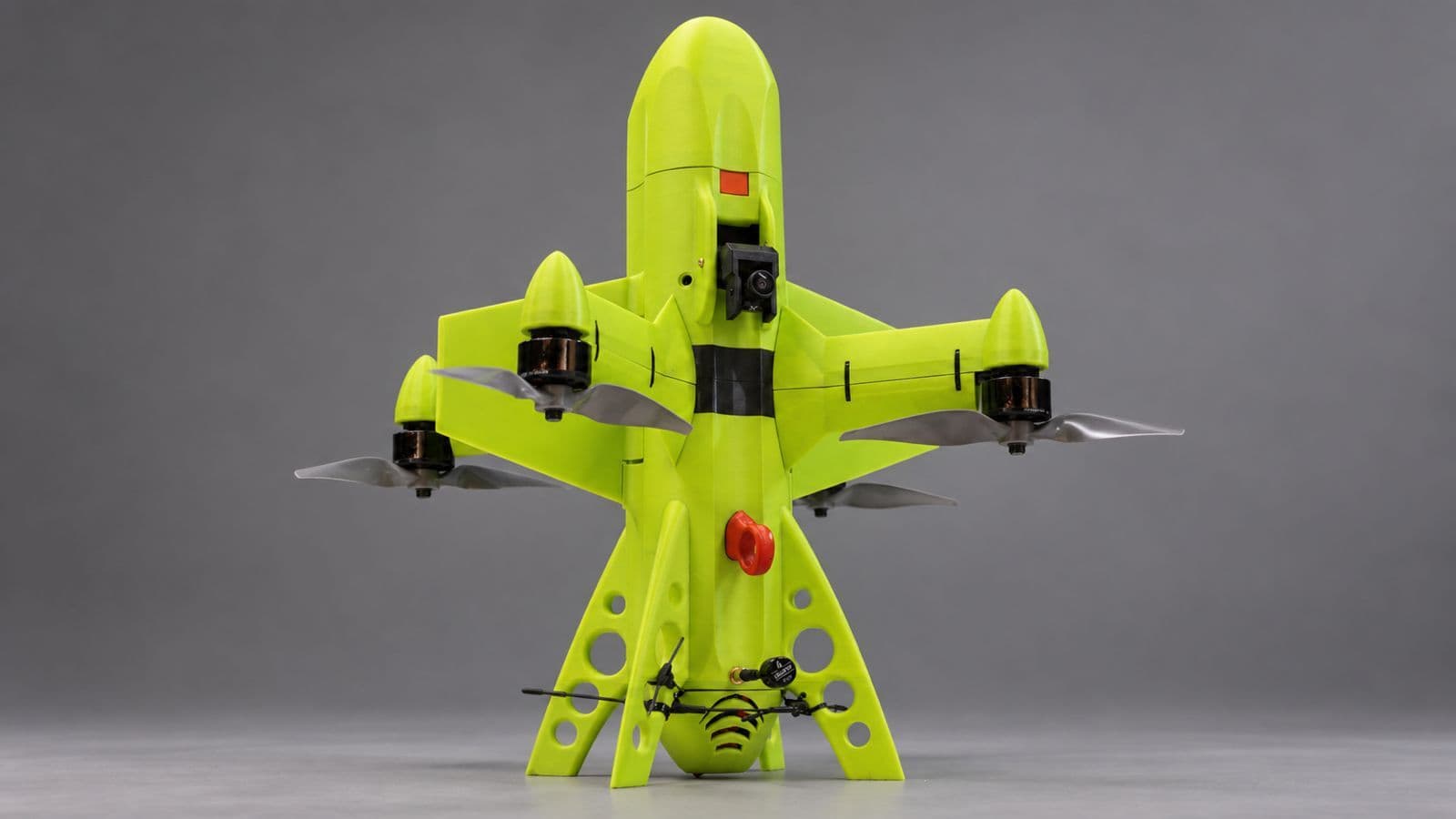


Ukrainian company ZVOOK has developed the ZVOOK NW0 “tactical acoustic sensor” to detect enemy FPV drones, particularly those using fiber optics, by the sound of their flight.
The company ZVOOK announced this on its Facebook page.
According to the company, the FPV detector is equipped with artificial intelligence that analyzes the acoustic environment around the clock. The declared detection range is 150-450 meters, and the device itself operates at 360 degrees. At the same time, it also detects FPV drones on fiber optics, which cannot be detected by RER means.
When a target is detected, the sensor:
The sensor is claimed to have a high level of protection against dust, water, and mechanical impact (IP67), allowing it to be used in difficult combat and weather conditions. The system also supports remote firmware updates.
To operate, the sensor must be connected to a power source and a data transmission system, which, depending on the model, can be built using fiber optics, twisted pair, LTE, or LoRa radio channel. The sensor consumes 15–20 watts, depending on the model.
It is noted that acoustic sensors make it technically possible to build a full-fledged network for “protecting the line of contact, frontline cities, or logistics routes.” To build a reliable network, the manufacturer recommends placing sensors every 400-600 meters apart.
Zvook is best known for creating an acoustic system for detecting cruise missiles, helicopters, drones, and fighter jets at low and medium altitudes.
The system consists of a network of microphones located throughout Ukraine that record ambient sounds, which are then processed by special software. The software analyzes and isolates acoustic signatures characteristic of cruise missiles, aircraft, and drones.
To achieve this range, Zvook’s developers installed curved “acoustic mirrors” with a diameter of half a meter, which concentrate sound waves onto the microphone. Most listening stations have a coverage angle of about 200°.
It is claimed that the complex is capable of detecting a drone at a distance of up to 5 km and a cruise missile at 7 km. These parameters are significantly lower than those of conventional radars, but such sensors are much cheaper and invisible to the enemy.
Each station costs about $500, so they are installed in large numbers, creating high coverage density, which affects detection accuracy. The microphones installed in the field are powered by rechargeable batteries and solar panels.
Підтримати нас можна через:
Приват: 5169 3351 0164 7408 PayPal - [email protected] Стати нашим патроном за лінком ⬇
Subscribe to our newsletter
or on ours Telegram
Thank you!!
You are subscribed to our newsletter