



Popular

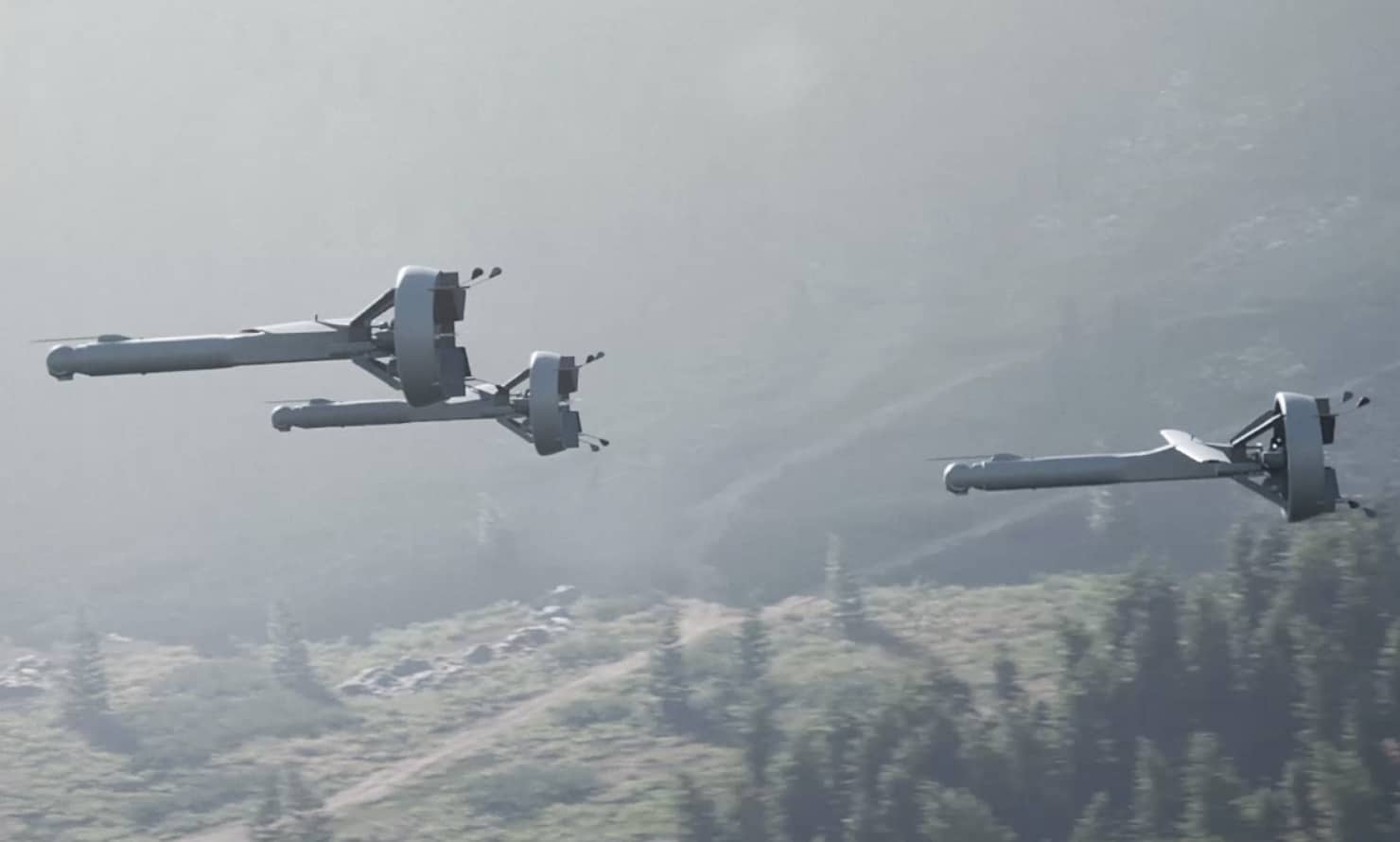
The US LUCAS guided strike drones deployed in the Middle East have received Starlink antennas to provide communications.
The U.S. Central Command (CENTCOM) has announced the creation of a new task force for the first U.S. strike drone squadron deployed to the Middle East.
The Scorpion Strike Task Force was formed four months after Defense Secretary Pete Hegseth ordered the acceleration of the procurement and deployment of available drone technology.
It was this group that created the Low-Cost Unmanned Combat Attack System (LUCAS) squadron of drones currently based in the Middle East.
LUCAS drones have a long range and can operate autonomously.

They can be launched in different ways: from a catapult, using a solid-fuel accelerator, as well as from mobile ground or vehicle platforms.
The LUCAS delta-winged drone, about 3 meters long with a 2.4-meter wingspan, was developed by SpektreWorks in Arizona.
The estimated cost of one platform is approximately $35,000. It is a low-cost, scalable system that offers advanced capabilities at a fraction of the cost of traditional US long-range drones.
The strike version is reportedly based on SpektreWorks’ FLM 136 target drone.

FLM 136 has a claimed maximum range of 715 kilometers and can stay in the air for up to six hours.
Its payload (excluding fuel) reaches 18 kilograms, and its cruising speed is about 74 knots with a flying speed of up to 105 knots.
Equipping such drones with Starlink terminals allows them to maintain stable communication even in the face of active enemy electronic warfare systems.
This increases the effectiveness of UAVs on the battlefield, especially over long distances.
Smaller, lighter modifications of Starlink terminals are used for drones, as seen on LUCAS drones.
The drone’s terminal connects to Starlink satellites in low Earth orbit.

Then the signal is transmitted to ground stations and gets to the control centers. Unlike classical radio channels, satellite communication provides coverage across the entire satellite network.
However, Starlink’s coverage in the Middle East remains uneven: the service is available in Yemen, Oman, Qatar, Bahrain, and Jordan, while in Saudi Arabia and the UAE, its operation is limited or pending regulatory approval.

The Pentagon also plans to use SpaceX’s Starshield for a future military communications network.
Підтримати нас можна через:
Приват: 5169 3351 0164 7408 PayPal - [email protected] Стати нашим патроном за лінком ⬇
Subscribe to our newsletter
or on ours Telegram
Thank you!!
You are subscribed to our newsletter